Friday, February 13, 2015

Mississippi River Basin Water Resource Weekly News

~Most of the Water News - None of the Spin~
This Week and Next
Cyanobacteria. Binder Lake, Iowa.
August 2006.
The week now ending saw Congress pass a bill approving the construction of the Keystone XL pipeline from Canada, through the Plains states to the Gulf of Mexico.  That bill will almost certainly be vetoed by President Obama, marking the first of what could be many vetoes through the remainder of his presidency. On Thursday, the House Energy and Commerce Committee debated and passed the Drinking Water Protection Act, sending the bill on to the full House. That bipartisan bill, introduced largely in response to last summer's Toledo, Ohio drinking water contamination incident, would require the U.S. EPA to develop a strategic plan to manage the risks associated with cyanotoxins in drinking water. Thus far, no companion bill has been introduced in the Senate, so the measure's overall fate remains uncertain. Also this week: the Mississippi River/Gulf of Mexico Watershed Nutrient (Hypoxia) Task Force has given the nation 20 more years to meet the Gulf of Mexico hypoxia reduction target; the Army Corps of Engineers said that civil works projects mean jobs; the Obama Administration said it would finalize its proposed clean water rule by the summer; and proposed state bills in West Virginia and Minnesota would impact water protections.  Details on all of this and much more can be found below (or in this readily-edible, one paragraph version: "What We Learned This Week - 'Slip slidin' away'").

Congressional lawmakers have next week off for the President's Day holiday (many will be out of town during a scheduled state or district work period).  So, no floor or committee activity is scheduled until Tuesday, February 24.

Noteworthy @UpperMiss Twitter Postings for the Week


Water Quality -
  • EPA release: States "develop new strategies to reduce nutrient levels in Mississippi River, Gulf of Mexico;" they need 20 more years to complete that work http://ow.ly/IXEeC (news article: http://ow.ly/IZPZr)
  • Des Moines Register: States want 20 more years to meet Gulf dead-zone goals http://ow.ly/J0qph
  • Army Assistant Secretary for Civil Works, Jo-Ellen Darcy: Administration looking to finalize clean water rule "by the summer" http://ow.ly/ITyIQ
  • Agriculture Secretary Vilsack will not ask U.S. EPA, Army Corps of Engineers to withdraw proposed Waters of the United States rule http://ow.ly/IW2Xr (link to hearing page here: http://ow.ly/IW3wt)
  • USDA NRCS announces "the new MRBI" - a second phase of its Mississippi River Basin Healthy Watersheds Initiative http://ow.ly/IO0f5
  • Tennessee Clean Water Network and Tennessee Scenic Rivers Association join lawsuit to
    Photo: CSA News Magazine
    protect Nashville drinking water source http://ow.ly/IBTOH
  • At Congressional hearing, Oklahoma attorney general vows to sue Obama administration over Clean Water Act rule http://ow.ly/IBTg8
  • Iowa Department of Natural Resources continues to monitor Mississippi River after derailed train spills ethanol http://ow.ly/ITJHn
  • Lawmakers clash over ‘mythical’ EPA water rule http://ow.ly/IJMRa
  • Effects on Indiana's Winona Lake uncertain following explosion, spill http://ow.ly/IO3yb
  • EPA proposes changes to National Oil and Hazardous Substances Pollution Contingency Plan requirements; comments due by April 22 http://ow.ly/IS5tJ (Federal Register notice: http://ow.ly/IS5AD)
  • Energy and Commerce Committee sends bill dealing with algal toxin management on to full House http://ow.ly/IZOJ6 (link to bill: H.R. 212, Drinking Water Protection Act)
  • Contamination levels persist but are dropping in larger downstream rivers following North Dakota saltwater spill http://ow.ly/ISe8D
  • Subsoil phosphorus loss: A complex problem with no easy solutions http://ow.ly/ISWKO
  • University of Arkansas scientists addressing Gulf of Mexico hypoxia http://ow.ly/IWV1w
Water Resource Management (Floodplains, Dams, Navigation, Wetlands, Flooding, Supplies, etc.) -
Photo: David Grunfeld, The Times-Picayune
  • University of Iowa study of over 50 years of data in 14 states finds Midwest is flooding more frequently http://ow.ly/IRZ5M
  • Horinko Group white paper: Role of Public-Private Partnerships in Meeting a Community’s Water and Wastewater Needs-A Primer for Public Officials http://ow.ly/IC3ng
  • Army Corps of Engineers to proceed with Mississippi River navigation lock expansion without Port of New Orleans help http://ow.ly/IJTJ5
  • With no money in budget for Chattanooga's Chickamauga Lock, Army Corps of Engineers reconsiders lock priorities http://ow.ly/ITIQG
  • House Democrats push bill to incorporate modern forecasting into Army Corps' dam operations http://ow.ly/ISlfl (bill: http://ow.ly/ISkRl)
  • An estimated $1.2 billion in corn, soy and wheat crops at risk in US states where competition with industrial water users is acute http://ow.ly/ISf8v
  • Settlement calls for northeast Twin Cities metro communities to use Mississippi River water instead of groundwater http://ow.ly/ITLzU
  • USDA survey: Corn used 14 percent more water from irrigation in 2013 than in 2008; Water use for all crops combined declined 3.7 percent http://ow.ly/IXyDz
Agriculture-
  • Des Moines Register explores current issues associated with swine animal feeding operations in Iowa http://ow.ly/IJK9P "Iowa Great Lakes may be next hog-confinement battleground"
  • U.S. cattle backgrounding and feeding capacity is moving to the Plains and Midwest
    Click to enlarge
     http://ow.ly/IJPq7
  • What nobody told me about small farming: the ugly fact that most farms are unsustainable http://ow.ly/INLwO
  • USDA: rate of growth in number of farmers markets nationally has slowed dramatically in the last five years; have farmers markets peaked? http://ow.ly/ISaSk (USDA report: "Trends in U.S. Local and Regional Food Systems" http://ow.ly/ISbeJ)
  • Federal district court in Minnesota approves EPA proposal not to release farmers, ranchers personal information while appeal is pending http://ow.ly/IOdpK
  • USDA: Farm income in the U.S. is poised to drop for a third straight year in 2015; a 15-percent increase in government payments in 2015 is expected http://ow.ly/ISc56 (see graph, above)
  • USDA releases new report entitled, “USDA Long-Term Agricultural Projections,” providing projections for the agricultural sector to 2024 http://ow.ly/IWhoH (highlights here: http://ow.ly/IWhTe)
  • Farm payment projections growing past the amounts originally budgeted just a year ago in Farm Bill http://ow.ly/IZV4G
  • DTN: Defense of Crop Insurance: House Ag Committee Leaders Argue Cuts Not Needed, But Efforts Continue http://ow.ly/IWfjy
  • New initiative allows farmers to test and compare soil-health improvements http://ow.ly/ISY46
  • House Agriculture Committee reviews the state of the rural economy during Wednesday hearing http://ow.ly/ITA65
  • "Nature, agriculture coexist in Mason County" (Illinois) http://ow.ly/ITJgX
  • Sen. John Thune (R., S.D.) reintroduces bill to stimulate new agricultural research through new type of philanthropy combining private sector entrepreneurship with charitable giving http://ow.ly/IWgxl
  • National Sustainable Agriculture Coalition releases new guide to how the USDA Conservation Stewardship Program works http://ow.ly/IWrUT
Click to enlarge
Climate and Weather -
  • Unprecedented 21st century drought risk in the American Southwest and Central Plains; research paper: http://ow.ly/IZQXq (story: http://ow.ly/IZR6K)
  • US weekly drought update: abnormally dry, moderate drought area expands across central and eastern Kentucky; abnormally dry areas expand in southwestern Missouri, and into western South Dakota http://ow.ly/wmTdv (map to the right)
  • As efforts to restrain deforestation begin to work, farming now worse for climate change than clearing forests http://ow.ly/IO73Z
Biodiversity, Wildlife and Invasives -
  • Asian carp advance up Mississippi River Basin to the Great Lakes has stalled, Army Corps of Engineers tells Congress http://ow.ly/IZQkZ
  • Obama administration and conservation groups launch plan to halt the death spiral of the monarch butterfly http://ow.ly/IO2n4
  • Proceedings of the National Academy of Sciences: scientists find new clue in bee colony collapse disorder http://ow.ly/IObES
  • Biologists study shovelnose sturgeon in Arkansas River ahead of planned development http://ow.ly/ITL4u
  • Federal agencies using unconventional model to help endangered pallid sturgeon from running into Yellowstone River's Intake Dam http://ow.ly/IXxIQ
Photo credit: Brian Peterson, Star Tribune
Forestry -
  • Alarmed by rapid deforestation, Minnesota DNR orders environmental review that will temporarily halt central-state jackpine conversion to potato fields http://ow.ly/IBV3J  (also see: http://ow.ly/IBVLI)
  • A Biofuel Debate: Will Cutting Trees Cut Carbon? http://ow.ly/ISd38
In the Cities -
  • Ground broken along Baton Rouge's Mississippi riverfront for new $45 million, 33-acre Center for River Studies http://ow.ly/IWXEB
  • Memphis, Tennessee city leaders forming 45-member task force to focus on water resources http://ow.ly/IWZCX
  • Post-flood rebuilding gave Nashville, Tennessee an opportunity to craft a vibrant, connected, green, dense downtown plan http://ow.ly/IX9sh
  • Virtual Map tour of Nashville water resource's bioretention, pervious pavement, green roofs and infiltration projects http://ow.ly/IZRPz
In the States -
  • Links to 46 state budget summaries for Fiscal Year 2014 (for states' enacted final budgets in fiscal years ending in mid-2014) http://ow.ly/IOOcs
  • Wisconsin manure spills putting drinking water supplies at risk; precipitating fish kills
    Photo: Picasa
    http://ow.ly/IJBU9
  • West Virginia lawmakers consider series of proposals that would weaken new chemical tank safety, water protection law http://ow.ly/IO41Z (link to Senate version of bill: http://ow.ly/IO64v)
  • West Virginia lawmakers back legislation to shield coal mining companies from environmental group lawsuits http://ow.ly/IS3cO (Senate version of bill: http://ow.ly/IS3BK); bill includes provisions to review water quality standards for selenium and aluminum
  • Proposed West Virginia bills would weaken water protections http://ow.ly/ISfFq
  • Ohio Senate bill outlines new effort to fight toxic algae, support clean drinking water http://ow.ly/IWe3f (link to bill: http://ow.ly/IWeco)
  • Minnesota state lawmakers seek to pass package of bills to limit hunting, ban snaring, increase livestock fund http://ow.ly/IJVwb
  • Minnesota state bills would require legislative approval, economic impact study of any new water quality regulations http://ow.ly/IO4Ga  (link to bills: http://ow.ly/IO5nf http://ow.ly/IO5yu)
  • Minnesota draft general permit for operating livestock feedlots with 1,000 or more animal units open for public comment through March 11 http://ow.ly/IOfQS
  • Iowa state revenue between July and January totaled $100 million below estimates http://ow.ly/ISUwI
  • North Dakota state Democrats say agency's promotion, regulation of oil and gas development is a conflict of interest http://ow.ly/IJWgR
  • Montana state senator introduces bill prohibiting state from selling land obtained from federal government to private owners http://ow.ly/IS4CD
Gulf Coastal Region -
  • Louisiana's threatened coast is seeing new patches of high ground and exposed land through restoration efforts http://ow.ly/IWWnH
Natural Resources Development -
  • House passes bill authorizing Keystone XL oil sands pipeline construction, setting up first major Obama presidency veto ow.ly/IVWtq (link to bill: http://ow.ly/IVZd3)
  • TransCanada Corp. will halt Keystone XL oil pipeline eminent domain proceedings in attempt to resolve litigation vs. Nebraska landowners http://ow.ly/IZPCn
Federal Budget -
  • Army Corps at House Appropriations subcommittee's budget hearing: money spent on civil works projects means jobs http://ow.ly/IWVyS
  • Committee hearing reaction implies that President's Army Corps of Engineers budget request is all but dead on arrival http://ow.ly/IW4M2
  • If Department of Homeland Security funding lapses, most Federal Emergency Management Agency staff would continue to work http://ow.ly/IJEQb
  • House Agriculture Committee sends its Budgets Views and Estimates Letter for Fiscal Year 2016 on to House Budget Committee http://ow.ly/IWupw
  • Groups urge congress to implement a 2% funding increase for key conservation, outdoors, historic preservation programs http://ow.ly/IZUsU
Events - Information on all past and future events listed here each week can be viewed in the on-line calendar, located above and to the right (and here as a stand-alone calendar)
  • Association of State Wetland Managers webinar: Playa and Rainwater Basin Wetland
    Click to enlarge
    Restoration; February 17, 3 PM ET http://ow.ly/ISZkK
  • CQ Roll Call forum: Future of Advanced Biofuels and the Renewable Fuel Standard; Washington, DC, February 24, 9 AM http://ow.ly/IS6j1
  • Briefing on USGS Report on Nationwide Groundwater Quality; March 6, 9:00 AM, Washington, DC http://ow.ly/IX7I3
  • National Groundwater Awareness Week; March 8-14 http://ow.ly/IXDrw
  • National Ag Day; March 18, 2015 http://ow.ly/IWt1g (Washington, DC events: http://agday.org/media/pr14.php)
  • Water is topic of University of Nebraska symposium and water law conference, Lincoln’s NU College of Law, March 19-20 http://ow.ly/IWTjK
  • Water Week 2015: National Water Policy Forum, Fly-In and Expo; Washington, DC, April 13-15 http://ow.ly/IS20
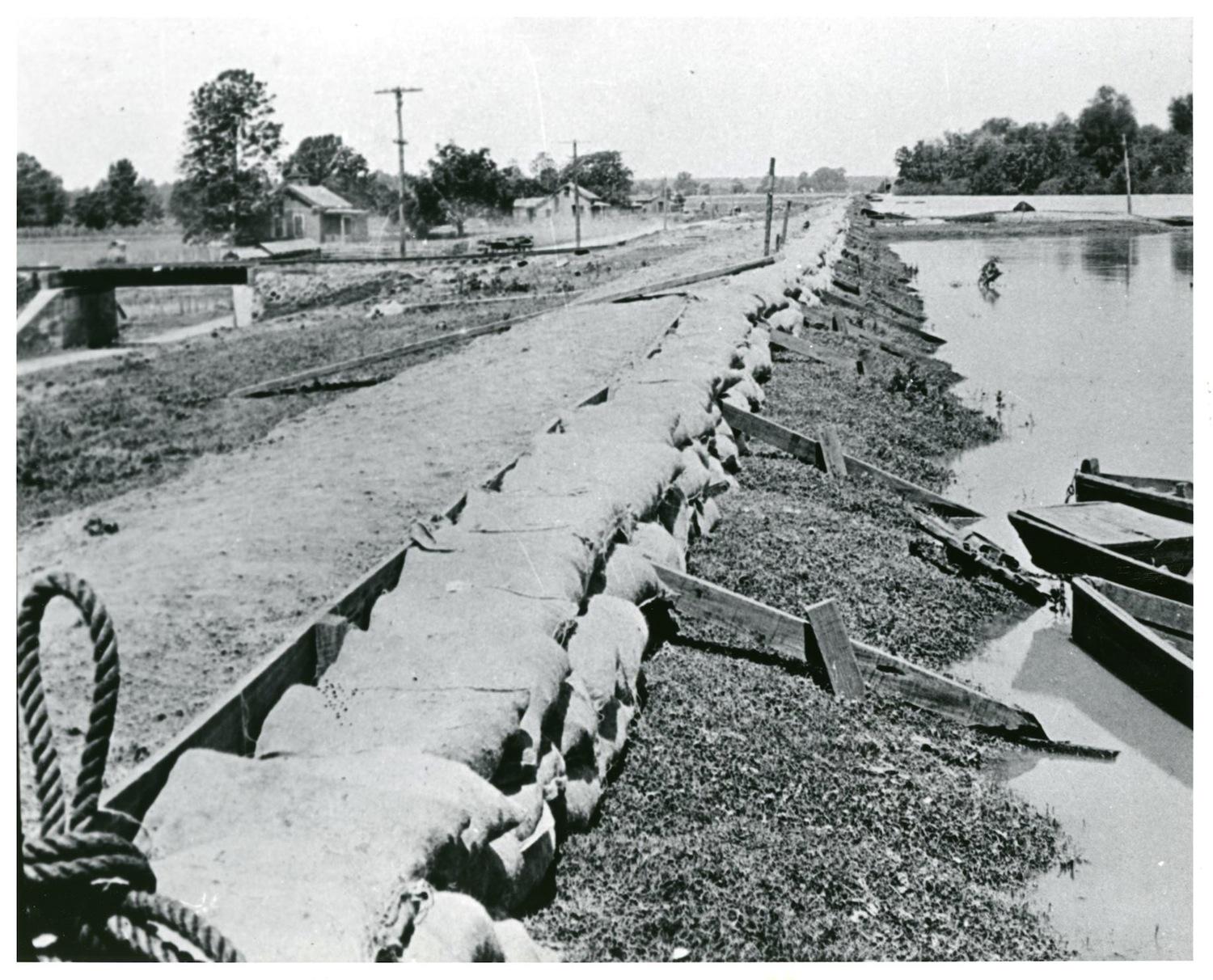
Photograph: U.S. Army Corps of
Engineers/St. Louis District
e-Newsletters, Publications, Journals, Multimedia -
  • Minnesota Pollution Control Agency's February "BALMM Currents" - Basin Alliance for the Lower Mississippi in Minnesota http://ow.ly/ITp4k
  • Lower Mississippi River Dispatch No. 277, February 11 http://ow.ly/ITCA9
  • Corps of Engineers shares historic Mississippi River flood of 1927 photos online http://ow.ly/ITKa3
  • Minnesota Pollution Control Agency's Waterfront Bulletin for February 2015 http://ow.ly/IXaAF
  • Tulane Institute on Water Resources Law and Policy's TUWaterWays, February 11 e-newsletter http://ow.ly/IY2ZY
  • Montana Watershed Coordination Council February 12 Watershed News http://ow.ly/IZTc4
  • Gulf Restoration Network's Gulf Waves e-newsletter for February 13 http://ow.ly/IZVRk
Other News -
  • Bill reintroduced to permanently stop EPA from regulating lead shot, sinkers, other ammunition under the Toxic Substances Control Act http://ow.ly/IJLUS
  • UN Water releases analytical brief on wastewater management, stressing the drinking water and wastewater nexus http://ow.ly/IVYot
  • Army Corps of Engineers Vicksburg District is seeking more volunteers to operate the Jesse Brent Lower Mississippi River Museum and Interpretive Site http://ow.ly/IWUjL
  • Alliance for Water Efficiency, Environmental Law Institute, River Network partner on initiative to promote water neutral community growth http://ow.ly/IXCSo
  • National Association of Clean Water Agencies, AGree, and U.S. Water Alliance white paper: Collaborating for Healthy Watersheds http://ow.ly/IXBj0
  • Job opening: Director of the University of Minnesota Sea Grant College Program (Lake Superior and Minnesota's inland waters) http://ow.ly/IXL91
People and Politics -
  • Federal Employed Women Association biennial interactive map of the federal workforce presence nationwide by agency grouping, county and congressional district http://ow.ly/IRWv7
  • Senate Energy and Natural Resources Committee announces the full lineup for its four subcommittees http://ow.ly/IXwY6
  • Analysis: Louisiana environmental lobby gains prominent ally in retired Army Lt. Gen. Russel Honore http://ow.ly/IJDk3
  • Rep. Alan Nunnelee (R-Miss.-1) dies after a battle with brain cancer http://ow.ly/IJRot
Your Moment of Zen

 Photograph: Brent Stirton/Getty Images

Tuesday, February 10, 2015

Capitol Hill This Week - What to Watch For

Russell Senate Office Building
Last week's release of the Obama administration's fiscal year 2016 budget proposal (found here, and explained from a Mississippi River perspective here) marked the start of the House and Senate budget-proposal-hearings' season, including several basin-related budget hearings scheduled for this week (see below).  There are a few other, more directly Basin-centric, Hill activities scheduled as well.  On Wednesday, the House is scheduled to take up the Senate's version of the Keystone XL Pipeline Approval Act, which is essentially the previously-House-passed measure, amended somewhat.  President Obama is poised to veto the bill following likely House passage.

Below are the U.S. House and Senate committee activities currently scheduled for this week that relate to Mississippi River Basin water resources.   Links are provided below to relevant committee web pages, and, where appropriate, to pieces of legislation. Many Congressional proceedings are webcast live, and these should be, as well (follow the appropriate link).  All times are Eastern.  This page will be updated as warranted. 

Tuesday
  • Senate Commerce, Science and Transportation Subcommittee on Surface Transportation and Merchant Marine Infrastructure, Safety, and Security hearing entitled, "Keeping Goods Moving," focusing on the U.S. supply chain, particularly the importance of efficiently functioning U.S. ports; 10:00 AM, room 253 Senate Russell Office Building
  • House Rules Committee meeting to determine the floor rules for the consideration of S.1, the Keystone XL Pipeline Approval Act; 5:00 PM, room H-313 The Capitol
Wednesday
  • House Agriculture Committee hearing to review the state of the rural economy; 10:00 AM, room 1300 Longworth House Office Building
  • House Appropriations Subcommittee on Energy and Water Development budget hearing on the Army Corps of Engineers, Civil Works; 10:30 AM, room 2362-B Rayburn House Office Building
  • Senate Appropriations Subcommittee on Energy and Water Development hearing to review the Fiscal Year 2016 funding request and budget justification for the U.S. Army Corp of Engineers and the U.S. Department of the Interior; 2:30 PM, room 192 Dirksen Senate Office Building
  • House Energy and Commerce Committee mark up of H.R. 212, the Drinking Water Protection Act (would require U.S. EPA to develop a strategic plan for protecting drinking water from algal toxins); opening statements for the markup are Wednesday, 5:00 PM, room 2123 Rayburn House Office Building; markup is Thursday, Feb. 12, at 10 AM in the same room (see below).
Thursday
  • House Agriculture Committee business meeting to consider the fiscal year 2016 Budget Views and Estimates Letter for the agencies and programs under jurisdiction of the Committee; 9:30 AM, room 1300 Longworth House Office Building
  • House Energy and Commerce Committee mark up of H.R. 212, the Drinking Water Protection Act (would require U.S. EPA to develop a strategic plan for protecting drinking water from algal toxins); opening statements for the markup are Wednesday, 5:00 PM, room 2123 Rayburn House Office Building; markup is Thursday, Feb. 12, at 10 AM in the same room (see above).
  • House Appropriations Subcommittee on Energy and Water Development budget hearing - Bureau of Reclamation; 10:30 AM, room 2362-B Rayburn House Office Building

Friday, February 6, 2015

What We Learned This Week - "That'll do, pig"

The President issued a budget proposal for the nation (one that has Mississippi River Basin implications) and Wisconsin's Governor issued one for that state (one that would tighten control over the DNR, cut science, and halt conservation purchases). The White House issued an Executive Order establishing flood risk reduction standards for federal assets.   Manure runoff was debated at an Ohio legislature hearing, where "sound science" came up.  U.S. pork production is expected to surpass beef production this year for first time since 1952.  A Tennessee federal judge ruled in favor of environmental groups over the Obama administration in the case of fish species threatened by mining-related pollution.  Major voluntary strategies used to curb Midwest farm fertilizer runoff don't work well enough.   Rep. Aaron Schock’s (R-Ill.) new Rayburn Building office in Washington, DC has a “Downton Abbey” feel to it . . . just don't photograph it.   Environmental groups filed a lawsuit against several federal agencies regarding pallid sturgeon endangerment by Missouri River Basin dams, and another set of environmental groups sued the Interior Department to protect another rare fish population; in the Upper Missouri River basin.  Minnesota farmers have adapted with drainage systems to big rains, but the result has caused downstream problems.   The GOP says that its new "sue and settle" bill will stop the EPA from developing regulations behind closed doors with special interest groups.  A bill was introduced to permanently extend the Land and Water Conservation Fund. The USDA will propose soon to cut off farm subsidies to "city slickers."  And last but not least, a small woodland creature named "Phil" in Pennsylvania may have ruined Americans’ week by predicting a long winter, but Phil's groundhog cousin, "Jimmy," in Wisconsin, ruined a mayor's day in the town of Sun Prairie.

Mississippi River Basin Water Resource Weekly News

~Most of the Water News - None of the Spin~

2016 Budget Plan and Mississippi River Basin Water Resources
On February 2, the Obama Administration's Office of Management and Budget (OMB) released the President's fiscal year (FY) 2016 budget plan.  Here, you can find an overview of some of the budget plan's significant
provisions as they relate to the Mississippi River Basin, noting key line items for the U.S. EPA, USDA, Army Corps of Engineers, Department of Interior, NOAA and FEMA. Links are also provided to each agency's budget summary and to the respective OMB budget appendix sections relating to the highlighted Federal agencies, where much more detail can be found.

What's Next
The release of the Obama administration's budget proposal precipitated a series of House and Senate hearings on the plan, and may ultimately result in a series of spending bills (ideally passed before the end of September 2015), which allocate funds for the next fiscal year across the agencies of the Federal government. In this overview of the Federal appropriations process we take a look at what might happen in the upcoming months, should the so-called "regular order" of appropriations lawmaking be followed.

In the short-term, there are several River Basin-related budget hearings scheduled for next week, as well as a few other, more directly Basin-centric, Hill activities. They are all summarized (and updated "on-the-fly") in "Capitol Hill Next Week - What to Watch For."

If you'd like to skip all of the details, and cut right to the chase, see this one-paragraph River Basin news' summary: "What We Learned This Week - 'That'll do, pig.'"

Noteworthy @UpperMiss Twitter Postings for the Week

Water Quality -
  • Study: Major voluntary strategies used to curb Midwest farm fertilizer runoff that feeds the annual low oxygen Gulf of Mexico "Dead Zone" don't remove enough nutrients http://ow.ly/ItByz
  • Lawmakers, and EPA and Army Corps officials go back-and-forth on details and scope of proposed clean water rule at joint committee hearing http://ow.ly/Iv58y
  • Congressional lawmakers tell EPA Administrator McCarthy that many states still seek clarification on proposed clean water rule http://ow.ly/Ixnj1
  • Tennessee federal judge rules in favor of environmental groups over Obama administration in
    Source: NPR
    case of fish species threatened by mining-related pollution http://ow.ly/IeqOP
  • Milwaukee Journal Sentinel Editorial: Contaminant-laden runoff from farms is one of the largest remaining challenges for Wisconsin waterways http://ow.ly/ImcpA
  • Blacktail Creek spill is largest wastewater spill since North Dakota oil boom began nearly 10 years ago, and state's spill problem is getting worse http://ow.ly/Ipp6G
  • NPR Morning Edition: "Here's How To End Iowa's Great Nitrate Fight" http://ow.ly/ItrPm
  • USEPA report: Getting to Green: Paying for Green Infrastructure, Finance  Options and Resources for Local Decision-Makers http://ow.ly/IBbhK
  • House Energy and Commerce subcommittee advances bill requiring EPA to develop a plan for addressing algal toxins http://ow.ly/IBlg2
  • Railroad officials: unclear how much ethanol made its way into the Mississippi River following eastern Iowa train derailment http://ow.ly/IBvNH
Water Resource Management (Floodplains, Dams, Navigation, Wetlands, Flooding, Supplies, etc.) -
  • White House issues Executive Order establishing flood risk reduction standards; provides public comment opportunities http://ow.ly/ICFoT (related article below)
  • Obama Executive Order: Federal construction projects must plan for flood risks from climate change http://ow.ly/IkKPI
  • Center for Neighborhood Technology: ‘RainReady Nation’ - tools to "build resiliency in our communities" http://ow.ly/IkXxP
  • Minnesota farmers adapt with drainage systems to big rains, but water draining from fields can cause downstream problems http://ow.ly/ItCKG
  • New York Times: Barges Sit for Hours Behind Locks That May Take Decades to Replace http://ow.ly/Ixc3e
Agriculture -
  • Sens. Jeanne Shaheen (D-N.H.) and Pat Toomey (R-Pa.) introduce bill to cap crop insurance premium subsidies; S. 345: http://ow.ly/IztW0
  • U.S. cattle herd expanded in 2014 for the first time in eight years, reversing drought-fueled decline http://ow.ly/IkZaO
  • U.S. pork production is expected to surpass beef production this year for first time since 1952 http://ow.ly/ItjNv
  • Federal Reserve Bank analysis: Government payments (both direct subsidies and crop insurance indemnities) remain an important part of farm sector income http://ow.ly/IoZnk
  • Minnesota near the top in recent USDA agricultural crop and livestock production report http://ow.ly/IpeGZ
  • USDA will soon issue a proposed rule for determining who is “actively engaged” in farming for the purpose of receiving farm bill benefits http://ow.ly/IB8oy
  • Farming Goes High Tech But High-Tech Is Increasingly a Liability http://ow.ly/IBxdL
Climate and Weather -
  • MPR special report: Climate Change in Minnesota: More heat, more big storms http://ow.ly/Il3ZP
  • US weekly drought update: Midwest dry conditions largely removed in response to this week's precipitation; drought expands in northeast Oklahoma, Arkansas http://ow.ly/wmTdv
  • NOAA Climate Prediction Center monthly drought outlook for February: short and medium-term forecasts favor near or sub-median precipitation in U.S. mid-section http://ow.ly/q3yAx
Biodiversity, Wildlife and Invasives -
Pallid Sturgeon (click to enlarge)
  • U.S. Fish and Wildlife Service releases first annual report to Congress on managing the threat of Asian carp in the Upper Mississippi and Ohio River basins http://ow.ly/Iu5bm
  • Defenders of Wildlife and the Natural Resources Defense Council (NRDC) file lawsuit against Bureau of Reclamation, Army Corps of Engineers, and Fish and Wildlife Service over pallid sturgeon endangerment by Missouri River Basin dams http://ow.ly/ItlHA  (Also see the underlying USGS study, below)
  • January USGS study is first to directly link dam-induced changes in sediment transport to reduced oxygen levels and pallid sturgeon survival http://ow.ly/Itmkt
  • Environmental groups sue Department of Interior to protect rare Montana, Upper Missouri River basin fish population http://ow.ly/IBduf
  • Senators introduce S. 338, a bill to permanently extend the Land and Water Conservation Fund, which authorizes up to $900 million annually for land acquisition and conservation http://ow.ly/ItpRS
  • Center for Food Safety study: Monsanto's signature herbicide has nearly eradicated the monarch butterfly http://bit.ly/18SBY2D (link to study here: http://ow.ly/IBfe5)
In the Cities -
  • MPR: As climate changes, cities have to deal with more and bigger rains in Minnesota http://ow.ly/ItF4S
  • Sun Prairie, Wis., mayor bitten on the ear by the city's groundhog, "Jimmy," during Tuesday's Groundhog Day ceremony http://ow.ly/ItnwD
In the States -
  • Kansas budget fix would avoid cash flow crisis by tapping into various state funds http://ow.ly/Iv1ZU (bill: http://ow.ly/Iv2hK)
  • North Dakota state bill would require elected officials to sign off on reductions of fines against oil and gas companies http://ow.ly/IerJF
  • Ohio Alternative Stormwater Infrastructure Loan Program offers below-market rate loans for the design and construction of green infrastructure http://ow.ly/IkGgu
  • Manure runoff debated at Ohio legislature hearing: Farmers urge Ohio House to employ sound science http://ow.ly/IkPkS
  • Ohio state senators introduce bill to ramp up state efforts to fight toxic algae, support clean drinking water http://ow.ly/ItE8P (link to Ohio bill http://ow.ly/ItEve)
  • Minnesota struggles to slow deforestation, protect water, as state loses natural landscapes to farming http://ow.ly/Il201
  • Gov. Scott Walker on Tuesday proposed a new spending plan for Wisconsin that relies on borrowing and spending cuts http://ow.ly/ItsRP (also see: Wisconsin Governor's budget proposal would tighten control over DNR, cut science, halt conservation purchases http://ow.ly/ItDc4)
Gulf Coastal Region-
  • Louisiana coastal officials propose spending $773 million in coastal restoration and hurricane protection for 2015-16 fiscal year http://ow.ly/Ipo5h
  • New Orleans Times-Picayune editorial: "Don't cut off offshore revenue-sharing, President Obama" http://ow.ly/Iv3T2
Resource Development-
  • House Republican leadership planning vote next week on Senate’s Keystone XL oil pipeline bill, which amends original House bill http://ow.ly/IkEjK
  • Department of Interior issues new rule for the restoration of abandoned non-coal mines, providing communities with an opportunity to reclaim abandoned non-coal mines (including cleaning polluted surface water, among other things) http://ow.ly/IxlvE
  • 20 groups getting together in attempt block proposed Bakken oil pipeline’s path across Iowa http://ow.ly/IxysV
Federal Budget-
  • Senate Appropriations Interior and Environment Subcommittee Chair Murkowski hopes to keep EPA riders out of spending bill http://ow.ly/IBke9
  • Obama Administration's Office of Management and Budget releases the President's fiscal year (FY) 2016 budget plan ow.ly/Im4Jy
  • Obama budget proposal seeks to cut crop insurance to offset higher projected direct farm-program subsidies http://ow.ly/IoZNj
  • President's proposed 2016 EPA budget is 5.8% greater than current funding; over  8% higher than the last year's request http://ow.ly/Ip173
  • Three weeks before the Department of Homeland Security's funding runs out (includes FEMA), GOP leaders are pointing fingers at each other http://ow.ly/IBvbq
Events - Information on all past and future events listed here each week can be viewed in the on-line calendar, located above and to the right (and here as a stand-alone calendar)
  • National Great Rivers Research and Education Center to host weekly seminar series in February (Alton, Illinois) http://ow.ly/IriRR
  • Webinar: Green Infrastructure Planning at Multiple Scales: From Landscape to Site, February 10, noon - 1 PM ET, Penn State Extension http://ow.ly/Iznm5
  • National Water Quality Monitoring Council Webinar Series: "The Water Quality Portal" 
  • (USGS presentation) February 18, 2 pm ET http://ow.ly/IB51A
  • 2nd Colorado Water Summit, Marriott Denver South, March 3-5 http://ow.ly/ItkQC
  • Minnesota Erosion Control Association Conference: March 10-12, Duluth Convention Center http://ow.ly/IzoD
  • Association of State Wetland Manager’s Annual State/Tribal/Federal Coordination Meeting; March 24-26, Shepherdstown, WV http://ow.ly/Ixpdf
e-Newsletters, Publications, Journals, Multimedia -
  • Gulf Restoration Network January 30 GulfWaves e-newsletter http://ow.ly/Ieg3Q
  • Western Pennsylvania Conservancy February e-newsletter http://ow.ly/IkIOB
  • NW PAssages February 2015 e-newsletter covering NW Pennsylvania's Nature, Heritage and Recreation http://ow.ly/Ith44
  • Minnesota Pollution Control Agency's Feedlot Update - February 4 http://ow.ly/Iv6co
  • The Wetlands Initiative's February "World of Wetlands" e-newsletter http://ow.ly/IxmhG
  • Minnesota Pollution Control Agency's February "River Connections," including an update on big river TMDLS http://ow.ly/Iyq36
  • National Great Rivers Research and Education Center February 2015 E-News http://ow.ly/Iyr4F
  • February 4 Green Lands Blue Waters Update, re: Continuous Living Cover on Mississippi River Basin agricultural land http://ow.ly/IzpIp
  • Tulane Institute on Water Resources Law and Policy's February 4 TUWaterWays e-newsletter http://ow.ly/IBfGr
  • Montana Watershed Coordination Council's February 5 Watershed News http://ow.ly/IBaFd
Other News-
  • GOP says new "sue and settle" bill would prevent EPA from developing regulations behind closed doors with special interest groups http://bit.ly/1DjGyCC
  • House passes H.R. 50, Unfunded Mandates Information and Transparency Act http://ow.ly/IB70s; requires agencies to determine how legislative changes to existing federal programs might shift costs to state, local and tribal governments
  • House passes H.R. 527, Regulatory Flexibility Act, 260-163, bill requires federal agencies to assess the indirect, in addition to the direct, costs of rules http://ow.ly/IB6mN (news article: http://ow.ly/IB8WJ)
  • American Water accepting applications for 2015 Environmental Grant Program; 13 states including Illinois, Indiana, Iowa, Kentucky, Missouri, Pennsylvania, Tennessee, West Virginia http://ow.ly/IkGRC
  • Rethinking How America Buys Infrastructure: A public-private paradigm http://ow.ly/IkLkf
  • Sens. Cornyn (R-Texas) and Leahy (D-Vt.) introduce "FOIA Improvement Act of 2015" http://ow.ly/Ipa5q (Freedom of Information Act)
  • Job: Friends of the Mississippi River (Twin Cities area, Minnesota) seeks to fill an Ecologist's position http://ow.ly/Iri0B
  • Coke is coming out with premium milk; will have more protein and less sugar, and cost double the price of regular milk http://ow.ly/Ituzn
  • New Senate bill package would boost hunting, fishing and target shooting opportunities on public lands http://ow.ly/IBccq
  • Senate Judiciary Committee approves bill to make a number of changes to the Freedom of Information Act (FOIA) http://ow.ly/IBcKe (bill link: http://ow.ly/IBcTv)
Politics and People-
  • House Oversight Committee chairman plans to take on what he sees as EPA overregulation, mismanagement http://ow.ly/Ip6cC
  • Senate Environment and Public Works Chair names full Republican rosters for each of four EPW subcommittees http://ow.ly/Ip9yb
  • March 7, inaugural Iowa Ag Summit promises to be politically steeped http://ow.ly/Ixoc1
Your Moment of Zen -

Wednesday, February 4, 2015

Capitol This Next Week - What to Watch For

1888 Blizzard
Below are the U.S. House and Senate activities currently scheduled for this week that relate to Mississippi River Basin water resources.  The week started off with Monday's release of the Obama administration's fiscal year 2016 budget proposal (which can be found at this White House OMB page).  The budget's release jump-starts a series of House and Senate hearings on the proposal, including a House Ways and Means Committee hearing scheduled for Tuesday (see below)

Links are provided below to relevant committee web pages, and, where appropriate, to pieces of legislation. Many Congressional proceedings are webcast live, and these should be, as well (follow the appropriate link).  All times are Eastern.  This page will be updated as warranted. 

Tuesday
Wednesday
  • Senate Environment and Public Works Committee-House Transportation and Infrastructure Committee joint hearing on the "Impacts of the Proposed Waters of the United States Rule on State and Local Governments;" 10:00 AM, room 210 HVC (House Visitors Center of the U.S. Capitol).  Witnesses will include EPA Administrator Gina McCarthy; Assistant Secretary of the Army for Civil Works Jo-Ellen Darcy; Oklahoma State Attorney General E. Scott Pruitt; Florida Agriculture Commissioner Adam Putnam; El Paso County, Colo., District 3 County Commissioner Sallie Clark; Clear Creek, Colo., District 1 County Commissioner Timothy Mauck; and Lemuel Srolovic, chief of the Environmental Protection Bureau in the New York State attorney general's office.
  • House Budget Committee hearing on the Obama Administration's FY 2016 budget (testifying: Office of Management and Budget Director Shaun Donovan); 10:30 AM, room 210 Cannon House Office Building.  NEW
Thursday
  • House Energy and Commerce: Subcommittee on Environment and the Economy hearing on H.R. 212 the "Drinking Water Protection Act" "to provide for the assessment and management of the risk of cyanotoxins in drinking water" (bill is intended to provide for better federal agency and drinking water utility ability to deal with algal-based toxins.); 10:00 AM, room 2123 Russell House Office Building.

Tuesday, February 3, 2015

The Obama Administration's 2016 Budget Plan and Mississippi River Basin Water Resources

On February 2, the Obama Administration's Office of Management and Budget (OMB) released the President's fiscal year (FY) 2016 budget plan. A variety of relevant Federal agencies, departments or programs are highlighted below, along with an overview of some of the budget plan's significant provisions as they relate to the Mississippi River Basin. Links are provided to each agency's budget summary and to the respective OMB budget appendix, where much more detail can be found.

The FY 2016 proposed budget would cost $3.99 trillion, and includes a $474 billion budget deficit. The President's proposal seeks to do away with across-the-board Federal spending cuts that are automatically scheduled under provisions of the Budget Control Act of 2011. Known as "sequestration," these mandatory cuts kick in if Congress fails to enact a deficit-reduction bill containing at least $1.2 trillion in cuts (which Congress failed to do). The role that those sequestration requirements will have on the budget and spending debate in 2015 should be significant to say the least.

Environmental Protection Agency (Links to EPA "Budget in Brief" (PDF file), EPA Congressional "Budget Justification" (PDF file) and OMB's EPA budget appendix)
  • EPA's overall budget would increase under the proposal for the first time in several years, coming in at 5.8% more than the current FY 2015 funding and over 8% higher than the President requested in his budget last year.
  • The budget would provide $2.8 billion for environmental programs and management, an increase of around $200 million compared with the $2.6 billion appropriated in FY 2015.
  • $2.3 billion are provided for the Clean Water and Drinking Water State Revolving Funds, which help to fund drinking water and wastewater infrastructure improvements.  This total includes $50 million for technical assistance, training, and other efforts to enhance the planning and financing capacity of communities and states.
  • The budget contains a slight increase for state and tribal assistance grants, proposing almost $3.6 billion to provide states the funding for environmental programs and infrastructure assistance (compared with $3.55 billion last year).
U.S. Department of Agriculture (Links to USDA Budget Summary (PDF), U.S. Forest Service Budget Justification (PDF), and OMB's USDA budget appendix)
  • The budget proposes $25 billion in discretionary funding and $131 billion for mandatory programs for the USDA in FY 2016, a slight increase over the $23.7 billion request in FY 2015, and approximately $800 million more than the FY 2015 funding actually provided to the USDA. 
  • The Natural Resources Conservation Service (NRCS) conservation programs (both mandatory and discretionary) would receive $4.45 billion under the budget proposal, which is $362 million more the FY 2015 actual allocation. That total includes $1.031 billion in discretionary funding and $3.417 billion for mandatory NRCS farm bill programs. 
  • The President proposes to cut three million acres from the maximum ten million acres per year eligible under the 2014 Farm Bill for landowners to sign up under the voluntary NRCS Conservation Stewardship Program. That acreage cap reduction is equivalent to a funding cut of $54 million a year. 
  • The budget proposes to cap funding for the NRCS Environmental Quality Incentives Program at $1.35 billion, $300 million less than authorized under the 2014 Farm Bill. The program provides financial and technical assistance to implement conservation practices, or activities like conservation planning, that address natural resource concerns. 
  • The Farm Service Agency (known as FSA), which manages the Conservation Reserve Program, would receive nearly $1.632 billion under the budget plan, less than the $1.735 billion the FSA received in FY fiscal 2015. 
  • The Agricultural Research Service would receive close to $1.426 billion for "in-house" research, while the National Institute of Food and Agriculture is budgeted $1.508 billion. 
  • Forest Service budget is proposed at $4.94 billion (a slight decrease from the $5.07 billion in actual FY 2015 Forest Service funding), and includes funding increases for national monuments, logging and landscape restoration. 
  • The budget proposal seeks to cut crop insurance outlays to offset higher projected direct farm-program subsidies.
Army Corps of Engineers (Links to Civil Works Budget Overview (PDF) and OMB's Civil Works budget appendix)
  • The Army Corps would receive $4.73 billion in discretionary funds under the President's plan. Although this is slightly higher than last year's proposed $4.5 billion budget, it is 15 percent lower than the $5.5 billion Congress appropriated to the Corps FY 2015.
  • The proposed Corps' construction budget is $1.72 billion.  The Army Corps is Congressionally limited to starting construction on four new projects each year. For FY 2016, the administration proposes that those projects include an Alaska harbor project, a California flood protection project, a Kentucky flood protection project (Ohio River shoreline at Paducah), and a Minnesota environmental restoration project (Marsh Lake, Minnesota River Authority).
  • One ongoing construction project - the Olmsted Lock and Dam project on the Ohio River between Illinois and Kentucky - would receive $180 million under the proposal.
  • The Army Corps' operations and maintenance budget is reduced to $2.71 billion from $2.9 billion it was allocated in FY 2015.
  • The Army Corps' regulatory budget would see a slight $5 million increase under the FY 2016 budget proposal, to $205 million. The agency's Clean Water Act permitting program is funded under that budget line item.
  • The "Mississippi River and Tributaries" Army Corps projects, would be budgeted $225 million, $77 million less than the FY 2015 actual appropriation.  Those projects, according to the Corps budget summary, involve "ongoing construction, operation and maintenance, and investigation activities, with emphasis on the 1,600 miles of levees and related features on the main stem of the lower Mississippi River and in the Atchafalaya Basin, which reduce the flood risk to a large region."
Some of the Mississippi River Basin project budget line items include the following (note: this is not an inclusive list; to see the full project breakdown, go to this link):

Mississippi River Basin Investigations (Studies)
  • Louisiana Coastal Area Ecosystem Restoration- Mississippi River Hydrology, LA $50,000
  • Illinois River Basin Restoration, IL $400,000
  • Interbasin Control of Great Lakes-Mississippi River Aquatic Nuisance Species, IL, IN, OH, WI $500,000
  • Minnesota River Watershed Study, MN, SD (Minnesota River Authority) $600,000
Mississippi River and Tributaries Construction, Operation and Maintenance, and other items “Remaining Items”)
Construction
  • Upper Mississippi River Restoration, IL, IA, MN, MO, WI $19,787,000 (down from $33,170,000 appropriated in FY 2015)
  • Olmsted Locks And Dam, Ohio River, IL, KY $180,000,000
  • Missouri River Fish and Wildlife Recovery, IA, KS, MO, MT, NE, ND, SD $47,127,000
  • Mississippi River Levees (construction) AR, IL, KY, LA, MS, MO, TN $15,909,000
  • Channel improvement (construction) AR, IL, KY, LA, MS, MO, TN $43,231,000
Operation and Maintenance
  • Channel Improvement (operation and maintenance) AR, IL, KY, LA, MS, MO, TN $65,124,000
  • Mississippi River Levees (operation and maintenance) AR, IL, KY, LA, MS, MO, TN $9,175,000
Other Army Corps' proposed budget line items that relate to Mississippi River Basin water resources, but are also highly relevant beyond the River Basin, include:
  • $915 million in income from the Harbor Maintenance Trust Fund, for harbor maintenance, construction, and operations activities;
  • $53 million in income from the Inland Waterways Trust Fund for construction and rehabilitation of the nation’s inland waterways infrastructure; and
  • $28 million for the Asian carp dispersal barrier project on the Chicago Sanitary and Ship Canal, between the Great Lakes and Mississippi River Basins.
Department of Interior - U.S. Geological Survey and Fish and Wildlife Service (Links to Department of the Interior "Budget in Brief," Fish and Wildlife Service "Budget Justification," USGS Budget Highlights (PDF) and OMB's Department of Interior budget appendix)
  • The President's Department of Interior budget request of $13.2 billion represents a nearly $1 billion (8 percent) increase above FY 2015 spending levels, and includes $530 billion in discretionary spending  - $37 billion over the Federal spending cap under provisions of the Budget Control Act of 2011 (known as sequestration).
  • The budget is premised on more than doubling the funding for the Land and Water Conservation Fund (LWCF) - anticipating the full $900 million funding authorized for LWCF ($400 million in discretionary funds and $500 million in mandatory funds).  LWCF is the main Federal program that can be utilized to acquire new lands; preserve private farm, ranch and forest land; and increase urban parks.  Beyond FY 2016, the President's proposal anticipates that Congress would provide all of the $900 million from mandatory funding.
  • The budget proposes to divert more than $3 billion in future offshore oil and gas money (designated under the 2006 Gulf of Mexico Energy Security Act for Alabama, Louisiana, Mississippi and Texas) to fund nationwide land conservation, rural counties, wildlife grants, coastal restoration or other "national priorities."
National Oceanic and Atmospheric Administration (Link to NOAA in this Department of Commerce "Budget in Brief")
  • NOAA would receive nearly $6 billion under the President's budget proposal, $500 million more than the FY 2015 NOAA appropriation.
  • The budget requests $50 million for NOAA's regional coastal resilience grants, funding the work of state and local governments to prepare for increased flood risks, sea-level rise and other risks from climate change.  That program's FY 2015 budget is $5 million.
Federal Emergency Management Agency (FEMA) (Links to Department of Homeland Security Budget Fact Sheet and OMB's Department of Homeland Security budget appendix)
  • The budget proposal provides for slightly more than $200 million in pre-disaster mitigation funding "to provide technical assistance and risk-based grant funding to State, local, and tribal governments to reduce the risks associated with disasters. Resources support the development and enhancement of hazard mitigation plans, as well as the implementation of pre-disaster mitigation projects."
  • The budget proposes funding the Flood Hazard Mapping and Risk Analysis Program (known as "Risk MAP") at $279 million (FY 2015 funding provided was $97 million).  RiskMAP supports the mapping and community engagement needs of the National Flood Insurance Program (NFIP).
  • $156 million is budgeted for Flood Mitigation Grants; $156 million for Floodplain Management and Flood Mapping; and $26 million for FEMA Flood Mitigation and Flood Insurance Operations.  That total represents about a $31 million increase over FY 2015 spending levels.
  • The National Flood Insurance Fund established under the National Flood Insurance Act of 1968 (42 U.S.C. 4017) is budgeted at no more than $133,252,000 for operating expenses; $1,123,000,000 for commissions and taxes of agents; and $175,000,000 for flood mitigation actions and for flood mitigation assistance.
What's Next
The release of the Obama administration's budget proposal precipitates a series of House and Senate hearings on the proposal, and (under a legislative term of art known as "regular order") may ultimately result in a series of spending bills (ideally passed before the end of September 2015), which allocate funds for the next fiscal year across the agencies of the Federal government. We provide an overview of what might happen, should the regular order of appropriations be followed, in this overview of the Federal appropriations process.

The President Has Proposed a Budget; Here's What's Next

Photo Credit: House Appropriations Committee
The February 2 release of the Obama administration's Fiscal Year (FY) 2016 budget proposal (which can be found at this White House OMB page) jump-starts a series of House and Senate hearings on the proposal, and (under a legislative term of art known as "regular order") would ultimately result in a series of spending bills that allocate funds for the fiscal year across the agencies of the Federal government.  Here is an overview of what might happen, should the regular order of appropriations be followed (something that has not happened in recent memory).

It is good to remember that the Administration's budget proposal is just that - a proposal. In recent years nothing closely resembling the President's budget request has made its way through Congress and been reflected in appropriation measures that were finally passed.

Coincident with the budget proposal hearings mentioned above, the House Budget Committee would typically prepare and release its FY 2016 budget plan, which will form the basis for a subsequent House Budget Resolution.  The Committee's spending plan and resulting Budget Resolution will effectively be a Republican response to the President’s proposed budget. The House-passed Budget Resolution is sent on to the Senate for its consideration.

Assuming the Senate and House agree on and pass a common Budget Resolution, it will be used, in part, to set spending ceilings for bills to be developed in the House and Senate to fund the government during the 2016 fiscal year.  Following approval of the Budget Resolution (assuming it is, in fact, approved), Appropriations Committees in both the Senate and House would develop legislation to allocate funds.  The bills would ostensibly fall line with Fiscal Year 2016 spending ceilings set by the Budget Resolution, and would ideally be passed and signed into law before the FY 2015 spending authority lapses at midnight on September 30. These so-called "regular appropriations bills" provide funding for the upcoming fiscal year. If regular bills are not enacted by the beginning of the new fiscal year, Congress would need to adopt one or more continuing resolutions to provide stop-gap funding until regular bills are enacted.

There are twelve appropriation subcommittees in each chamber, and each traditionally would be tasked with drafting legislation to allocate funds to government agencies within their respective jurisdictions. The appropriations subcommittees with jurisdiction over funding for Federal departments and agencies that manage key Mississippi River Basin programs, and links to their web pages are: 
  • Agriculture, Rural Development, Food and Drug Administration, and Related Agencies (USDA, except the U.S. Forest Service) - House SiteSenate Site
  • Energy and Water Development, and Related Agencies (Army Corps of Engineers, Department of the Interior-Bureau of Reclamation) - House SiteSenate Site
  • Interior, Environment, and Related Agencies (USEPA; U.S. Forest Service; Department of the Interior, except Bureau of Reclamation and Central Utah Project) - House SiteSenate Site
An informative, November 2014, Congressional Research Service introduction to the Congressional budget and appropriations process can be read online or downloaded here (PDF file).  Once appropriations activities start, the latest news on appropriations efforts in Congress can be tracked on the respective House and Senate Appropriations Committee’s web pages, or on this Congress.gov web page.