Thursday, April 3, 2014

Implementing the New Farm Bill - What's Up Next for Conservation

The Agricultural Act of 2014 (commonly known as the “farm bill”) was enacted on February 7, 2014, establishing and reauthorizing, respectively, a suite of new and existing conservation programs that benefit both agricultural producers and the environment. USDA has tallied 430-plus actions that it believes it needs to take in order to implement all of the measures called for in the new farm bill (and has documented these steps in an internal, 35-page implementation framework). Based on a series of meetings over the past month with U.S. Department of Agriculture (USDA) Secretary Tom Vilsack and USDA’s Natural Resources Conservation Service (NRCS) Chief Jason Weller, this post summarizes USDA’s plans for implementing key conservation initiatives under the provisions of the 2014 farm bill.

Implementation Priorities
Secretary Vilsack and NRCS Chief Weller have both stressed the “all hands on deck” and “hit the ground running” approaches that they are taking to expedite the numerous steps to implement the farm bill as quickly as possible. New farm bill measures that are particular priorities for the NRCS include:
  1. Getting assistance out as soon as possible this spring. Especially important to USDA is the task of getting disaster assistance out as soon as possible to farmers, ranchers and landowners suffering from the effects of past natural disasters.  One specific group of people awaiting disaster relief are Great Plains ranchers who lost cattle during a particularly potent and unusually early winter blizzard in 2014. NRCS intends to provide disaster assistance (and assistance under a variety of conservation programs)  under existing rules whenever they can (i.e., promulgated under previous versions of the farm bill), as long as those rules “comport” with the new law.  At the same time, USDA intends to follow a parallel track of promulgating new rules through the regular rulemaking process. 
  2. Moving from 23 to 13 conservation programs will provide NRCS the opportunity to (a) do some program and resource “trimming” in the name of gaining efficiency, and (b) make its conservation programs as simple and user-friendly as possible for both the NRCS implementers and the program users (i.e., partners, farmers, ranchers and landowners).
  3. The new Regional Conservation Partnership Program (RCPP) is one of NRCS’s flagship 2014 farm bill programs, and the USDA is moving to ensure that the program is up and running quickly. NRCS believes that the RCPP will be “bigger and bolder” than past, similar programs, putting partners and partnerships “in the driver’s seat.” The agency’s plan is to draw from experiences gained while implementing the now-eliminated Cooperative Conservation Partnership
    NRCS Landscape Conservation Initiatives
    (click to enlarge)
    Initiative (CCPI). The CCPI, along with the NRCS’s Chesapeake Bay watershed Initiative and Great Lakes Restoration Initiative, are being merged into the RCPP under provisions of the farm bill. NRCS’s objective is to have RCPP agreements with project partners in place by the end of the 2014 fiscal year, and to have projects begin in the field next spring (2015). That schedule would require that Requests for Proposals (or RFPs) be published by the NRCS by the end of May, 2014. Beyond the above-mentioned Chesapeake Bay watershed and Great Lakes basin programs, NRCS intends that its other existing landscape conservation initiatives, such as the Mississippi River Basin Healthy Watersheds Initiative (MRBI), will fit seamlessly with the new RCPP, complimenting, rather than competing with, the new RCPP provisions and projects. NRCS Chief Weller envisions that “one or two” of the existing landscapes could be incorporated into one or more of the (up to) eight critical conservation areas of the RCPP (35 percent of the funds and acres to RCPP projects is to be targeted toward critical conservation areas designated under section 1271(F) of the farm bill). Those critical conservation areas will be named by USDA this spring.
  4. The 10 million-acre-per-year Conservation Stewardship Program (CSP) enrollment will be implemented with only a few minor changes to the existing CSP rules. NRCS is planning on having this year’s new enrollments for the program in place by the late summer, 2014.
  5. The $250 million-per-year authorized for the Small Watershed Rehabilitation Program is also a high NRCS priority, and the program’s funding will be targeted toward projects that rehabilitate unsafe dams in small watersheds nearing the end of their 50-year design life. 
  6. NRCS will work with USDA’s Risk Management Agency (RMA) and Farm Service Agency (FSA) to put conservation compliance regulations in place, moving the rulemaking process along quickly.  While that process may take some time, NRCS is stressing to farmers and landowners that the effective date for being in compliance with this provision of the farm bill is the date of the farm bill enactment (not when the rulemaking is completed).  The conservation compliance provision of the farm bill requires (a) that all persons who produce agriculture commodities must protect all cropland classified as being highly erodible from excessive erosion, and (b) that producers must certify that they have not produced crops on wetlands converted after December 23, 1985, and did not convert a wetland after November 28, 1990, to make agricultural production possible.  Otherwise, the producers risk losing eligibility for USDA programs, including crop insurance premium subsidies.  NRCS does not believe that the 2014 farm bill conservation compliance provisions will result in significant changes to the way it manages conservation compliance. 
Other Key Milestones
Here are some additional 2014 farm bill implementation milestones that USDA has set:
  • Agricultural land easement obligations under the Agricultural Conservation Easement Program met: fall 2014 (with farmer applications received in May). The Agriculture Conservation Easement Program provides financial and technical assistance to Indian tribes, state and local governments and non-governmental organizations to protect working agricultural lands and limit non-agricultural uses of the land.  Under the Wetlands Reserve Easements component of ACEP, NRCS helps to restore, protect and enhance enrolled wetlands. 
  • Voluntary Public Access and Habitat Incentive Program obligations met: summer 2014.  The Voluntary Public Access and Habitat Incentive Program is a competitive grants program that helps state governments and Indian tribes increase public access to private lands for wildlife-dependent recreation, such as hunting, fishing or hiking.  
  • New provisions for land “transitioning” out of the Conservation Reserve Program in place: winter of 2014-15.  The Conservation Reserve Program is a land conservation program administered by the FSA. In exchange for a yearly rental payment, farmers enrolled in the program agree to remove environmentally sensitive land from agricultural production, and to plant species that will improve environmental health and quality.
  • Defining (pursuant to Section 1604 of the farm bill) what an “actively engaged” producer means for the purposes of participating in the Price Loss Coverage or Agricultural Risk Coverage programs: end of 2014.  The Price Loss Coverage or Agricultural Risk Coverage programs constitute part of the agricultural “safety net” provided to farmers under the farm bill: risk management options that offer protection when the farmer suffers significant economic losses.
  • Interim rule on native sod (known as the “sodsaver” provision of the farm bill) in place: summer 2014.  Under the new sodsaver provision of the farm bill, producers who choose to till native sod would see their crop insurance premium subsidies reduced and their available yield or revenue guarantee limited during the first four years of crop production on native sod that had not been previously tilled. The sodsaver provision applies only to native sod in Minnesota, Iowa, North Dakota, South Dakota, Montana, and Nebraska.
Transitions
Because the new Farm Bill reduces the number of conservation programs from 23 to 13, some older programs have either been effectively de-authorized, or their provisions have been included (along with those of other “old” programs), into new over-arching farm bill programs, such as the RCPP and ACEP mentioned above.  Specifically, the Wetlands Reserve Program (WRP), and Farm and Ranch Lands Protection Program (FRPP), and the easement portion of the Grassland Reserve Program (GRP) are consolidated into the ACEP.  The Agricultural Water Enhancement Program, Chesapeake Bay Watershed Program, Cooperative Conservation Partnership Initiative, and Great Lakes Basin Program are consolidated into the RCPP.  And the Wildlife Habitat Incentive Program (WHIP) is merged into the Environmental Quality Incentives Program (EQIP).

During the transition from the previous to the new farm bill program regime, existing contracts with USDA executed for now-unauthorized programs (such as the GRP, WRP and FRPP) will remain in place and be valid through their respective contract durations. Applications being received now for WRP projects will be accepted and reviewed by the NRCS under the existing (2008 farm bill) rules, and will be rolled into the new Agricultural Conservation Easement Program’s Wetlands Reserve component, when the new rules pertaining to that new program are promulgated.

Monday, March 31, 2014

Capitol Hill This Week - What to Watch For

Below are the U.S. House and Senate activities currently scheduled this week that relate to Mississippi River Basin water resources.  As in most of the recent weeks, many of the hearings deal with the President's proposed fiscal year 2015 budget for select agencies, with the exception of Thursday's House Transportation and Infrastructure Committee's hearing on disaster mitigation and planning and House Agriculture Committee's hearing on the state of the rural economy. Links are provided to the relevant committee hearing pages, and, if applicable, to pieces of legislation. Many Congressional proceedings are webcast live, and these should be, as well (follow the appropriate link). All times are Eastern.

Wednesday
Thursday
Friday

Friday, March 28, 2014

Mississippi River Basin Water Resource Weekly News

~Virtual Newspaper for an Aquatic World~
Next Week in Congress
Various U.S. House and Senate committees have scheduled hearings for next week that
relate to Mississippi River Basin water resource issues. As in recent weeks, most of the hearings will deal with the President's proposed fiscal year 2015 budget for select agencies, including the Army Corps of Engineers, Environmental Protection Agency, Department of Interior and Department of Agriculture. Presently, the lone exception to that fiscal topic is Thursday's House Transportation and Infrastructure Committee's hearing on disaster mitigation and planning.  To see all of the hearings' details and find links to each, you can follow this link.

Noteworthy @UpperMiss Twitter Postings for the Week 

Water Quality -
Proposed Clean Water Act Jurisdiction Rule
  • LEAD STORY: EPA and Army Corps of Engineers Clarify Protection for Nation’s Streams and Wetlands; Agriculture’s Exemptions and Exclusions from Clean Water Act Expanded by Proposal http://ow.ly/uX4dd
  • LEAD STORY: Obama administration regulatory proposal would bring nearly all rivers, streams under Clean Water Act protection http://ow.ly/uX95t
  • LEAD STORY: Washington Post: EPA proposes greater protections for streams, wetlands under Clean Water Act http://ow.ly/uYZFI
  • Reaction swift to Obama administration proposal that increases number of streams falling under Clean Water Act jurisdiction http://ow.ly/uXBMT
  • House appropriators warn Army Corps' official that Administration's proposed Clean Water Act rule will "have a tough time up here" http://ow.ly/v2RVP
  • Some federal lawmakers indicate they will attempt to stop the EPA’s Clean Water Act jurisdiction effort http://ow.ly/uZ094 (second half of article)
  • 53 conservation practices would be exempt; previous agriculture exemptions would stay in place under Clean Water Act proposed rule http://ow.ly/uYZ2k
  • EPA media release: "Here’s What They’re Saying About the Clean Water Act Proposed Rule" http://ow.ly/uYX1r
  • Proposed Clean Water Act jurisdiction rule dominates Thursday morning House Appropriation subcommittee hearing ow.ly/v46hA
  • Op-ed: Proposed Clean Water Act jurisdiction rule protects Midwest’s streams, wetlands http://ow.ly/v6VsZ
Other Water Quality News
  • House Transportation and Infrastructure Subcommittee takes a close look at water quality trading issues http://ow.ly/uZ9mP
  • City of Sioux Falls, South Dakota, announces series of programs aimed at improving Big Sioux River water quality http://ow.ly/uP6DP
  • Playing catch-up with runoff: Farmers plow new ground on water quality (Wisconsin) http://ow.ly/uTmp4
  • Fracking company owner pleads guilty to ordering fracking waste dumped into Mahoning River http://ow.ly/uX6o8
  • Justice Department seeks $197 million in Clean Water Act fines from CITGO Petroleum for 2006 Lake Charles, La.  refinery oil spill http://ow.ly/uTnBP
  • Kanawha County, West Virginia's new computer program will catalog hazardous storage sites threatening county's waterways http://ow.ly/uTo7S
  • ND wildlife manager wants wildlife area contaminated by oil spill at confluence of Yellowstone and Missouri rivers totally clean http://ow.ly/uTovE
  • Supreme Court declines to review challenge to EPA's authority to retroactively veto Army Corps of Engineers Clean Water Act permits http://ow.ly/uW6Rg (see related news release: House Transportation and Infrastructure Committee heads announce plans to mark up bill to "push back on EPA regulatory overreach" http://ow.ly/v3deh)
  • House passes bill to block USEPA's Office of Surface Mining from promulgating controversial Stream Protection Rule http://ow.ly/uXB9a
  • ISU's Iowa Nutrient Research Center provides first quarter progress information on 10 projects; story: http://ow.ly/v0jcJ and report: http://ow.ly/v0jpD
  • Iowa State Daily editorial: Iowa waterways need more attention http://ow.ly/v2T5c
Water Resource Management (Floodplains, Dams, Navigation, Wetlands, Flooding, Supplies, etc.) -
  • LEAD STORY: President signs bill rolling back flood insurance rate increases called for in National Flood Insurance Program 2012 reform bill http://ow.ly/uTkbM
  • LEAD STORY: FEMA Administrator tells House panel that his agency doesn't yet have timeline to implement new flood insurance law http://ow.ly/uZp2S
  • Relief, uncertainty after flood insurance fix http://ow.ly/uW9WA
  • Federal flood insurance costs to jump in Iowa http://ow.ly/uWac1
  • Flood insurance rate spikes to ripple across Illinois http://ow.ly/uWau6
  • FEMA intends to prepare Environmental Impact Statement on proposed modifications to the National Flood Insurance Program http://ow.ly/uXHWY
  • Some Mississippi River shipping ports remain closed with a record amount of ice lingering longer than usual http://ow.ly/uZ2JA
  • Arkansas and Oklahoma congressional delegation requests study of McClennan-Kerr Arkansas River Navigation System http://ow.ly/uZ3NK
  • Army Corps To Begin Levee Construction Project Along Shell Creek In Schuyler, Nebraska http://ow.ly/uZ5iW
  • Southeastern Minnesota's water supply is both the most plentiful in the state and the most vulnerable http://ow.ly/uTmHa
Agriculture -
  • Nebraska’s success in recruiting new farmers and ranchers could point the way for other states and Congress http://ow.ly/uTluF
  • "There's a growing discontent among the farming community" over a variety of problematic issues like drought, GMOs http://ow.ly/uW4ft
  • Fish and Wildlife Service, conservation groups partner to highlight problems with Prairie Pothole Region grassland conversions to crops http://ow.ly/uW5kT
  • U.S. crop forecast: Farmers will plant 6% more soybean acres this spring while corn acreage will drop 2.4% http://ow.ly/uZ0EZ
  • Iowa farmland values dropped 5.4 percent during the past six months http://ow.ly/v6TJM
  • Lower corn prices fueled a dramatic 78 percent drop in Minnesota farm income last year http://ow.ly/v6TU4
March 25 Drought Monitor Map
(click to enlarge)
Climate and Weather -
  • NOAA/NWS March 25 drought monitor update: drought expands in Plains; status quo in Midwest http://ow.ly/q3w3u
  • In its spring outlook, US weather forecasters see Iowa drought ending this spring http://ow.ly/uP6as
  • NOAA's spring outlook: Flooding, Drought and More: What Spring Has In Store http://ow.ly/uTkPj
  • Climate Assessment Report: Runoff into Missouri River has become erratic, prone to cause flooding, no clear reason why http://ow.ly/uW4EQ
Biodiversity, Wildlife and Invasives -
  • LEAD STORY: Fish and Wildlife Service lists Lesser Prairie-Chicken as threatened; Endorses landmark State Conservation Plan; FWS notice: http://ow.ly/v53zS (also see story here: http://ow.ly/v54AQ)
  • Partnership with Pheasants Forever will Provide $5 Million to Promote Improved Lesser Prairie-chicken Habitat http://ow.ly/uPmqD
  • Potential for Endangered Species Act listing for the lesser prairie chicken sparks debate ahead of March 30 deadline ow.ly/v0i4e (story prior to listing announcement)
  • Rep. Randy Neugebauer (R., Tex.) says his new bill would "improve the Endangered Species Act" by preventing listings http://ow.ly/uW5HP
  • House Natural Resources Committee members introduce four bills "to improve and update the Endangered Species Act" http://ow.ly/v6TtB
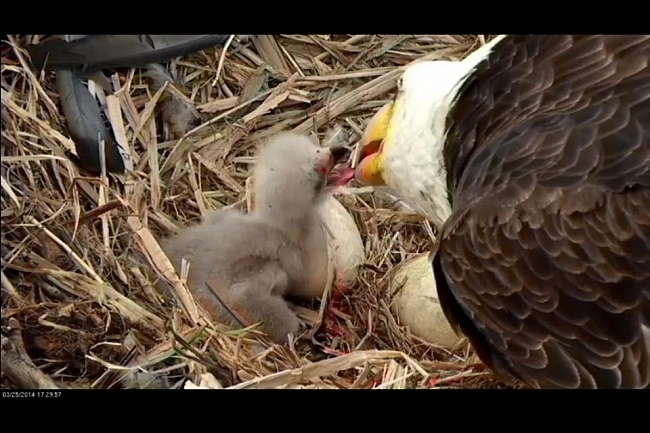
  • First eaglet hatches in Minnesota DNR's webcam nest after no eggs hatched last year
    Bald eagle feeds a newly hatched eaglet in Minnesota
    http://ow.ly/v0IwJ live webcam http://ow.ly/v0IDH
  • Kansas state Senate committee votes to repeal the state's 1975 endangered species law http://ow.ly/uPLJ2
  • Minnesota natural resource staff prepare for 2014's work to prevent spread of zebra mussels, other aquatic invaders http://ow.ly/uW3Sq
  • Minnesota Legislature bills would require official state materials to refer to Asian carp as "invasive carp" instead http://ow.ly/v6VbG
  • Iowa River still has a surprisingly high percentage of its pre-settlement native fish species http://ow.ly/uW9uJ
  • Processing plant in Kentucky is trying the latest method of Asian carp disposal: sending them to China http://ow.ly/uX6Fr
  • Businesses and officials look to 'rebrand' Asian carp as cuisine from the Illinois River http://ow.ly/uZ3YT
  • State fish and wildlife agencies to get almost $1.1 billion in federal funds (between $1 and $50 million per state) to fund conservation, recreation http://ow.ly/uXafy
  • Environmental groups intend to sue EPA over its approval of a new pesticide because of the potential harm to endangered species http://ow.ly/uXb9U
In the Cities -
  • Mississippi River Cities and Towns Initiative mayors push to protect Mississippi River at Washington DC meeting http://ow.ly/v2SOz
  • LaCrosse Mayor Tim Kabat one of 15 Mississippi River mayors speaking out for River communities in Washington D.C.  this week http://ow.ly/v6VRR
  • Roy Buol, mayor of Dubuque, Iowa, discusses reviving Mississippi River economy on Bloomberg Television's "Bottom Line" http://ow.ly/v2TFP (related: Dubuque mayor Roy Buol visits Washington D.C. as co-chair of the Mississippi River Cities and Towns Initiative http://ow.ly/v6WrU)
  • Federally-mandated Springfield, Ohio project to cut raw sewage flowing into local waterways could cost up to $243 million http://ow.ly/uTnfl
  • National spotlight: What smart cities can learn from Memphis http://ow.ly/uWaGh
  • The history of levees in New Orleans http://ow.ly/uWbbg
  • Dubuque, Iowa wins 2014 "Big Muddy Cup" - awarded to top metro area along Mississippi River for new corporate investments http://ow.ly/uZ3of
  • Des Moines proposal to prohibit downtown fishing delayed to allow time to evaluate alternatives http://ow.ly/uZ4fy
  • "Restoring and Reusing Degraded Landscapes" article highlights Minneapolis, Minnesota riverside restoration effort http://ow.ly/v2UaD
In the States-
  • State representative says Illinois Levee Laws will cause major flooding in area if passed http://ow.ly/uW9jD
  • Oklahoma Legislature asks U.S. Geological Survey for new Red River study from headwaters to Mississippi River http://ow.ly/v2UF8
Louisiana Coastal Region-
  • Lego-like coast-protecting technology wins $50,000 Water Challenge in New Orleans http://ow.ly/uX70F
Resource Development -
  • Rep. Collin Peterson (D-MN) hopes Environmental Protection Agency will not reduce U.S. Renewable Fuel Standard as much as proposed http://ow.ly/uTlK0
  • West Virginia residents say mountaintop coal removal is altering ridgelines, ravaging environment and a way of life http://ow.ly/uWKLg
  • Questions linger whether it's wise to turn Mississippi River headwaters region into a pipeline conduit http://ow.ly/v6WbB
Federal Budget -
  • House Republicans in April will consider a budget authored by Rep. Paul Ryan (R-Wis.) http://ow.ly/uQ5hj
  • Rep. Paul Ryan’s budget headed for likely release next week; floor vote by mid-April, but House passage is uncertain http://ow.ly/uZ1fB
  • GOP members of Senate Environment and Public Works Committee accuse EPA of making deep cutting Clean and Drinking Water State Revolving Funds on the expectation that Congress would restore funding http://ow.ly/uZ9Xb
  • House Appropriations Agriculture Subcommittee holds budget hearing on USDA’s research agencies; Testimony here: http://ow.ly/v2NWE
Events - Information on all past and future events listed here can be viewed in the on-line calendar (here as a stand-alone calendar)
  • "Paddle, Float and Explore-Wisconsin’s River Communities" airs on April 5-6 on Discover Wisconsin’s broadcast network http://ow.ly/v0lQc
  • Farm Foundation Forum: Geopolitical Uncertainty in Agriculture and Energy Markets; April 9, 9 AM EDT, National Press Club, Washington DC http://ow.ly/v2QWZ
  • April 11 USGS Capitol Hill Briefing: Trends in Nutrients and Pesticides in the Nation’s Rivers http://ow.ly/uPePb
  • Minnesota River "Blueway" project topic proposed for the agenda at April 15 Minnesota River Watershed Alliance meeting http://ow.ly/v0n9b
  • Save the dates: "Urban Waterfronts 2014," November 7-8, Washington, DC http://ow.ly/uOZMS
e-Newsletters, Publications, Journals, Multimedia -
  • "Lower Mississippi River Dispatch" for March http://ow.ly/uWJvR
  • Montana Watershed Coordination March 27 Watershed News http://ow.ly/v4jEZ
  • Minnesota Pollution Control Agency's "River Connections" for March http://ow.ly/v0mJy
  • Icarus Films announces home video release of the feature documentary "The Great Flood" (Mississippi River 1927); story: http://ow.ly/v0k4Q trailer below:
Other news-
  • Missouri River Basin Lewis and Clark Center needs $50,000 by the end of June to keep the center's doors open http://ow.ly/uWaU6
  • Achieving Energy and Water Security: Scalable Solutions from the Private Sector http://ow.ly/uWqlx
  • Western Illinois University will begin new Ph.D. program in environmental science in fall focusing on large river ecosystems http://ow.ly/uZ33Z
Politics and People-
  • In South Dakota, Rick Weiland officially files as the Democrats' only candidate for this fall's U.S. Senate election http://ow.ly/uYY2k
Last Word -
Wind pushes waves over the sea wall of Lake  Pontchartrain
as Hurricane Isaac makes its way inland in August 2012
"Adaptation is not just about building a higher sea wall.” - Kathleen Mogelgaard, an environmental change and security program consultant at the Woodrow Wilson International Center for Scholars, on March 12 at a Wilson Center panel discussion entitled "Double Dividends: Population Dynamics and Climate Adaptation” (video of panel discussion available at that link).


Monday, March 24, 2014

Capitol Hill This Week - What to Watch For

Below are the U.S. House and Senate activities currently scheduled this week that relate to Mississippi River Basin water resources.   Most but not all of the hearings and meetings for the week will deal with the President's fiscal year 2015 budget proposal for select agencies.  There is also a subcommittee hearing on water quality trading initiatives and a hearing on the interface of the Endangered Species Act with U.S. Forest Service forest management activities. Links are provided to the relevant committee hearing pages, and, where appropriate, to pieces of legislation. Many Congressional proceedings are webcast live, and these should be, as well (follow the appropriate link).  All times are Eastern.

Tuesday
Wednesday

Friday, March 21, 2014

Mississippi River Basin Water Resource Weekly News

~Virtual Newspaper for an Aquatic World~

Next Week in Congress - What to Watch For
The U.S. House and Senate are back in session next week, following a week off.  Most activities currently scheduled next week that relate to Mississippi River Basin water resources will deal with the President's fiscal year 2015 budget proposal for select water-related agencies.  There is also a subcommittee hearing on water quality trading initiatives and a hearing on the interface of the Endangered Species Act with U.S. Forest Service forest management activities. We list all of the presently-scheduled activities here, along with links to the respective hearing web site (to view details and to - usually - be able to watch the proceedings live).

Noteworthy @UpperMiss Twitter Postings for the Week  

Water Quality -
  • LEAD STORY: Federal court grants U.S. EPA a stay from developing numeric standards for water pollution in Mississippi River Basin ow.ly/uJYdF
  • Environmental groups file federal lawsuit against United Bulk for Mississippi River pollution at Louisiana coal export facility http://ow.ly/uKr55 (also see: http://ow.ly/uKsrw)
  • Hearings set on Montana's proposed nutrient surface water pollution standards http://ow.ly/uBm9g
  • EPA Issues Guidance for Cities on Managing Sewer Overflows With Green Infrastructure http://ow.ly/uEYNY
  • EPA publishes final rule changing existing regulations applying to stormwater discharges from construction activities http://ow.ly/uMnDS
  • Oil spills from flooded oil wells into Missouri River in North Dakota http://ow.ly/uFAGx
  • Spill at flooded North Dakota oil well contained before oil could leak into nearby Missouri and Yellowstone rivers ow.ly/uJXpu
  • Phosphorus concentrations have been decreasing since 2003 in parts of  Illinois River basin (Oklahoma) http://ow.ly/uFAM1
  • ExxonMobil says Arkansas oil pipeline spill is cleaned up ow.ly/uK29C
  • Environmental groups plan to sue Kentucky coal ash plant for “unabated” coal ash dumping into the Ohio River ow.ly/uK1XO
  • Long-term strategy to reduce sediment in Minnesota River and south metro Mississippi River open for public comment ow.ly/uK0mP
  • Oil pipeline leaks in Ohio nature preserve near Cincinnati ow.ly/uJYwN (also see: http://ow.ly/uKs1C)
  • 10,000-gallon oil spill at the Oak Glen Nature Preserve in Ohio is now contained and the pipeline has been shut off http://ow.ly/uOFBd
Water Resource Management (Floodplains, Dams, Navigation, Wetlands, Flooding, Supplies, etc.) -
  • LEAD STORY: Key House and Senate Water Resources Development Act differences resolved; a final agreement likely after April 30 ow.ly/uJX5m
  • LEAD STORY: Senate gives final congressional approval to bill that limits most flood 
    Levee Break: 2011 Mississippi River Flooding
    insurance premium increases, rolling back 2012 reform law http://ow.ly/uBlJx
  • Obama will sign discounted flood insurance bill after it sails through the Senate http://ow.ly/uBmKn
  • Across parched US West, Southern Plains, long drought sets off fierce legal, political battles over who controls water http://ow.ly/uEX8A
  • Army Corps of Engineer’s has revived a plan to remove the Lock and Dam No. 6 on the Green River in Kentucky http://ow.ly/uFulo
  • Missouri River flood threat is low for most areas; reservoirs have extra room for runoff http://ow.ly/uFASi
  • Army Corps schedules Missouri River Basin public meetings to provide updates on current River Basin conditions http://ow.ly/uFB1k
Agriculture -
  • Wal-Mart to begin requiring suppliers of crops (such as corn, wheat, soy) to develop fertilizer-optimization plans http://ow.ly/uFv4d
  • Agricultural Act of 2014 (a/k/a "farm bill") calls for mandatory spending on USDA conservation programs to decline by $200 million between 2014-18; details here: http://ow.ly/uMqIU
  • USDA TV Feature: Preserving Prairie Potholes For Wildlife http://ow.ly/uODdt
Latest Drought Monitor Map
(click to expand)
Climate and Weather -
  • National drought update for March 18: Little rain for next two weeks in parts of Kansas, Oklahoma, Texas; dryness expansion in southern Iowa, north Missouri, west Illinois http://ow.ly/uMpgt (also see the "Last Word," below)
  • NOAA Releases 2013 Global Climate Report http://ow.ly/uOAqQ
Biodiversity, Wildlife and Invasives -
  • Property values rise on zebra-mussel infested lakes, study indicates http://ow.ly/uFu2E
  • Oklahoma and industry alliance sue Fish and Wildlife Service over 2011 mega-settlements with environmental groups ow.ly/uJXYH
In the Cities -
  • Resource Rain Chattanooga, Tennessee: Low Impact Development Design Challenge focused on managing stormwater http://ow.ly/uFoZH
  • Wichita Falls pursuing four-step wastewater recycling plan to provide over a third of  city’s current daily water use http://ow.ly/uFr2m (on Wichita River)
  • Hugo, Minnesota asks state Legislature for $3 million in bonding funds to convert stormwater for irrigation use http://ow.ly/uFtLE
  • Proposal would limit fishing along Des Moines River in downtown Des Moines http://ow.ly/uFBmz
In the States-
  • Two West Virginia agencies seek to dismiss lawsuit that would force them to do more to prevent water contamination http://ow.ly/uBk83
Louisiana Coastal Region-
  • Authority timeline: Louisiana energy companies involved in wetlands lawsuit ignored federal, state environmental guidelines http://ow.ly/uBiGc
  • As Louisiana's coast washes away, threatened communities face questions about their identity http://ow.ly/uFt9j
  • Louisiana on track to have more than $2 billion in coastal restoration projects done or underway by 2015 http://ow.ly/uKsSg
  • Louisiana: Study - 'Pipelines Can Rebuild Wetlands More Cheaply Than Diversions' in some cases http://ow.ly/uMrur
  • Louisiana's coastal insects still dying from BP oil spill, researcher says http://ow.ly/uOFea
  • Coastal restoration, and BP oil spill topics at this week's Louisiana State of the Coast conference http://ow.ly/uOFVi
Resource Development -
  • Average U.S. ethanol plant made a profit of $23 million last year, the second most profitable on record ow.ly/uK1Nl
Federal Budget -
  • Secretary of Agriculture Tom Vilsack testifies at House Agriculture Appropriations Subcommittee hearing on budget related matters http://ow.ly/uEWFg
  • National Association of Conservation Districts outlines Congressional appropriations priorities for conservation programs http://ow.ly/uOCGN
Events -  Information on all past and future events listed here can be viewed in the on-line calendar (here as a stand-alone calendar)
  • "Cultivating a Healthy Future: Agriculture’s Role in Improving Health and Wellness" Summit, April 7, 9 AM - 12:45 PM, Washington, DC http://ow.ly/uKY9T
  • 2014 America's Watershed Initiative Summit registration open; September 30- October 2, 2014; Louisville, Kentucky http://ow.ly/uOCgv
e-Newsletters, Publications, Journals, Multimedia  -
Other news-
  • Indiana American Water accepting grant applications for projects to improve, restore, protect  watersheds, surface water, groundwater http://ow.ly/uEZh5
  • USEPA to lose about 540 employees by April through buyouts and "early outs" http://ow.ly/uMsk5
Politics and People-
  • Rep. Vance McAllister (R-LA-5) takes House Agriculture Committee seat; assigned to three subcommittees http://ow.ly/uBvWH and http://ow.ly/uBvKP
  • Republican Tom Hoefling files papers to challenge Iowa GOP Gov. Terry Branstad in the Iowa GOP primary http://ow.ly/uETQe
  • Former Louisville Metro Councilman Hal Heiner expected to formally announce (2015) bid for Kentucky governor on Tuesday http://goo.gl/ZyxwSv
  • Rep. Collin C. Peterson, D-Minn.,  announces that he will seek a 13th term in Minnesota's 7th District http://ow.ly/uFACs
  • Ann Callis wins Democratic nomination in Illinois' 13th District; to face freshman GOP Rep. Rodney Davis in fall ow.ly/uJZPV
  • Businessman Bruce Rauner wins primary; will face Democratic incumbent Illinois Gov. Pat Quinn in this fall's election ow.ly/uJZh9
  • Illinois state Sen. Oberweis (R) wins GOP Senate primary; will face House Majority Whip Dick Durbin (D-IL) in fall ow.ly/uJWmg
  • Former Governor Edwin Edwards announces that he will be running as a Democrat to represent Louisiana’s Sixth Congressional District ow.ly/uHiUJ
Last Word -
Satellite photo of March 18 "haboob"
(click to enlarge)
"Haboob" - Originally an arabic term, "haboob" is a word for a dust storm or sandstorm. A large wall of dust that was up to 1,000 feet high and 200 miles wide blew across Oklahoma, Texas and New Mexico on Tuesday.  For the past six months, precipitation amounts have ranged from four to locally almost a foot below average in the Red River Valley, Oklahoma.  Since the start of the water year (October 2013), a mere 15 to 35 percent of average precipitation has fallen on much of the Texas Panhandle and northeast New Mexico (NOAA March 18 Drought Update).

Friday, March 14, 2014

Mississippi River Basin Water Resource Weekly News

~Virtual Newspaper for an Aquatic World~

January 2014 Freedom Industries, Inc. West Virginia Tank Spill and Its Intersection with Federal Policy
On January 9, 2014, a 46,000-gallon steel tank in a tank farm owned by Freedom Industries, Inc. in
Charleston, West Virginia experienced a leak of up to 10,000 gallons of 4-Methylcyclohexane methanol, containing an estimated 5.6% polyglycol ethers. A significant amount of the chemical was released into the Elk River, approximately one and a half miles upstream from the potable water supply intake of the local water utility. Ultimately, the spill left 300,000 people without water for varying periods of time, while the chemical contamination worked its way downstream, eventually flowing down and being diluted by the Ohio River.  Now that the emergency has been officially declared over, we take a step back from the incident to explore in this article where the incident intersects with existing and emerging Federal policy.

Noteworthy @UpperMiss Twitter Postings for the Week

Water Quality -
  • With Ohio River credit program in place, the country's first major water quality trading program is set to take off http://ow.ly/ur0QS
  • First Interstate Credits for Water Quality Nutrient Trading Sold http://ow.ly/uw6kA
  • Ohio River Basin farmers will get paid to expand conservation practices, reduce nutrient loads under interstate water-quality trading program http://ow.ly/uxCby
  • EPA proceeding with plans to implement a Reagan-era regulation to protect waterways from coal mining ow.ly/ur2o9
  • Wisconsin acreage with agricultural nutrient-management plans in place showing promising water quality results http://ow.ly/umg5u
  • Delta Farm Press - "On-farm runoff numbers in conflict with popular opinion" http://ow.ly/ummHs
  • Ohio Environmental Protection Agency has released its annual Fish Consumption List; Ohio River section: http://ow.ly/uqedJ
  • Projects using perennial bioenergy crops in the Midwest to lessen hypoxia in the Gulf of Mexico http://ow.ly/uqkKy
  • Nutrient concentrations are going down in several major Iowa rivers http://ow.ly/uqnba
  • EPA Inspections Reveal Clean Water Act Violations by Former Dairy Owner near Rock Valley, Iowa http://ow.ly/urlVv
  • Montana DEQ Opens Public Hearing Period for Statewide Numeric Nutrient Standards for State Waters http://ow.ly/usUvS
  • EPA "319 Success Story" - Kentucky: Licking River Watershed Restoration Efforts Improve Water Quality http://ow.ly/uvc0B
  • New York Times: EPA’s Proposed Rules on Water Worry Farmers http://ow.ly/uxBIf
  • Appeals court upholds Kentucky mining permit ruling centering on Army Corps Clean Water Act issue http://ow.ly/uA71t
  • Proposed order in federal court: Kentucky coal firm to pay $660,000 dumping mining debris into Appalachian streams http://ow.ly/uAayF
  • Stakeholders use collaborative adaptive management to address Hinkson Creek, MO pollution-control (stormwater runoff) http://ow.ly/uAaVw
Water Resource Management (Floodplains, Dams, Navigation, Wetlands, Flooding, Supplies, etc.) -
  • Meldahl Dam Hydroelectric Project (Hamilton, Ohio), Ohio River’s largest hydroelectric power plant, nears completion http://ow.ly/umqX8
  • Army Corps: 2014 runoff forecast in Missouri River Basin above Sioux City, Iowa, increases to 121 percent of normal http://ow.ly/uxAPI
  • U.S. Senators ask Army Corps to provide Missouri River flood prevention plan information, update infrastructure status http://ow.ly/uxB9J
  • Flooding swells Montana rivers, washes out roads http://ow.ly/uA6tz
  • Rep. Ron Kind (D-3-WI) pushes to roll back flood insurance premium hikes http://ow.ly/uqmRA
  • Tri-Basin Natural Resources District directors okay next project steps for new Platte and Republican basin streamflow augmentation http://ow.ly/uxGmT
Agriculture -
Projected Outlays under the 2014 Farm Bill
(click to enlarge)
  • USDA's Natural Resources Conservation Service moving "full steam ahead" on implementing new farm bill provisions http://ow.ly/umjZC
  • USDA announces series of meetings to share information with stakeholders about 2014 Farm Bill implementation process http://ow.ly/ulVHP
  • USDA Announces Efforts to Expand Support for Small and Mid-Sized Farmers and Ranchers http://ow.ly/uqZbz
  • USDA's ERS presents highlights and some economic implications of new farm bill programs and provisions http://ow.ly/usV5K  
  • The Open Agriculture Data Alliance launches effort to standardize, secure farm data http://ow.ly/uvblc
  • Iowa State University: “Iowa Farmland Value Survey Shows Historic High Statewide Average” ow.ly/usWTJ
  • For young people, securing adequate land to begin or expand farming operations is a major challenge http://ow.ly/uvaKQ
  • Photographs, infographics and interviews paint big picture view of "prairie strips" in new Iowa State University publication http://ow.ly/uxG5i
March 11 Drought Monitor Map
(click to enlarge)
Climate and Weather -
  • National drought summary: slight dryness expansion in Iowa, southern plains dryness impacts increase http://ow.ly/q3w3u
Biodiversity, Wildlife and Invasives -
  • USGS Asian carp eggs identified in samples collected from Upper Mississippi River as far north as Lynxville, Wisc. http://ow.ly/uv9PH (USGS news release) See related story:  http://ow.ly/uv9Vc
  • White pelicans making annual spring migration north stop on southern Illinois lakes http://ow.ly/ummdp
  • Asian Carp invade the rivers of eastern South Dakota http://ow.ly/uqljS
  • Wall Street Journal: Sage Grouse Rebellion: Will Obama use two small birds to limit oil drilling? (also Lesser Prairie Chicken) http://ow.ly/usW8g
  • Mississippi River News & Insights: The Scoop on Emerald Ash Borer http://ow.ly/uA96i
In the Cities -
  • Robbinsdale, MN working to clean up Crystal Lake by reducing phosphorus loading into the lake http://ow.ly/uvL4T
  • Repairs and improvements on Council Bluffs, Iowa’s river and creek levees could cost the city $50 million http://ow.ly/uw6wZ
In the States-
  • Control of St. Croix River development spurs Minnesota Legislature debate http://ow.ly/uxFOa
  • Minnesota's Pollution Control Agency postpones decision on surface water sulfate pollution, saying it needs more time http://ow.ly/uA7rV
  • Arkansas Natural Resources Commission hosting meetings to hear comments, concerns, and suggestions on new State Water Plan http://ow.ly/uArW3
Louisiana Coastal Region-
  • Lawsuit against oil and gas companies for damage to the coast has become a symbol of Louisiana’s environmental future http://ow.ly/uvK1w
  • Louisiana state, local politicians split on oil levee board wetland and land loss lawsuit against big oil companies http://ow.ly/uqmdt
Resource Development -
  • The Christian Science Monitor: In the Midwest, a storm brews over "frac sand" mining http://ow.ly/uqfdG
  • Fracking drives up demand for sand, creates headaches in Midwest mining areas http://ow.ly/uw4Ks
  • Texas coast, Louisiana, southern Arkansas leading areas in country for commercial open-pond algae farms (biofuel stock) ow.ly/ut5xv
  • Bans on fracking and mountaintop mining through Tennessee legislation appear dead for the year http://ow.ly/uA9Qa
Federal Budget -
  • Obama 2015 budget proposal includes $176 million for western Pennsylvania waterways, reservoirs and dams http://ow.ly/uw6Ma
  • House Ag Committee adopts fiscal year 2015 budget recommendations for agencies and programs under its jurisdiction http://ow.ly/uAbtM
Events -  Information on all past and future events listed here can be viewed in the on-line calendar (here as a stand-alone calendar)
  • Webinar: Stewarding America’s Water Bodies: Policy Innovations in Non-point Source Pollution; March 21, 2 PM ET http://ow.ly/uxDvm
  • Ohio River Valley Woodland and Wildlife Workshop; General Butler State Park in Carrollton, KY; March 22  http://ow.ly/uqkcE
  • River Futures: Student Visions of the Mississippi-Twin Cities, MN area students discuss their River visions; April 16, 4 PM  http://ow.ly/uwlsn
  • “The Irony of Carp”  event will ask you to reconsider how we may live with the Mississippi in the future; April 21, 7 PM, Minneapolis, MN http://ow.ly/uwmrl
e-Newsletters, Publications, Journals, Multimedia  -
Other news-
  • Commercial rafting on the Arkansas River in Colorado realized an economic impact of more than $55 million in 2013 http://ow.ly/ummSf
  • U.S. Geological Survey releases a “harmonized” set of maps of watersheds that cross the U.S.-Canada border http://ow.ly/upVA1
  • Sen. Al Franken’s annual hotdish
    off, on Wednesday
  • Supreme Court "rails-to-trails" ruling against U.S. Forest Service is a broad victory for property rights activists http://ow.ly/ur0f6
Politics and People-
  • Rep. Tim Walz (D-MN) Cooks Up Second Consecutive Minnesota Hotdish Win http://ow.ly/uA7UK
  • Businesswoman and scientist Sharon Sund will take another shot at running against GOP Rep. Erik Paulsen (MN 3rd U.S. House district) http://ow.ly/uxCPX

Last Word -
"Climate change is real. It’s here."  Senate Majority Leader Harry Reid, Monday evening on the Senate floor, kicking off a nearly 15-hour climate-change "talkathon" by about 30 Senate Democrats.  Reid  added that it was time to stop acting as if those who ignore climate change "have a valid point of view."


Wednesday, March 12, 2014

January 2014 Freedom Industries, Inc. West Virginia Tank Spill and Its Intersection with Federal Policy

Background
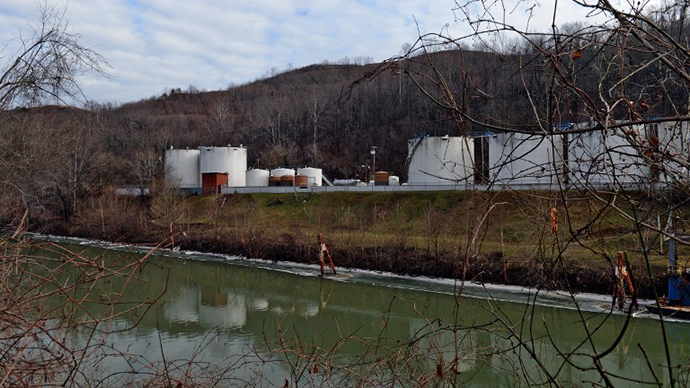
Freedom Industries, Inc. on the banks of the Elk River
in Charleston, West Virginia
On January 9, 2014, a 46,000-gallon steel tank in a tank farm owned by Freedom Industries, Inc. in Charleston, West Virginia experienced a leak of up to 10,000 gallons of 4-Methylcyclohexane methanol (MCHM) with an estimated 5.6% polyglycol ethers (PPH). A significant amount of the chemical was released into the Elk River, a tributary to the Kanawha River.  The Freedom Industries bulk storage distribution facility is located alongside the Elk River and approximately one and a half miles upstream from the potable water supply intake of the local water utility, West Virginia American Water (see “Summary of Subject Matter” prepared for the February 10, 2014 Field Hearing on “The Charleston, West Virginia Chemical Spill,” U.S. House Committee on Transportation and Infrastructure; Charleston, West Virginia).  Ultimately, the spill left 300,000 people without water for varying periods of time, while the chemical contamination worked its way downstream, eventually flowing down and being diluted by the Ohio River. 

The post-spill agency coordination and response, by most accounts, went relatively smoothly. The working relationships among the various responding local, state and federal agencies (in particular, between the West Virginia Department of Environmental Protection and the U.S. Environmental Protection Agency) was reported to have been one of "mutual respect and cooperation." Decisions were made cooperatively, allowing the state and federal governments to speak with one voice to the public, as well as the responsible party (Department of Environmental Protection Testimony at February 10, House Transportation and Infrastructure Committee Field Hearing).  So, rather than post-incident activities and policy, the focus of official investigations into the incident has been on pre-spill conditions and related policy.

U.S. Chemical Safety Board Involvement in the River Valley
The U.S. Chemical Safety Board (CSB) is an independent federal agency charged with investigating industrial chemical accidents. Headquartered in Washington, DC, the agency's board members are appointed by the President and confirmed by the Senate.

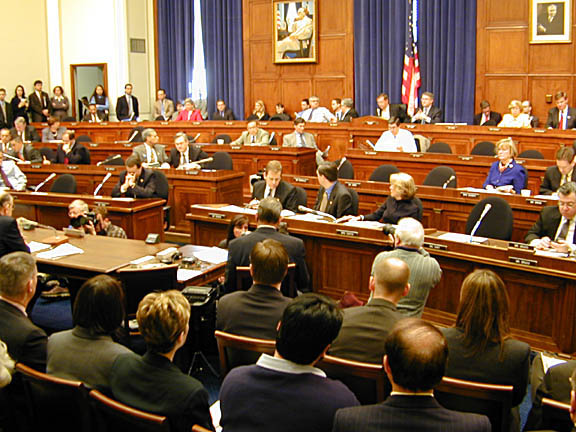
U.S. House Transportation and Infrastructure
Committee February 10 Field Hearing
CSB’s preliminary research into the West Virginia incident indicates that it was an incomplete pre-spill regulatory framework that ultimately led to the Freedom Industries, January 9 release; that there was a “gap in the regulatory framework” that failed to adequately cover not only that particular Freedom Industries' above ground storage tank, but also many more like it around the country.  Specifically, while EPA’s Spill Prevention Control and Counter Measure (SPCC) Program rule outlines requirements for prevention and preparedness of oil discharges, such regulations do not apply to tanks containing “non hazardous substances” like those found at Freedom Industries. Under existing state and federal laws, those non-hazardous substance-containing tanks, including the tank involved in the January 9 release, were not regulated by the state or federal government. While there are laws prohibiting polluting to waterways with a spill, there are not really any clear, mandatory standards for how one should site, design, maintain, and inspect non petroleum tanks at a storage facility. (CSB Testimony at February 10, House Transportation and Infrastructure Committee Field Hearing).

It is noteworthy that CSB has had a history of investigating accidents in West Virginia's Kanawha Valley. In 2008 a waste tank containing the toxic pesticide methomyl violently exploded at the Bayer CropScience chemical plant in Institute, West Virginia. In 2010, three incidents occurred within a thirty-three hour period at the DuPont Belle, West Virginia facility.  Following CSB’s investigation into the Bayer and DuPont incidents, the CSB recommended that Kanawha County, working with the state, establish a hazardous chemical release prevention program to enhance safety and optimize emergency response.  CSB cited as an example of such a program, a successful one developed in Contra Costa County, California, which has an industrial chemical base similar in density to that in Kanawha County.  Contra Costa Health Services’ Hazardous Materials program is designed to respond to emergencies and monitor hazardous materials within Contra Costa County, California (See here for more information on that program). Kanawha County never developed the recommended prevention program.

Related Federal Policy Initiatives
Executive Order 13650
Five months prior to the West Virginia spill, in August 2013, the President issued Executive Order 13650 ("Improving Chemical Facility Safety and Security"), the purpose of which is to put into place “additional measures can be taken by executive departments and agencies (agencies) with regulatory authority to further improve chemical facility safety and security in coordination with owners and operators.”  The Executive Order, in part, established a Chemical Facility Safety and Security Working Group to undertake a comprehensive review of Federal chemical safety and security programs and develop recommendations for improving these programs (The Working Group is chaired by the Administrator of the Environmental Protection Agency).  The Working Group agencies have been holding listening sessions and have formed workgroups to implement the Executive Order directives, which include:
  •        Improving operational coordination with state, local, and tribal partners
  •        Enhancing Federal coordination regarding chemical facility safety and security
  •        Enhancing information collection by and sharing across agencies
  •        Modernizing key policies, regulations, and standards
  •        Identifying and sharing successes to date and best practices
Chemical Safety and Drinking Water Protection Act
In the wake of the West Virginia incident, Senators Joe Manchin (D-WV), John D. Rockefeller (D-WV) and Barbara Boxer (D-CA) introduced legislation aimed at safeguarding water supplies from chemical releases such as the one that occurred in Charleston, West Virginia. The bill (S. 1961 - the "Chemical Safety and Drinking Water Protection Act of 2014") would amend the Safe Drinking Water Act to require state regulation of above-ground storage facilities near drinking water supplies and would set minimum safety standards, as well as increase information sharing on substances held at such facilities.  Related to the spill and to the introduction of S. 1961, the U.S. Senate Environment and Public Works Committee held a March 6 hearing focused on efforts to improve the safety and security of chemical facilities across the country.  S. 1961 is due to be marked up in committee soon, although Republicans have reportedly indicated that they would like to see some changes to the language before it comes up for a vote.

The CSB recommends that any effort at legislative reform, such as S. 1961, ideally incorporate the basic framework of accident prevention, known as the hierarchy of controls, which is an effectiveness ranking of techniques used to control hazards and the risk they represent. The further up the hierarchy, the more effective the risk reduction achieved. The top-most hierarchy level involves what is called inherent safety, an industry-developed concept that focuses on safety in design (i.e., tank siting).  Down the hierarchy are engineering elements that, while they do not eliminate the risk of an accident, make it far less likely (i.e., double-walled tanks, leak detection systems, secondary containment).  Near the bottom of the hierarchy are measures such as inspections for potential failure mechanisms (i.e., corrosion, etc.).  These are necessary to any incident prevention system, but are among the least effective of safeguards, and cannot be counted on alone to prevent an incident.  (CSB Testimony at February 10, House Transportation and Infrastructure Committee Field Hearing).