Thursday, May 15, 2014

Water Resources Bill Details Trickle Out - UPDATED

PLEASE NOTE: The Conference Report has now been released, and updated information on the WRRDA bill can be found here.  

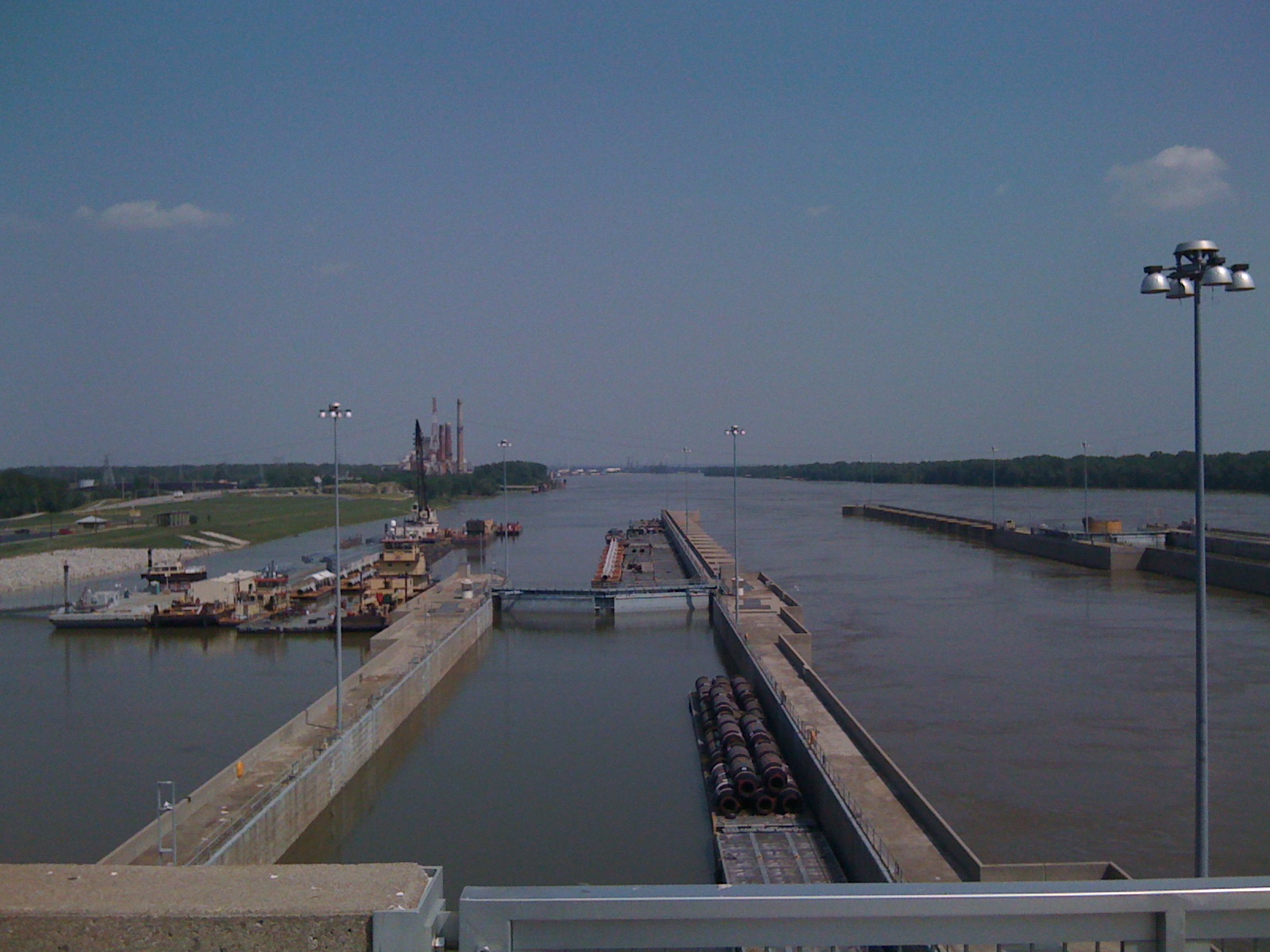
As has been widely reported, a  bicameral, bipartisan deal was reached last week to send a conference committee report for the long-delayed national water resources bill (known as the Water Resources Reform and Development Act (WRRDA)) to both congressional chambers for consideration in the next several weeks. WRRDA (historically known as the Water Resources Development Act - or WRDA) is a massive public works bill that authorizes flood control, navigation, and water resource projects, maintenance and studies by the U.S. Army Corps of Engineers. A House-Senate conference committee has been negotiating to resolve the differences between a House WRRDA bill passed by that chamber in October 2013, and a companion Water Resources Development Act (S. 601) bill passed by the Senate last May.

It now looks as though the WRRDA conference report will be released next week after members of the conference committee agree to the compromise language (the House is recessed this week). Should the conferee approval be relatively quick and bipartisan, as expected by the conference committee leaders, votes in both chambers may follow in relatively quick succession.

Details of the bill are largely unknown outside of the conference committee; however, statements by some of the committee members have shed light on what is and is not contained in the compromise measure. Based on those statements, the legislation:
  • Expedites the process for reviewing the feasibility of water infrastructure projects (feasibility studies would need to be completed in no more than three years and at a cost not greater than $3 million);
  • Includes a provision to help limit Asian carp movement into Minnesota’s waterways upstream of Minneapolis by closing the Upper St. Anthony Falls Lock on the Mississippi River within one year;
  • Allows the Army Corps of Engineers to make a decision on levee vegetation based on local circumstances;
  • Authorizes permanent flood protection in the Fargo-Moorhead region (authorizing permanent flood protection in the Red River Valley); 
  • Bars the U.S. Army Corps of Engineers from charging residents and businesses for Missouri River reservoir water from Lake Sakakawea for a period of ten years;
  • Would make changes to the Harbor Maintenance Trust Fund (HMTF), so that relatively more money in the fund is used for port and harbor maintenance.  In recent years, nearly half of the HMFT has been used by congressional appropriators each year to address general fund needs rather than being used for harbor maintenance (although in the compromise bill that baseline would apparently be approximately 65 percent). The bill would increase the amount of the HMTF that is spent on harbor maintenance by two percent a year through 2020, so that by that year 80 percent of the Trust Fund would be spent on harbor maintenance;
  • Prioritizes funding for high-and medium-use ports, and increase the Federal cost-share threshold for Army Corps of Engineers operation and management responsibility for navigation channels from 45-foot to 50-foot depths;
  • Authorizes construction of and future "levee lifts" for the Morganza to the Gulf Hurricane Protection Project (a flood protection system for Terrebonne Parish and Lafourche Parish, Louisiana);
  • Authorizes $1.07 billion for the Mississippi Coastal Improvements Program, which would establish a system for hurricane and storm damage risk reduction and restoration measures in coastal Mississippi;
  • Allows a non-federal interest to receive bankable credit if it carries out operation and maintenance responsibilities for a federal navigation project.  That credit could then be applied toward future construction costs associated with related projects;
  • Authorizes coastal and ecosystem restoration through the construction of six Louisiana Coastal Area projects;
  • Would not create a National Endowment for the Oceans, an authorization proposed in the Senate version of the bill;
  • Would not include an amendment proposed Rep. Bill Flores (R-Texas) that Democrats argue would have effectively gutted the authority of the Obama Administration’s National Ocean Policy; and
  • Authorizes a new Army Corps of Engineers program that would help improve ocean and coastal ecosystem resiliency by funding projects such as those securing beaches against erosion, and protecting estuaries that might mitigate against the effects of storm surges.

Monday, May 12, 2014

Capitol Hill This Week - What to Watch For

Russell Senate Office Building
Washington, DC
Below are the congressional activities currently scheduled for the week that relate to Mississippi River Basin water resources.  The House is officially recessed this week, although one House committee will hold an oversight hearing in Arkansas focusing on Fish and Wildlife Service plans to create critical habitat for two river mussels.

The House Transportation and Infrastructure Committee hearing scheduled for last Thursday on the Obama Administration's proposal to clarify Clean Water Act jurisdiction was postponed following the death of former committee Chairman Jim Oberstar of Minnesota. Committee leaders are now planning to reschedule the hearing for sometime in early June.

Links are provided to the relevant committee pages. Many Congressional proceedings are webcast live, and these should be, as well (follow the appropriate link).  All times are Eastern except for the Arkansas field hearing time.  This page will be updated as needed.

Tuesday
Wednesday

Friday, May 9, 2014

Mississippi River Basin Water Resource Weekly News

~Virtual Newspaper for an Aquatic World~


Climate Assessment Report Findings Have Implications for Mississippi River Basin
Tuesday saw the release of a National Climate Assessment ("NCA") report (the third since 2000) by a 44-member advisory committee established by the U.S. Department of Commerce to integrate federal research on environmental change and its implications for society. The national implications of climate change on the environment, human health and the economy that were highlighted in the NCA report have received widespread media coverage (some included, below, under the "Climate and Weather" heading).  We have compiled and summarized the Assessment's climate change implications for the three main U.S. regions that make up the Mississippi River Basin: the Midwest, Southeast (focusing on Louisiana) and the Great Plains. You can find that review here.


This Week and Next
Here are the Mississippi River Basin-related news highlights from the past seven days or so, in our weekly "What We Learned This Week" segment. Next week, the U.S. House will be recessed, but the Senate will be in session in Washington, DC, and there are a few hearings scheduled that relate to the River Basin. Here is a link to those Senate activities currently scheduled for the week.

Noteworthy @UpperMiss Twitter Postings for the Week  

Water Quality -
  • CEO and general manager of the Des Moines Water Works: Ag regulation would improve water quality http://ow.ly/wudYc
  • May 13 USEPA Twitter Chat: Waters of the U.S. Proposed Rule; 1-2 PM EDT http://ow.ly/wy4up
  • EPA's release of waters of the U.S. language spurs an opposition campaign from the American Farm Bureau Federation http://ow.ly/wtYBb
  • Members of Western Congressional Caucus call on EPA to refrain from moving forward with its controversial "Waters of the U.S." rule http://ow.ly/wERY5
  • West Virginia Gov. Tomblin announces upcoming review of January 8 Elk River spill response http://ow.ly/wx9HG
  • Senate Environment and Public Works Chairwoman Boxer vows to block House legislation to limit USEPA Clean Water Act veto power http://ow.ly/wzEZa
  • Minnesota Pollution Control Agency monitoring crews begin seventh of a ten-year effort to assess condition of state waters http://ow.ly/wArWT
Water Resource Management (Floodplains, Dams, Navigation, Wetlands, Flooding, Supplies, etc.) -
  • LEAD STORY: Bipartisan agreement reached on the Water Resources Reform and Development Act conference report http://ow.ly/wEQEG
  • LEAD STORY: House and Senate negotiators reach agreement on an $8.2 billion bill to boost U.S. ports and waterways http://ow.ly/wERw4
  • Updated New Orleans levee system could knock down a Katrina-like storm surge, but adequacy is being questioned http://ow.ly/wpqu6
  • 80-year-old Lockport Lock and Dam (Illinois River) in last phases of $148.7 million overhaul by Army Corps of Engineers http://ow.ly/wuejD
  • The Mississippi River rose above the La Crosse, Wisconsin flood stage on Sunday http://ow.ly/wxdr1 and in Dubuque, Iowa later in week http://ow.ly/wEVLw
  • Montana Farm Bureau is taking a "serious look" at what is being proposed in the 2015 state water plan http://ow.ly/wxk7q
  • Funds needed to repair Mississippi River levee could be released soon under legislation approved by Illinois House http://ow.ly/wEWJq
  • Army Corps of Engineers’ Rock Island District Engineer: US infrastructure is “degrading and underperforming” http://ow.ly/wEX47
  • Mississippi River's lock and dam system headlined this year's Tri-State Development summit (Hannibal-LaGrange University, MO) http://ow.ly/wEXwD
Agriculture -

  • Agriculture Secretary Tom Vilsack announces progress through the first 90 days of implementing  2014 Farm Bill http://ow.ly/wArz1
  • Senate Agriculture Committee held a hearing Wednesday to examine USDA’s ongoing implementation of the 2014 Farm Bill http://ow.ly/wCiGL
  • USDA Economic Research Service analysis: "2014 Farm Act Continues Most Previous Trends In Conservation" http://ow.ly/wwRSe
  • USDA twice-per-decade census unlocks new agricultural insights http://ow.ly/wzxOk
  • 2012 Census of Agriculture: 3.2 million farmers operating 2.1 million farms on 914.5 million acres of farmland across U.S. http://ow.ly/wpZ5j
  • USDA farm census: Farmers increasingly choose renewable energy and conservation options http://ow.ly/wu2T2
  • National Geographic: in long run small-scale farmers in developing world will ensure secure global food supply ow.ly/wpjOc
  • Erosion carries tons of Iowa topsoil from its farmland each year and potentially cuts $1 billion in yield along with it http://ow.ly/wu2eD
  • Ducks Unlimited and USA Rice Federation study reports that  U.S. rice production is worth $3.5B to duck conservation http://ow.ly/wCnkK
Climate and Weather -
  • LEAD STORY: U.S. drought update: dryness returns "in earnest" to Missouri, Iowa, eastern Plains; large expansion in Kansas; "story is even bleaker in the southern Plains" http://ow.ly/wmTdv
  • LEAD STORY: New White House report concludes that human-generated climate change is having dramatic effects on every part of U.S. http://ow.ly/wx6es (Report web page here: http://ncadac.globalchange.gov/)
  • Look for more extremes: searing heat, late-spring freezes, floods and droughts across Midwestern U.S. region that includes Ohio, Michigan, Indiana, Illinois, Wisconsin, Minnesota, Iowa and Missouri http://ow.ly/wCjNS
  • National climate change report says effects on Louisiana will be significant, costly http://ow.ly/wCklK and http://ow.ly/wCkG7
  • Climate report: Kentucky and Indiana can expect more heat, bigger storms, poorer air, water quality because of climate change http://ow.ly/wCl1n
  • USDA climate official on Third National Climate Assessment: climate change altering agriculture and forestry systems http://ow.ly/wxZJ7
  • USGS launches Internet tool to track impact of climate change on watersheds (updated National Climate Change Viewer) http://ow.ly/wEV3r
  • Climate change report's Midwest projections include notable changes to weather patterns, affecting agriculture, trade http://ow.ly/wzzdr 
    Drought conditions, heat and wind have combined to
    generate Plains dust storms in May
  • Soil conservation practices will be more critical as weather volatility increases with higher temperatures, rising CO2 http://ow.ly/wzzRZ
  • WSJ: Climate Change Harming Economy, White House Report Says Urgent Action Needed; Details Effects in Every State http://ow.ly/wxrtK
  • Wichita, Kansas records its earliest (May 4) 100-degree day in history http://ow.ly/wv3OP
  • Extreme heat coupled with exceptionally dry conditions set temperature records, ignite wildfires in Southern Plains http://ow.ly/wxaqm
  • Esri Disaster Response Program Severe Weather interactive map http://ow.ly/wpwLR (to change the search terms, go to the Media Layers menu)
  • Bloomberg BNA Insights:  "A Role for Reasonableness and Physical Solution in Water Law in an Era of Climate Change" http://ow.ly/wxmOH (PDF file)
Biodiversity, Wildlife and Invasives -
  • LEAD STORY: Army Corps of Engineers posts summary of Mississippi River Interbasin Study (GLMRIS) Report public comments submitted http://ow.ly/wvoCI (article below)
  • Army Corps finds widely diverging opinions on how to deal with invasive species in Great Lakes and Mississippi River basins http://ow.ly/wEUGz
  • In Eastern Montana, confluence of Pallid Sturgeon water needs and 105 year-old federal promises to farmers raises concerns http://ow.ly/wxkK4
  • USDA/DOI: Those implementing Conservation Reserve Program practices to protect, restore lesser prairie-chicken will not be subject to additional Endangered Species Act regulations http://ow.ly/wpDEN
  • Fish and Wildlife Service finalizes threatened species protections for Kentucky glade cress (flower); designates 2,053 acres in state as critical habitat http://ow.ly/wzCec
  • Fish and Wildlife Service designates about 1,110 acres of critical habitat for Nebraska's Salt Creek tiger beetle http://ow.ly/wzCL2
  • Site in Northeastern Iowa along Mississippi River will become state's first globally important bird area http://ow.ly/wueWy
  • Battle to protect Minnesota’s lakes and rivers from invasive species shifting to boat design http://ow.ly/wzxpI
  • Fishing tournament to reduce Asian carp in the Illinois River scheduled by Illinois Department of Natural Resources http://ow.ly/wzFPn
  • Minnesota wolves edge southeastward along the Mississippi River into Iowa http://ow.ly/wzFuP 
In the Cities -
  • Mississippi River Cities and Towns Initiative Moves Headquarters to St. Louis, Missouri http://ow.ly/wuUC2
  • Some of Mississippi River's mayors have plan to address River issues http://t.co/A0CX5YvVpr  (h/t @_MRNetwork)
  • Des Moines school officials want to build multi-use stadium on environmentally troubled site on bank of Raccoon River http://ow.ly/wuawE
In the States-
  • Louisiana Senate passes legislation to strip levee authority of ability to file suit enforcing laws governing coastal wetlands http://ow.ly/wCsn2
  • Local groups criticize West Virginia for approving strip-mining permit located near Kanawha State Forest http://ow.ly/wu9Fb
  • Wisconsin state Senator plans to introduce bill requiring phase-out of microbeads in some personal care products http://ow.ly/wu12Z
Louisiana Coastal Region-
  • Louisiana oyster industry representatives launch new campaign to fight sediment diversions from the Mississippi http://ow.ly/wuff0
  • Lincoln Institute of Land Policy releases "Lessons from Sandy: Federal Policies to Build Climate-Resilient Coastal Regions" http://ow.ly/wxGLf (Report PDF here http://ow.ly/wxGZH)
  • White paper co-authored by the Environmental Law Institute and the Tulane Institute on Water Resources Law and Policy: "Funding Deepwater Horizon Restoration & Recovery: How Much, Going Where, For What?" http://ow.ly/wEPxL
Forestry -
  • Habitat improvement funding to benefit National Forest System lands available through Missouri River Resource Advisory Committee http://ow.ly/wxjwb
  • Nearly 50 environmental groups oppose funding for farm bill's streamlined logging of forests threatened by insects and disease http://ow.ly/wzEdk
Resource Development -
  • Livestock, environmental, small-engine sector ethanol opponents want Congress to reform or repeal EPA renewable fuel standard http://ow.ly/wCpmx
  • Kansas has vast untapped hydropower potential, Department of Energy study says http://ow.ly/wueEa
Federal Budget -
  • The Atlantic: how states compare in terms of their reliance on federal funding http://ow.ly/wETGA
  • Earmark debate returns to Congress: Opponents insist that earmarks could make comeback, despite voter unpopularity http://ow.ly/wCf4i
  • Overview of the Federal fiscal year 2015 appropriations season from Taxpayers for Common Sense http://ow.ly/wtZTw
Events -  Information on all past and future events listed here can be viewed in the on-line calendar (here as a stand-alone calendar)
  • St. Croix River Association lists details for upcoming River Basin paddling experiences http://ow.ly/wxzJh
  • May 10 hike near Le Sueur, Minnesota will explore floodplain forest along the Minnesota River http://ow.ly/wxdYy
  • French Perspectives on Coastline Protection and Natural Disaster Prevention, Tulane University Law School, Weinmann Hall Room 151, May 14, 9 AM–12:30 PM; more information:  cbr@tulane.edu
  • Webcast on living shorelines – erosion control practices to protect natural shoreline structure, function; May 14, 1 PM EDT http://ow.ly/wq1OS
  • Registration for Spring 2014 Hypoxia Task Force Public Meeting open;  May 21, 8:30-5:45 pm, Little Rock, AR and webcast http://ow.ly/wwONE
  • "Rivergator Exploratory Expedition" - Middle Mississippi River float from St. Louis to Caruthersville; May 26-June 8 http://ow.ly/wpGuC
  • Wisconsin’s Annual Invasive Species Awareness month to be highlighted by June 10 Invasive Species Education Summit http://ow.ly/wCg6j (month's complete activity calendar: http://ow.ly/wCgrc)
  • Fishers and Farmers Partnership Meeting - Bloomington, IL, July 23-24; contact Heidi_Keuler@fws.gov for more information http://ow.ly/wvrRA
  • The third annual Pedal the Plains Bicycle Tour will shadow the South Platte River, featuring the Pawnee National Grasslands and Jackson Reservoir; Sept. 19-21 http://ow.ly/wxhaG
e-Newsletters, Publications, Journals, Multimedia  -
  • May 6 TUWaterWays -water news from the Tulane Institute on Water Resources Law and Policy http://ow.ly/wzy4U
  • Green Lands Blue Waters bi-weekly update, highlighting Mississippi River Basin Continuous Living Cover on agricultural land http://ow.ly/wAqtL
  • The spring edition of the Army Corps' "Our Mississippi" newsletter - http://ow.ly/wEPbM
  • Minnesota Pollution Control Agency's Waterfront Bulletin for May 2014 http://ow.ly/wEPLh
  • America's Waterway "River Currents" Newsletter - May 2014 http://ow.ly/wET07
Other news-
  • Scientists consider declaring 1950 as beginning of Anthropocene geological epoch, when humans began to permanently alter Earth http://ow.ly/wwZCV
  • EPA releases EnviroAtlas Ecosystem Mapping Tool to highlight implications of planning, policy decisions on ecosystems http://ow.ly/wAr8v
  • Prairie Rivers Network named National Wildlife Federation’s Affiliate of the Year for successful conservation efforts http://ow.ly/wEOKT
Politics and People-
  • POLITICO: It’s 8 a.m. on a Friday. Do you know where your senators are?  http://ow.ly/wpnAo
  • Republican state Rep. Lenar Whitney is mulling a bid for Louisiana’s 6th District U.S. House seat http://ow.ly/wzDE2
  • Kentucky Attorney General Jack Conway announced Tuesday that he will run for governor in 2015 http://ow.ly/wzOFF
  • Iowa Republican Chuck Grassley has only missed 0.3 percent of votes over a 33-year U.S. Senate tenure http://ow.ly/wCfD7
  • Obama announces nominees for long-vacant NOAA chief scientist position and USDA undersecretary for rural development http://ow.ly/wEVsT
Last Word - 
"Where it's going to go is anybody's guess." - Dr Jan Zalasiewicz, chair of the Anthropocene Working Group of the International Commission on Stratigraphy speaking of what Zalasiewicz called "this whole Earth-system change" thing that's been happening since 1950 (see associated story, above, under "Other News")


What We Learned This Week - Hurry Up and Wait

Some states giveth; some states taketh away
Scientists seem to be reaching consensus on declaring 1950 as the year when  humans began to permanently alter the basic makeup of Earth, launching the Anthropocene geological epoch. On a related matter, human-induced climate change is producing dramatic effects in every part of U.S., including the Mississippi River Basin.  However, the American public routinely ranks dealing with global warming low on its list of priorities for the President and Congress to pursue. The drought conditions in the Southern Plains are looking more and more bleak.  After six months of negotiating, House and Senate negotiators have reached agreement on an $8.2 billion water resources bill to fund construction, research and environmental work in U.S. ports and waterways.  The U.S. Environmental Protection Agency's proposed and controversial "Waters of the U.S." rule continues to stir the political waters of the U.S. The U.S. Department of Agriculture (USDA) has made progress during its first 90 days of implementing the 2014 Farm Bill.  USDA's twice-per-decade agricultural census was released, revealing some new and some not-quite-so-new agricultural insights. Parts of Iowa are losing up to twelve times more topsoil into its streams and rivers than the government typically estimates.  After analyzing public comments, the Army Corps of Engineers concluded that there are widely diverging opinions on how to deal with invasive species moving between the Great Lakes and Mississippi River basins, and that it will wait for some direction from Congress and the White House on the topic.  When it comes to federal funding, some states are "givers" (i.e., Illinois and Minnesota) and some states are "takers" (i.e., Mississippi, Louisiana and Tennessee).   And last but not least, in China, the world's biggest polluter, about 64 percent of people identify themselves as environmentalists, more than double the number in Europe and the United States, where an ethos of "cosmopolitan environmentalism" predominates; a movement frequently supported by liberal, highly-educated and politically active people.

Thursday, May 8, 2014

Climate Assessment Report Implications for the Mississippi River Basin

Tuesday saw the release of a National Climate Assessment ("NCA") report (the third since 2000) by a 44-member advisory committee established by the U.S. Department of Commerce to integrate federal research on environmental change and its implications for society.  The national implications of climate change on the environment, human health and the economy that were highlighted in the NCA report have received widespread media coverage.  In this article, we review the implications of climate change for the three main U.S. regions that make up the Mississippi River Basin: the Midwest, Southeast and Great Plains.

Midwest
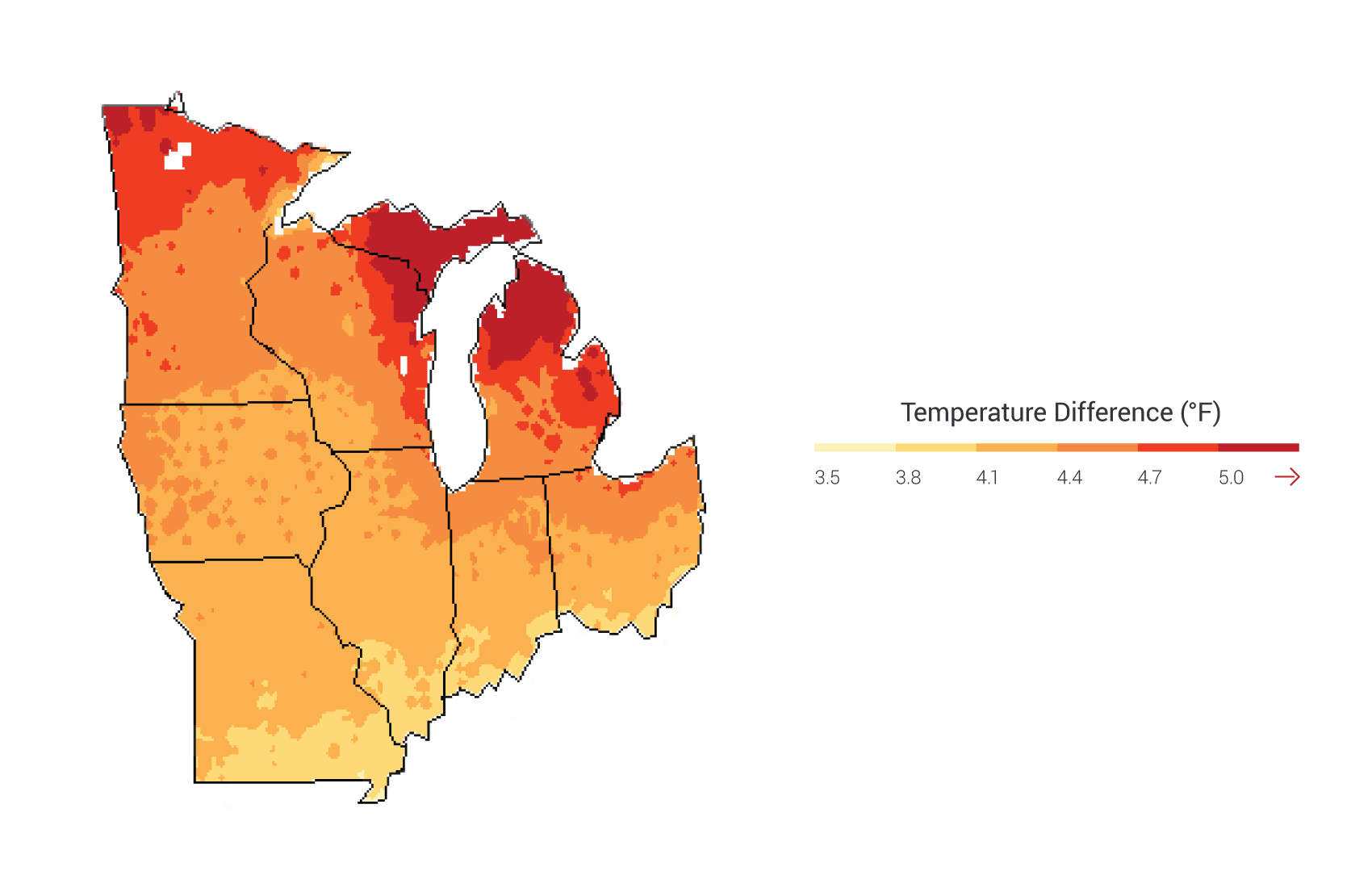
In general, the report finds, climate change will tend to amplify existing climate-related risks to people, ecosystems, and infrastructure in the Midwest, which should see more heat waves, higher humidity, and declining air and water quality as a result of climate change.  The report  notes that the eight Midwestern states have already felt the effects of a changing climate pattern, exhibiting increased average temperatures in recent years.  Annual temperatures in the Midwest have generally been well above the 1901-1960 average since the late 1990s, with the decade of the 2000s being the warmest on record. 

A regional summary projects that "direct effects of increased heat stress, flooding, drought, and late spring freezes on natural and managed ecosystems may be multiplied by changes in pests and disease prevalence, increased competition from non-native or opportunistic native species, ecosystem disturbances, land-use change, landscape fragmentation, atmospheric pollutants, and economic shocks such as crop failures or reduced yields due to extreme weather events."

Projected average air temperature changes - Midwest
The region, an area that provides up to 65 percent of the country's corn and soybean production, may at first see increasing crop yields, as a result of rising atmospheric carbon dioxide levels and longer growing seasons. However, eventually, climate change's negative impacts such as extreme weather events, should outweigh the positives, according to Donald Wuebbles, a professor at the University of Illinois and member of the NCA advisory committee.  Wuebbles notes that "increased yields will be offset progressively by extreme weather events and precipitation events, and insect and disease threats," and adds that "though adaptation options can reduce some of the detrimental effects, in the long term, the combined stresses associated with climate change are expected to decrease agricultural productivity."

In addition to the above-noted Midwestern climate change scenarios, the report predicts that 
  • The composition of the region’s forests will change as rising temperatures drive habitats for many tree species northward; and
  • Extreme rainfall events and flooding should continue, causing erosion, declining water quality, and negative impacts on transportation, agriculture, human health, and infrastructure
Southeast
Key NCA report findings for the region are that sea level rises in conjunction with land subsidence will  result in "widespread and continuing threats to both natural and built environments and to the regional economy," and that "increasing temperatures and the associated increase in frequency, intensity, and duration of extreme heat events will affect public health, natural and built environments, energy, agriculture,
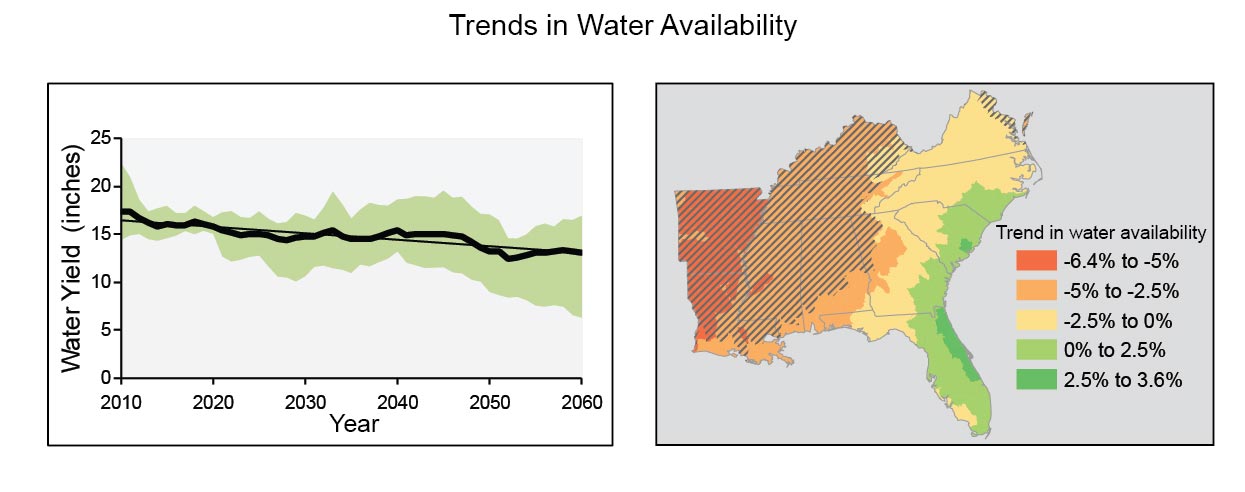
and forestry." Additionally, the report finds, "decreased water availability, exacerbated by population growth and land-use change, will continue to increase competition for water and affect the region’s economy and unique ecosystems."  Coastal Alabama, Mississippi, Louisiana, and Texas already face significant economic losses that annually average $14 billion from hurricane winds, land subsidence, and sea level rise.

In coastal Louisiana, since the 1930s, a combination of human and natural factors has resulted in 1,880 square miles of land being lost.  The NCA report regional analysis notes that "Four Native communities in Southeastern Louisiana  have already experienced significant land loss" (the Grand Bayou Village, Grand Caillou/Dulac, Isle de Jean Charles, and Pointe-au-Chien communities).

Among the reports other findings for the region are:
  • Agricultural areas in southern Louisiana with shallow groundwater tables are at risk of increased inundation and future loss of cropland; and 
  • Forest disturbances caused by insects and pathogens will be altered by climate changes due to factors such as increased tree stress, shifting phenology, and altered insect and pathogen life cycles; however, adaptation strategies are limited, except through post-epidemic management responses
Great Plains
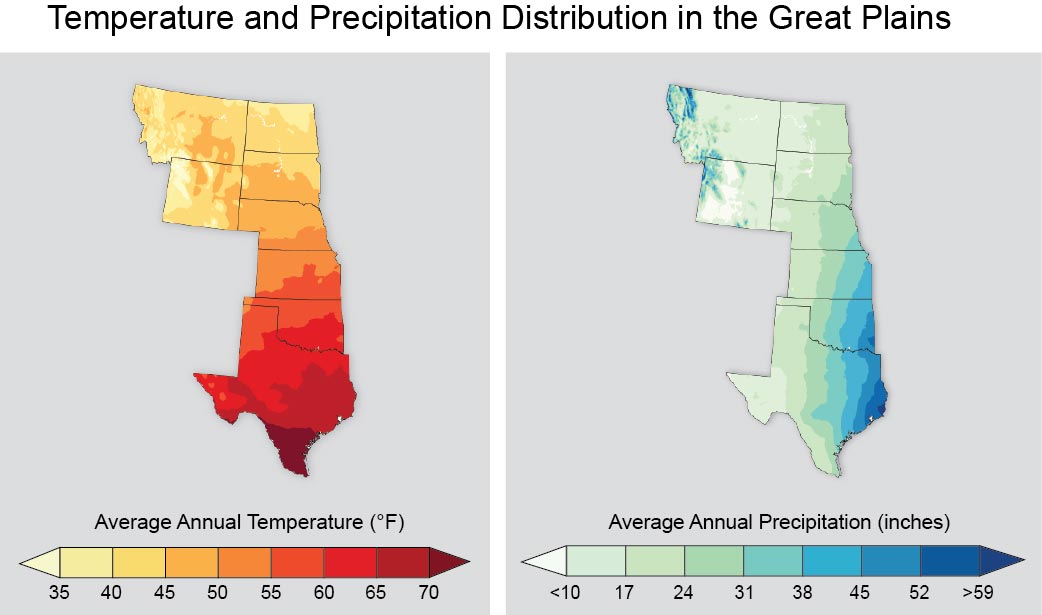
The report found that the Great Plains are facing increasingly extreme periods of wetness and dryness due to climate change and experiencing depleted groundwater resources due to unsustainable agricultural usage patterns. The report authors observe that rising temperatures in the Great Plains region have contributed to an increased demand for water and energy, and that this trend is expected to continue, constraining development, stressing natural resources, and increasing competition for dwindling water among the region's communities, agriculture, energy production and ecological needs.  "We have been depending for water on underground aquifers, but they are running out. So we are now increasingly dependent on rainfall precisely at the time that the climate is changing those rainfall patterns," notes Katherine Hayhoe, an atmospheric scientist and associate professor of political science at Texas Tech University.

Significant Great Plains climate-related challenges are expected to include "1) resolving increasing competition among land, water, and energy resources; 2) developing and maintaining sustainable agricultural systems; 3) conserving vibrant and diverse ecological systems; and 4) enhancing the resilience of the region’s people to the impacts of climate extremes."  Great Plains communities that are already vulnerable to weather and climate extremes will be stressed even further by more frequent extreme events occurring within an already highly variable climate system, according to the report.

Other climate change implications for the Great Plains region predicted by the report include:
  • Landscape fragmentation is increasing, and such a highly-fragmented landscape will hinder adaptation of species when climate change alters habitat composition and timing of plant development cycles;
  • Changes to crop growth cycles due to warming winters and alterations in the timing and magnitude of rainfall events will continue, creating the need for new agriculture and livestock management practices; and 
  • Existing adaptation and planning efforts are inadequate to respond to projected climate change impacts, since the magnitude of expected changes will exceed those experienced in the last century.

Tuesday, May 6, 2014

Capitol Hill This Week - What to Watch For - UPDATED

Below are the U.S. House and Senate activities currently scheduled for this week that relate to Mississippi River Basin water resources. In addition to those listed meetings and hearings, the House Natural Resources Committee has scheduled a bill markup session for Thursday morning, but has yet to name the bill or bills that will be the subject of the meeting.  Links are provided to the relevant pages on the Internet, and, where appropriate, to pieces of legislation. Many Congressional proceedings are webcast live, and many of these should be, as well (follow the appropriate link).  All times are Eastern.  This page will be updated as warranted.


Wednesday
Thursday

Friday, May 2, 2014

Mississippi River Basin Water Resource Weekly News

~Virtual Newspaper for an Aquatic World~
This Week and Next
Here is a link to "What We Learned This Week," a weekly Mississippi River Basin one-paragraph summary of the week gone by (for those who don't particularly want to wade into the details, below).  The next seven days offer a pair of tantalizingly water-relevant Congressional hearings in Washington, DC: one in the Senate, concerning the next steps in Farm Bill implementation, and one in the House relating to the U.S. Environmental Protection Agency's proposal to clarify the jurisdictional scope of the Clean Water Act (please note a related, May 13, informational webinar on that topic under the "Events" heading, below).  A list of all of next week's water resource related Congressional activities (tantalizing and not) can be viewed here.

Noteworthy @UpperMiss Twitter Postings for the Week

Water Quality -
  • 200 House members tell EPA and Army Corps to drop plan to clarify Clean Water Act jurisdiction over U.S. water bodies http://ow.ly/wp65T
  • Study: majority of southern Minnesota cropland that abuts lakes and rivers doesn't meet buffer zone requirements http://ow.ly/wlhS8
  • Federal judge rules Alpha Natural Resources is illegally discharging excess levels of selenium from West Virginia coal-slurry impoundment http://ow.ly/wlnWx Also see: http://ow.ly/wloOE
  • Algae and bacteria are health and environmental threats in lakes across Wisconsin http://ow.ly/wloxI
  • Kentucky Department of Fish and Wildlife Resources investigating massive die-off of Asian carp in the Cumberland River  http://ow.ly/wlme1 and http://ow.ly/wlm60
  • Persistent thick ice, deep snow on Eastern Iowa ponds and lakes causes large winter fish kills, according to state http://ow.ly/wluWB
  • Minnesota Supreme Court delays action involving state’s lawsuit accusing 3M of environmental damage (water quality) http://ow.ly/wmSdF
  • Minnesota Pollution Control Agency to conduct water quality field work in Des Moines River basin  http://ow.ly/wnpBC
Water Resource Management (Floodplains, Dams, Navigation, Wetlands, Flooding, Supplies, etc.) -
  • LEAD STORY: Water Resources Development Act conference committee expected to complete compromise bill within the next two weeks http://ow.ly/wlfV9
  • In southwestern Minnesota, water costs rise, pipes get longer as supply adequacy wanes  http://ow.ly/wp86c
  • Army Corps of Engineers study recommends building new locks at three locations on the Upper Ohio River http://ow.ly/wp8Ep
  • Barge, port industries and Mississippi River mayors back move to broaden river shipping http://ow.ly/wlvvd also see http://ow.ly/wlw4W
  • Proposed Public-Private Partnership Projects for U.S. Inland Waterways Infrastructure Financing, Operations, and Governance http://ow.ly/wnefg  (The Horinko Group)
  • Heavy rain, swollen waterways prompt Army Corps to restrict  Mississippi, St. Croix  River navigation http://ow.ly/wmRCo http://ow.ly/wmRIR
  • National Geographic: Wetlands Do Triple Duty in a Changing Climate (with focus on Mississippi River basin) http://ow.ly/wntIa
  • Army Corps of Engineers awards two contracts for lock rehabilitation at Olmsted Dam on the Ohio River in Kentucky http://ow.ly/wmRZp
  • Politics enters discussion of funding for repairs to damaged Grand Tower, Illinois levee along Mississippi River http://ow.ly/wp9VW
Agriculture -
  • Illinois Nutrient Research and Education Council's first annual report addresses fertilizer nutrient utilization, water quality, education http://ow.ly/wmR1v
  • House Agriculture Subcommittee on Horticulture, Research, Biotechnology and Foreign Agriculture reviews management strategies to control pollinator pests, diseases http://ow.ly/wkYIE
  • Pollinator hearing deepens gulf between pesticide manufacturers and environmentalists over  pesticides' role in bee deaths http://ow.ly/wltpX
  • U.S. farmers douse their fields with wider array of herbicides in war vs. super weeds but are adding new costs and environmental concerns http://ow.ly/wlsvV
  • EPA seeks public comment on its proposal to register the "Enlist Duo" herbicide (containing 2,4-D and glyphosate) "to reduce the spread of glyphosate resistant weeds" article - http://ow.ly/wmO3t (EPA media notice: http://ow.ly/wlshE)
  • Monsanto Co. pledges to advance sustainable agriculture through increasing water and nutrient efficiency http://ow.ly/wlj2t
Climate and Weather -
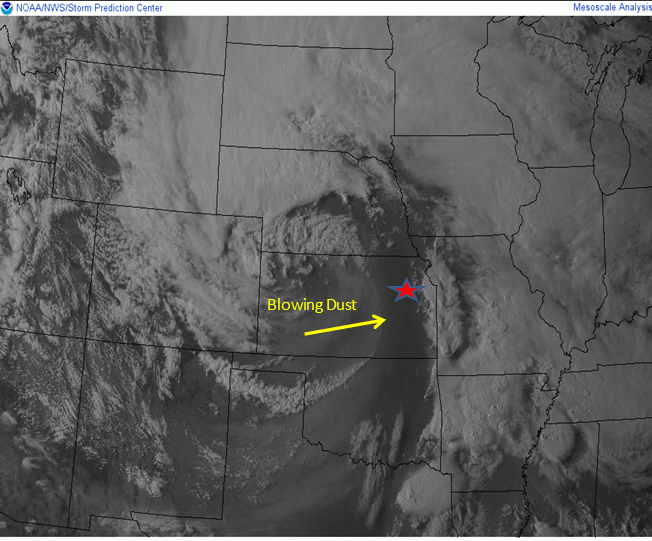
NWS Topeka, Kansas satellite image
(click to enlarge)
  • LEADING STORY: High atmospheric carbon dioxide levels set a record http://ow.ly/wnPnO
  • US drought update: southern Plains precipitation continues below average; dryness expands in parts of Nebraska and Kansas; improves in parts of Iowa and Missouri http://ow.ly/wmTdv
  • NOAA Climate Prediction Center monthly drought outlook for May: May expected to be relatively dry month; widespread drought improvement not anticipated http://ow.ly/q3yAx
  • Satellite image shows blowing dust moving east and northeast across north-central and northeastern Kansas http://ow.ly/wlkOk (April 27; photo to the right)
  • Iowa experiencing warmer, wetter and more intense weather, forcing its cities and farmers to adapt http://ow.ly/wmPAg
NOAA National Weather Service flood prediction maps
Biodiversity, Wildlife and Invasives -
  • Minnesota Senate approves name change for Asian carp - changing it to "invasive carp" http://ow.ly/wlx6R
  • US Fish and Wildlife Service says Corps of Engineers helping it bring back three lower Mississippi basin endangered species http://ow.ly/wnuEi
  • Asian carp processing plant may soon be a reality for East Peoria, Illinois area http://ow.ly/wntqG
  • House Natural Resources Committee advances four bills to House floor that would amend the Endangered Species Act http://ow.ly/wlino
  • Report: federal endangered listing of greater sage grouse could impede voluntary landowner conservation partnerships http://ow.ly/wlh6y
  • Last Friday's La Crosse, Wisconsin biodiversity summit aim was to improve cities' environments http://ow.ly/wlnla
  • Budget shortfall in West Virginia black fly suppression program has meant fewer applications of Bti pesticide http://ow.ly/wngE9
In the Cities -
  • Columbus, Ohio explores new ways of eliminating sanitary sewer overflows, investing in neighborhoods, local economy http://ow.ly/wai7W
  • Cape Girardeau city leaders meet with Missouri Department of Conservation to focus on Mississippi River issues http://ow.ly/wp9tk
In the States-
  • Council for a Better Louisiana opposes state bill that would let governor remove levee authority members http://ow.ly/wlpAL
Forestry -
  • U.S. Forest Service poised to begin identifying national forest areas for future timber projects using farm bill's new environmental streamlining authority http://ow.ly/wnz2D
Resource Development -
  • Builders of controversial Bluegrass Pipeline through Kentucky halting project on economic grounds http://ow.ly/wlxzo
Federal Budget -
  • House GOP debuts 2015 FY science, commerce and justice appropriations bill promising National Science Foundation $7.4 billion; boosting weather programs but keeping total budget flat http://ow.ly/wkVkX
  • House committee passes first 2015 appropriations bill http://ow.ly/wnpVf while the Senate Appropriations Committee will hold its first full committee votes on fiscal 2015 spending bills on May 22 http://ow.ly/wmLCs
  • Forest Service, Department of the Interior projected to spend over $470 million more than available to fight 2014 wildfires http://ow.ly/wnwoK
  • Sens. Tom Coburn (R-Okla.) and Mark Udall (D-Colo.) Pushing Senators to Keep Earmark Moratorium http://ow.ly/wnOYs
Events -  Information on all past and future events listed here can be viewed in the on-line calendar (here as a stand-alone calendar)
  • NC-FAR Seminar: Detours On The Road To Sustainable Feedstock Production For Cellulosic Biofuel, Washington, DC, May 8 http://ow.ly/wmNbi (register by May 6)
  • Briefing on the Third National Climate Assessment; May 8, 2-3:30 PM EDT; Washington, DC http://ow.ly/wn9Lc (the Assessment will be released on May 6)
  • Webinar: What the Waters of the US Rulemaking Means for Your Watershed Work, May 13, 2-4 PM EDT. Register by May 12 http://ow.ly/wag4R
  • May 17: annual invasive Garlic Mustard Pull volunteer day at the Dixon Waterfowl Refuge at Hennepin & Hopper Lakes (Illinois) http://ow.ly/wnQlq
  • Resources For The Future Seminar-Natural Resources, Ecology, and Public Policy: Time for Some Unconventional Ideas? May 28, 12:45-2 PM EDT http://ow.ly/wp4Xs (webcast and Washington, DC)
e-Newsletters, Publications, Journals, Multimedia  -
Other news-
  • Dutch research implies that many coastal cities around the world are now sinking at a rate up to ten times that of sea level rise http://ow.ly/wkW56
  • 1.6 million Americans don't have indoor plumbing. Here's where they live (Washington Post) http://ow.ly/wkYl1 (interactive map)
Politics and People-
  • Collin O'Mara named as next President and Chief Executive Officer of the National Wildlife Federation http://ow.ly/wnQWG
  • There will be May primary elections in eleven Mississippi River Basin states.  Here is where and when they are: http://ow.ly/wmVbP
  • Ron Bruch, a 37-year veteran of Wisconsin's Department of Natural Resources, has been named WI DNR fisheries director http://ow.ly/wns1v
  • Rep. Vance McAllister won¹t run for reelection (R-LA-5) http://ow.ly/wkUoY as calls begin for him to resign now http://ow.ly/wkUGg
  • Sen. John Boozman (R-Ark.) has been released from an Arkansas hospital following emergency heart surgery last week http://ow.ly/wliBw
Last Word -
"Nullius in verba" - The Royal Society's motto, which roughly translates as "take nobody's word for it."  The motto is an expression of the determination of the 352-year-old UK society's members to withstand the domination of authority and to verify all statements by an appeal to facts determined by scientific inquiry.