
Thursday, December 17, 2015
And in the end . . .
Final day at the office for the Northeast-Midwest Institute . . . and a clean desk at last! Stay in touch everyone: gormanme1@gmail.com and (mobile/text) 571-215-5671.


Mississippi River Basin Water Resource Weekly News
~Most of the Water News - None of the Spin~
In the early morning hours of Wednesday (December 16), the House Rules Committee released a

Most of the contentious environmental policy provisions (known as riders) that were being considered by negotiators did not make their way into the final draft, leaving a wake of discouragement and disappointment within the Republican faction. Following release of the measure, Sen. Roy Blunt (R-MO) noted that "it's a disappointment for those of us who wanted to see some real policy prohibitions and policy directions determined by the appropriations process.” Riders not making the cut included language that would have blocked funding to implement the Clean Water (or Waters of the U.S.) Rule, and a proposed Interior Department "Stream Protection Rule." To see a fuller summary of items in the omnibus legislation that may be of particular interest to Mississippi River Basin stakeholders, you can check out this article.

Perhaps most importantly, the omnibus package includes a provision that House appropriators attached to a spending bill back in April - one that urges the U.S. Capitol Police Board to allow sledding on Capitol Hill. Now all that is needed is snow - no small feat in these climate-balmy times.
Up next? Not much - in Washington, DC, at least. As the holidays approach, lawmakers (and your FNB*) will by and large flee the capital once the omnibus spending legislation passes. That leaves us time to look ahead to 2016. As an aid to those who like to gaze into legislative crystal balls, here are the 2016 legislative calendars for the U.S. House and Senate. I would venture to guess that if past election year performance is an indication of future returns, not much will happen in 2016 on the federal legislative front (possible passage of a new Water Resources Development Act being a notable exception).
But did you know that so far this year, over 140,000 bills have been introduced in state legislatures? Next year should be equally as busy, and often those bills get passed and have a significant bearing on water resources. Here is a nice summary table should you care to see when your particular state house of concern will be in session in 2016.
But did you know that so far this year, over 140,000 bills have been introduced in state legislatures? Next year should be equally as busy, and often those bills get passed and have a significant bearing on water resources. Here is a nice summary table should you care to see when your particular state house of concern will be in session in 2016.
*Friendly Neighborhood Blogger
Noteworthy @UpperMiss Twitter Postings for the Week

Water Quality -
- In the Ohio River's ‘Chemical Valley,’ a debate over good jobs and bad health: C8 in the region's water http://ow.ly/VQMS3
- GAO finds that the EPA broke the law with its social media push for the Clean Water (WOTUS) Rule; EPA disagrees with findings http://ow.ly/VTMHE
- Lack of spending bill rider leaves some farmers worried about future of Clean Water Rule http://ow.ly/W1nnG
- North Dakota researchers are concerned about the lack of reliable data about oil pipeline spills in the state http://ow.ly/VU1bk
- North Dakota regulators are considering easing a $2.4 million fine against a Texas company for a pipeline spill that went unnoticed for three months http://ow.ly/VU3kQ
- Cleanup under way on 42,000-gallon water and clay spill at North Dakota pipeline site http://ow.ly/VU1Xd
- National Academies: EPA should develop rigorous, risk-based guidelines for reuse of untreated residential wastewater, stormwater runoff http://src.bna.com/bzh
- St. Cloud State University study will look at impact on fish of pharmaceuticals that can enter rivers and lakes through wastewater treatment plant effluents http://ow.ly/VUaCv
- Supreme Court will consider whether federal determination that a wetland qualifies for Clean Water Act protection can be subject to court challenge http://ow.ly/VQWzL

- National Academies report: Data gaps prevent FEMA officials from understanding how rising prices for federal flood insurance will affect policyholders http://ow.ly/VYgMk
- S. 611, a bill to provide financial and technical assistance to small, rural drinking water systems, signed into law by President http://ow.ly/VQTH8
- Barges on the Ohio River in western Pennsylvania are diversifying their loads as coal shipments decline http://ow.ly/VQYjG
- Pair of towboats collide on the Lower Mississippi River near Memphis; one sinks as a result http://ow.ly/VYdqQ
- Army Corps of Engineers is inspecting New Orleans levee system as Mississippi River rises more than 12 feet above sea level http://ow.ly/VU1ue (related story below)
- Army Corps of Engineers New Orleans District, levee officials keep eye on rising Mississippi River http://ow.ly/W1l4D
- Water Environment Federation report: "Rainfall to Results: The Future of Stormwater" http://ow.ly/VU4nH
- New report examines proven strategies for reducing green infrastructure costs http://ow.ly/VU4Z0
- Interior Department announces plans for new Natural Resource Investment Center to leverage private capital to help meet water infrastructure and conservation needs http://ow.ly/VY9ms (administration's fact sheet: http://ow.ly/VZ6o1)
- Pueblo Conservancy District's Arkansas River levee work expected to resume in February http://ow.ly/W1BuL

 Agriculture -
- North Central Region Sustainable Agriculture Research and Education Program (NCR-SARE) seeks nominees Administrative Council http://ow.ly/W1w7s
- Field to Market releases Request for Proposals for the technical development of a revised Water Quality Metric http://ow.ly/W1wHw
- Lawyer of environmental, animal rights coalition tells court that two new Wyoming laws improperly bar them from gathering agricultural information http://ow.ly/VQLoV
- USDA issues long-awaited final rule guiding eligibility for farm program payments; story: http://ow.ly/VY8SP USDA release: http://ow.ly/VY8VI
- Several varieties of pigweed adapt rapidly to develop Roundup resistance and emerge as farm "super pest" http://ow.ly/VYfQl
- Iowa farmland values drop 3.9 percent from 2014 levels http://ow.ly/W1nXZ
- NOAA Weekly US drought update: much of the Plains and Mississippi Valley dryness is alleviated except in the Dakotas and adjacent Minnesota; Indiana drought remains largely unchanged http://ow.ly/wmTdv
- USGS study confirms a wetter South Dakota climate east of the Missouri River over the last six and a half decades http://ow.ly/W1DYk
 Biodiversity, Wildlife and Invasives -
- U.S. Fish and Wildlife Service reopens public comment period on proposed rule listing Big Sandy crayfish and Guyandotte River crayfish as endangered species (Kentucky and West Virginia) http://ow.ly/VTVmv
- Fish and Wildlife Service initiating 5-year status reviews under Endangered Species Act for several listed Mississippi River Basin plants and animals http://ow.ly/W1lZW
- Effort to keep Mississippi River Basin Asian carp out of the Great Lakes appears stymied http://ow.ly/W1ko0
- USFWS has not halted any of the 88,000 actions and developments considered potentially harmful to the nation’s endangered species over the past seven years http://ow.ly/VTWTF
- USFWS National Fish Passage Program awards $1.6 million to support Midwest fish passage projects, including these in the Mississippi River Basin: Eel River, Indiana, Wapsipinicon River Basin, Iowa, Moniteau Creek, Missouri http://ow.ly/VU9zz
- North Dakota Game and Fish Department proposes to extend aquatic invasive species prevention practices statewide http://ow.ly/VYjo1
 In the Cities -
- Cincinnati Connects proposes 42-mile bicycle, pedestrian loop to link disconnected bike trails http://ow.ly/W1CCR
- Minnesota state legislature scheduled to reconvene at noon on March 8, must adjourn by May 23 http://ow.ly/VYezj (here is a list of all the U.S. states' 2016 legislative calendars: http://ow.ly/VYeHV)
- Wisconsin DNR $3 million surface water management grant application deadline approaching (February 1) http://ow.ly/VYk0R
- National Association of State Budget Officers reports that states' spending will rise in 2015 for the sixth straight year, as states settle in to a slow-growth era http://ow.ly/VTYWR
- Pennsylvania DEP announces major reorganization of water management responsibilities http://ow.ly/VUcHY (organizational chart: http://ow.ly/VUcO1)
- Pennsylvania lawmakers aim for state budget bill by week's end http://ow.ly/VYqdx
- Jefferson Parish, Louisiana deciding how it will spend $20 million from BP settlement http://ow.ly/VQPOD
- Louisiana coastal project offers new shoreline stabilization and restoration solutions for wetlands http://ow.ly/VQQaS
- Gulf Coast Ecosystem Restoration Council announces initial activities that the Council will fund and prioritize for further consideration http://ow.ly/VTVZw (more: news article coverage http://ow.ly/VUbWS)
- Editorial, The Daily Comet: "It'll take more than common sense to save Louisiana's coast" http://ow.ly/VTY6B
- Nature: Mississippi River is the primary contributor of sediment for most coastal wetland development http://ow.ly/VTYxA
- EPA extends comment period until February 12 for "Opportunity to Provide Information on Existing Programs that Protect Water Quality from Forest Road Discharges" http://ow.ly/W1lrs
- Environmental groups object to bankruptcy deal between West Virginia DEP and coal company Alpha Natural Resources Inc. over mine reclamation liabilities http://ow.ly/VYl18
- Groups file complaint with regulators over Arch Coal financial bonds guaranteeing reclamation in Wyoming http://ow.ly/W1uTx
- EPA publishes final rule setting Renewable Fuel Standards for 2014, 2015, and 2016 (effective February 12, 2016) http://ow.ly/VQQSb
- Minnesota Supreme Court upholds lower court decision requiring an environmental study for the Sandpiper pipeline project http://ow.ly/VYpGU
- Opponents of proposed Bakken oil pipeline accuse Iowa DNR of trying to prevent them from publicly voicing objections http://ow.ly/W1sP4

- Part of Bakken pipeline would go over publicly owned Iowa land and water, including the Des Moines and Mississippi rivers; Iowa decision due in 2016 http://ow.ly/W1EuM
- Illinois regulators follow South Dakota's lead and approve their state's portion of the Bakken Pipeline http://ow.ly/W1Fuw
- Op-ed: Pennsylvania's pipeline infrastructure task force put industry first and the public last http://ow.ly/VQNBx
- Obama administration may appeal federal court ruling in Wyoming that temporarily blocks new regulations on fracking on federal land http://ow.ly/VQZ8X
- Frac sand industry officials are optimistic that 2016 will be a better year for the market in Wisconsin and Minnesota than 2015 http://ow.ly/VU30O
- Company aiming to build 255-mile pipeline to carry gas from shale across Ohio (partly in Mississippi River Basin) http://ow.ly/VYb8h

- Proposed fiscal year 2016 omnibus appropriations bill released early on Wednesday morning (House vote anticipated on Friday) http://ow.ly/VY5DG
- Association of State Wetland Managers Webinar: "Improving Wetland Restoration "Success": What We've Learned So Far" December 15, 3 pm ET http://ow.ly/VUltY
- Mighty Quapaw Solstice-Christmas Party, at sunset on December 19, Banks of the Sunflower River, Clarksdale, Mississippi http://ow.ly/W1u1t
- FEMA offers advanced floodplain management course; April 11–14, July 11– 14, and August 29 – September 1, 2016, Emmitsburg, Maryland http://ow.ly/VQXBz
- Lower Mississippi River Dispatch No 325, December 14: Mountain Classroom: the Mighty Mississippi http://ow.ly/VUeHy
- Tulane Institute on Water Resources Law and Policy December 16 TUWaterWays "Water News and More" http://ow.ly/VZ8m8
- NW PAssages e-magazine December 2015 http://ow.ly/W1A9n
- Minnesota Pollution Control Agency Waterfront Bulletin for December 2015 http://ow.ly/W1HZP
- Coal ash utilization, which had stalled between 2009 and 2013, increased significantly in 2014 in anticipation of December 2014 final federal coal ash rule http://ow.ly/VYlWo
- EPA changing name of its Office of Solid Waste and Emergency Response to the Office of Land and Emergency Management http://ow.ly/VTUz1
- EPA Announces 2015 Annual Environmental Enforcement Results

 |
| Click to enlarge |
- It's increasingly unlikely that additional USEPA officials will gain Senate confirmation during this presidency http://ow.ly/VYcu9 (related table to the right)
- Iowa Gov. Terry Branstad (R) on Monday became the longest serving governor in U.S. history http://ow.ly/VQOe8
- Republican U.S. Rep. Charles Boustany announces run for Louisiana US Senate seat http://ow.ly/VTQcA
- American Farm Bureau Federation members will have four candidates to consider in January in vote for AFBF President http://ow.ly/VUfaD

The Proposed FY 2016 Omnibus Appropriations Legislation and Mississippi River Basin Water Resources

In the early morning hours of Wednesday (December 16) the House Rules Committee released a proposed omnibus appropriations bill that would set levels of federal government discretionary spending for the remainder of the 2016 fiscal year. The bill is due to be considered and passed by House this Friday, before moving on to the Senate for debate and likely passage. Later on Wednesday, Congress passed another short-term spending extension known as a Continuing Resolution, giving lawmakers through December 22 to pass the long-term measure.
Most of the contentious environmental policy provisions (known as riders) that were being considered by negotiators did not make their way into the final draft, including measures that would have blocked funding for implementing the Clean Water (or Waters of the U.S.) Rule, and a proposed Interior Department "Stream Protection Rule." In addition to the legislative language, itself, included in the Rules Committee release were separate "Explanatory Statements" providing further breakdown of the funding levels, and direction to departments and agencies funded by the bill. The following Explanatory Statements relate most directly to water resource issues:
Most of the contentious environmental policy provisions (known as riders) that were being considered by negotiators did not make their way into the final draft, including measures that would have blocked funding for implementing the Clean Water (or Waters of the U.S.) Rule, and a proposed Interior Department "Stream Protection Rule." In addition to the legislative language, itself, included in the Rules Committee release were separate "Explanatory Statements" providing further breakdown of the funding levels, and direction to departments and agencies funded by the bill. The following Explanatory Statements relate most directly to water resource issues:
- Agriculture, Rural Development, Food And Drug Administration, and Related Agencies (including the Natural Resources Conservation Service - NRCS)
- Energy And Water Development and Related Agencies (including the Army Corps of Engineers)
- Interior, Environment, and Related Agencies (including the Environmental Protection Agency, Department of Interior, and USDA Forest Service)
- Commerce, Justice, Science, and Related Agencies (including NOAA)
- Department of Homeland Security (including FEMA)
Below is a summary of several items in the omnibus legislation that may be of particular interest to Mississippi River Basin stakeholders.
For the Department of Interior
- Reauthorizes the Land and Water Conservation Fund through September 30, 2018, providing the program with $450 Million in discretionary funds for fiscal year 2016 (a one-time increase of $143.86 Million above the fiscal year 2015 enacted level)
- $35.145 Million for the North American Wetland Conservation Fund
- $13.228 Million for payments to counties authorized by the National Wildlife Refuge Fund
- $213.1 Million for USGS Water Resources surveys, investigations and research under the agency's newly-requested budget structure, including $92.79 Million for National Water Quality Programs
- Directs the National Park Service "to undertake a study for the development of a permanent headquarters and visitor use facility at the Mississippi National River and Recreation Area in close proximity to the existing temporary headquarters and the river."
- $8.14 Billion for the EPA overall (equal to fiscal year 2015 funding level), including $2.61 Billion for Environmental Programs and Management
- $1.394 Million for the Clean Water State Revolving Fund (SRF) ($.055 Million below the fiscal year 2015 funding level) and $.86 Million for the Drinking Water SRF ($.044 Million below the fiscal year 2015 funding level)
- $164.92 Million for Clean Water Act Nonpoint source (Section 319) grant program ($5.66 Million over the fiscal year 2015 funding level)
For the Federal Emergency Management Agency (FEMA)
- $100 Million for the Pre-disaster Mitigation Fund ($75 million above the fiscal year 2015 funding level)
For the USDA-NRCS
- $850.856 Million for NRCS operations ($4.4 Million above the fiscal year 2015 funding level)
- $12 Million for the NRCS Watershed Rehabilitation Program (equal to the fiscal year 2015 funding level - the administration had requested nothing for this program)
- Carries over the same limitations from fiscal year 2015 to the mandatory farm bill Environmental Quality Incentives Program (EQIP), cutting funding by $321 million below the farm bill authorized level
- Removes fiscal year 2015 limitations that had been placed on the mandatory farm bill Conservation Stewardship Program (CSP)
- $5.99 billion overall to the Army Corps of Engineers ($535 Million over the fiscal year 2015 level)
- $19.787 Million for the Upper Mississippi River Basin Restoration (equal to the administration's request)
- $500,000 for the Interbasin Control of Great Lakes-Mississippi River Aquatic Nuisance Species Feasibility Study
- $400,000 for an Illinois River Basin Restoration Feasibility Study
- $700,000 for a Des Moines Levee System Feasibility Study (Des Moines and Raccoon Rivers)
- $50,000 for a Louisiana Coastal Area Ecosystem Restoration Feasibility Study
- $600,000 for a Minnesota River Watershed Feasibility Study
- $345 Million for Mississippi River and Tributaries construction, and operation and maintenance
- $700,000 for a St. Louis Riverfront Feasibility Study (both sides of the Mississippi River)
- Directs the Army Corps to “provide to the Committees on Appropriations of both Houses of Congress, not later than 30 days after the enactment of this Act, a report detailing the scope, schedule, and Budget” for completing any update or reanalysis to be undertaken regarding the Upper Mississippi River-Illinois Waterway System Navigation and Ecosystem Sustainability Program (NESP).
- Continues a limitation included in past appropriation bills that no funds provided to the Corps of Engineers be used “to develop or implement rules or guidance to support implementation of the final Principles and Requirements for Federal Investments in Water Resources released in March 2013 or the final Interagency Guidelines released in December 2014.”
- Directs the Corps' Comptroller General to conduct a study on "the cumulative economic impact of all shallow draft ports on the Mississippi River between St. Louis, Missouri, and Baton Rouge, Louisiana."
Friday, December 11, 2015
Mississippi River Basin Water Resource Weekly News
~Most of the Water News - None of the Spin~
This Week and Next
On Tuesday, the U.S. Court of Appeals for the Sixth Circuit in Cincinnati heard oral arguments on
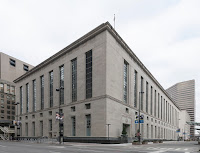 whether it has exclusive jurisdiction to review appeals relating to the Waters of the U.S. (WOTUS or "Clean Water") rule. The case outcome rests on the Court's interpretation of a section of the Clean Water Act that determines when lawsuits can skip lower court review and move directly to a U.S. Court of Appeals. Most of the WOTUS cases in federal district and appellate courts are in a holding pattern until the Sixth Circuit Court decides (likely later this month). The three-judge Sixth Circuit Court panel seemed to signal on Monday that the appeals court would be the proper venue to hear WOTUS appeals. That decision would suit the Obama administration, which argued on Monday that the Sixth Circuit should take up case. If the Sixth Circuit Court panel decides otherwise that lower (district) courts have jurisdiction, the decision would provide an opening for WOTUS rule opponents to file numerous challenges, resulting in various, likely-conflicting, decisions, as assorted district court judges come down on different sides of the rule. Such a decision would would stretch out the appeals process overall, giving rule opponents a chance to wait for an administration that might view the rule less favorably. The Eleventh Circuit Court of Appeals also will hear oral arguments on the same issue, during the week of February 22, 2016, on an appeal of a district court ruling that jurisdiction lies exclusively in the court of appeals. Should the Sixth and Eleventh Circuits reach contrary conclusions on jurisdiction, that issue, rather than the actual merits of the challenges, could end up before the U.S. Supreme Court.

Noteworthy @UpperMiss Twitter Postings for the Week
Water Quality -
 Biodiversity, Wildlife and Invasives -
Water Quality -
- Minnesota Center for Environmental Advocacy: state program to improve farm runoff is ineffective in removing nitrates http://ow.ly/VLmtk
- 6th U.S. Circuit Court of Appeals judges signal that WOTUS rule case belongs in appeals court - not district courts, against wishes of rule's challengers http://ow.ly/VFkbp (related article below)
- US Sixth Circuit Court of Appeals hearing arguments Tuesday on whether jurisdiction to review Clean Water Rule lies exclusively with the courts of appeals http://ow.ly/VC0F0

- US House passes microbead ban bill on voice vote; bill now headed to the Senate http://ow.ly/VC49O (link to bill: http://ow.ly/VC41u)
- Sen. Chris Murphy (D-Conn.) calls on Senate to follow House lead and pass bill to ban plastic microbeads in personal care products http://ow.ly/VFhSe
- EPA approves water quality rules meant to protect southeastern Montana cropland from natural gas drilling wastewater produced in Wyoming http://ow.ly/VKX7X
- EPA proposes to let cadmium criteria for freshwater remain flat for acute exposure and less stringent for chronic exposure http://ow.ly/VzmVx
- North Dakota Department of Health notified of 213-barrel source water spill at well owned by Denbury Onshore in Bowman County; 33 barrels not contained http://ow.ly/VC6av
- Kentucky Energy and Environment Cabinet to fine coal mining company over thousands of Clean Water Act violations, effectively barring company from operating in state http://ow.ly/VESdI
- House Oversight and Government Reform Committee Republicans grill Interior Department over proposed stream protection rule http://ow.ly/VEWdE (link to hearing archive web page: http://ow.ly/VEWfB)
- AgriPulse: Water quality trading markets subject of hot debate http://ow.ly/VFsuZ
- Q and A with Des Moines Water Works manager on how legal challenge to upstream drainage districts is being funded and on the state's voluntary water quality standards http://bit.ly/1M1PoVr
- Four separate challenges to EPA's power plant effluent limits will be consolidated into one U.S. Court of Appeals case (Fifth Circuit) http://ow.ly/VI8xR (link to rule: http://ow.ly/VI8Te)
- EPA and West Virginia DEP settle with companies to restore and protect Turkey Creek, and tributary, where 20 unauthorized dams were constructed that blocked natural trout streams and damaged water quality http://ow.ly/VJqOu
- America’s Great Waters Coalition's October 20 webinar on nutrient pollution in the Great Lakes and Mississippi River now available online http://bit.ly/1lSFlNq

- U.S. Rep. Mike Bost (R-IL-12) urges 'no action' on Mississippi River St. Johns Bayou-New Madrid Floodway project http://ow.ly/VIBd4
- Disputes over the Republican River continue to cost Nebraska millions in legal expenses http://ow.ly/VCkCm
- In the face of an Obama veto threat, the U.S. House passes "Red River Private Property Protection Act" to address property dispute issues; in a largely party line vote (253 - 177) http://ow.ly/VGemw?
- Obama administration issues veto threat over proposed bill on property boundaries' dispute
along Red River (Oklahoma and Texas) http://ow.ly/VEVMz
Republican River at Junction City, KS - Sens. Rob Portman (R) and Sherrod Brown (D) introduce bill to aid communities facing water and wastewater infrastructure upgrades http://ow.ly/VC5Az
- An Interstate Battle for Groundwater: Mississippi and Tennessee are locked in a dispute over who can use Delta’s aquifers http://ow.ly/VEVAZ
- New Horinko Group study looks at role of green infrastructure in addressing water management challenges - "Nature, Economics, and Resilience" http://ow.ly/VFclM
- EPA issues guide for developing stormwater prevention plans to minimize stormwater runoff from small construction lots http://ow.ly/VFTIQ
- Rep. Tom Rice (R-SC) introduces bill eliminating U.S. EPA's power to veto some Army Corps of Engineers' projects and aimed at reducing "frivolous lawsuits" http://ow.ly/VI13d
- Missouri River reservoir system releases reduced by Army Corps in late November, marking end of flow support for Missouri River navigation season http://ow.ly/VKYVb
- President signs landmark freight transport bill that will benefit ports; inland ports and terminals are in the funding mix http://ow.ly/VL13J
- Pumped beyond limits, many U.S. aquifers are in decline http://ow.ly/VLrO5

- In Minnesota's farm country, clean water is costly; better farm practices can help limit water pollution http://ow.ly/VClaw
- USDA NRCS delays overhaul of Conservation Stewardship Program until 2017 sign-up http://ow.ly/VF1WF
- New $7.3 million permanent exhibit meant to teach how food is produced is coming to the St. Louis Science Center http://ow.ly/VC10l
- Review on Antimicrobial Resistance report: Farmers need to dramatically cut the amount of antibiotics used in agriculture, because of the threat to human health http://ow.ly/VF10b
- Samuel Roberts Noble Foundation and the Farm Foundation to form a Soil Health Institute http://ow.ly/VFt0n
- Rep. Rick Crawford (R-AR-1) introduces HR 4175 - Groundwater Conservation Incentive Act of 2015 - to allow a deduction for conservation expenditures to reduce groundwater consumption http://ow.ly/VFSrn
- House Agriculture Subcommittee on General Farm Commodities and Risk Management holds hearing to examine current state of U.S. cotton industry; AgriPulse article: http://ow.ly/VGqv5 Subcommittee release: http://ow.ly/VFUCD
- House Agriculture subcommittee holds hearing on USDA’s use of Census of Agriculture authority to acquire farmers' personal financial information; archived hearing site http://ow.ly/VG8v9 and subcommittee release: http://ow.ly/VGq04
- Gross income for southwestern Kansas farms is down by 20 to 30 percent http://ow.ly/VL2CV
- USDA FDA: sales and distribution of antimicrobial drugs approved for on-farm use increased 3 percent from 2013 through 2014 http://ow.ly/VLu4U
- Dane County, Wisconsin board approves funding for climate action plan http://ow.ly/VCmaZ
- Missouri's dependence on coal and prospect of more intense heat waves, rainfall make Paris climate negotiations relevant for region http://ow.ly/Vzs0b
- Wisconsin Academy of Sciences, Arts & Letters "The Promise of Paris: An Interview with Wisconsin Leadership at COP21" http://ow.ly/VG0e9
- NOAA weekly US drought update: general improvements in dryness and drought throughout the River Basin http://ow.ly/wmTdv
- NOAA: September through November saw “record and near-record warmth” almost everywhere across the U.S. http://ow.ly/VI5Kh

 Biodiversity, Wildlife and Invasives -
- Wisconsin 2015 aerial surveys document a record number of bald eagles since the surveys started 43 years ago http://ow.ly/VFl3T
- Yellowstone National Park has more gray wolves now than at any point since the species was reintroduced; pressure mounts to lift endangered species protections http://ow.ly/VzwH1
- Senate passes bill by unanimous consent that would make the bison the national mammal of the United States http://ow.ly/VFtqA
- Wildlife officials plan to use GPS collars to track the movements of destructive feral hogs in two Tennessee national parks http://ow.ly/VAoZ9
- USDA announces $40 million in funding to help ranchers restore and protect greater sage-grouse sagebrush habitat http://ow.ly/VJe5z
- Residents see benefits since launch of integrated Greater New Orleans Urban Water Plan http://ow.ly/VIa27
- From Paris: Mayor Landrieu touts New Orleans' resilience http://ow.ly/VI9uR
- Senate Commerce, Science and Transportation Committee passes "Waterfront Community Revitalization and Resiliency Act " to recognize and fund communities that adopt plans to handle ecosystem challenges and economic opportunities along their waterfront; link to bill: http://ow.ly/VFY9t; Committee meeting web site: http://ow.ly/VFXGf
- St. Paul Mayor Coleman, other mayors, address Mississippi River issues at Paris climate talks http://ow.ly/VF8yE
- Video of Mississippi River Cities and Towns Mayors' Initiative's December 8 "Global River Talks: Sustaining the World’s Food-Producing Rivers" COP 21, Paris, France https://youtu.be/SiCb6EV21qI (also embedded below)
In the States-
e-Newsletters, Publications, Journals, Multimedia -
- Minnesota Department of Agriculture seeks comments through Jan. 26 relating to proposed state Nitrogen Fertilizer Rule designed to protect groundwater http://ow.ly/VG1kd
- Ohio Clean Water Compliance and Affordability Act (S. 2358) would set up pilot program to manage wastewater and stormwater using integrated planning http://ow.ly/VznvV
- Among the major challenges facing Kentucky's new Governor is crafting a new, two-year spending plan for the state by January 26 http://ow.ly/VCjNG
- Pennsylvania state budget agreement may be collapsing http://ow.ly/Vzj7W
- Pennsylvania's Republican-controlled Senate-amended budget bills kill conventional drilling regs, cut growing greener watershed funding, delay climate plan http://ow.ly/VJglQ
- South Dakota Gov. Dennis Daugaard proposes ambitious state budget bolstered by better-than-expected revenues http://ow.ly/VIBYs
- Gulf Coast Ecosystem Restoration Council approves Initial Funded Priorities List totaling approximately $183 million of ecosystem restoration projects http://ow.ly/VFZzA (related background materials at link below)
- Gulf Coast Ecosystem Restoration Council background information on proposed initial funded priorities list of Gulf Coastal restoration projects http://ow.ly/VFYVf
- Gulf of Mexico Coastal Ocean Observing System Regional Association releases new plan for Red Tide Warning System http://ow.ly/VGfHO
- The Courier (Houma, Louisiana) editorial: "Move quickly to restore the coast" http://ow.ly/VKZkp
- Louisiana gains $52.2 million in Restore Act coastal restoration projects, but loses some future funding http://ow.ly/VKZxw
- US Forest Service publishes "Community Forest and Open Space" proposed rule revision; open for comment until March 7, 2016 http://ow.ly/VC2Cc
- Obama administration expresses concern about coal mining self-bonding deals in states like West Virginia and Wyoming http://ow.ly/VEW1j
- U.S. taxpayers could be left with multibillion-dollar liabilities if large coal companies are pushed to bankruptcy as part of a practice known as "self-bonding" http://ow.ly/VIiy6
- Iowa regulators will decide in coming months extent to which oil company can use eminent
domain to build Dakota Access pipeline http://ow.ly/Vzss1
Click to enlarge - Federal judge rejects key parts of lawsuit brought by tribal and environmental groups seeking to block upgrade of Alberta Clipper pipeline through northern Minnesota http://ow.ly/VIhve (see figure to right)
- Developer behind Dakota Access oil pipeline project wants Iowa regulators to move faster on its permit-approval process http://ow.ly/VF7GE
- Colorado Supreme Court will hear oral arguments this week over whether local governments can ban fracking http://ow.ly/VzCx1
- Senate Commerce, Science and Transportation Committee passes bill to update pipeline safety oversight, require prioritizing the completion of existing rules; link to bill: http://ow.ly/VFXoC; Committee meeting web site: http://ow.ly/VFXGf
- Fish and Wildlife Service publishes draft rule to increase oversight of oil and gas operations in national wildlife refuges; comments due on or before February 9, 2016; Federal Register notice: http://ow.ly/VKXDY and news article: http://ow.ly/VL0qR
- Obama administration considers declaring over 67,000 Tennessee acres unsuitable for surface coal mining following up on state's 2010 petition http://ow.ly/VJf8B (related Federal Register notice: http://ow.ly/VKXWP)

- Citing slow progress toward a spending bill resolution, Congress is expected to pass a continuing resolution running through next Wednesday to ward off government shutdown http://ow.ly/VI0Fl
e-Newsletters, Publications, Journals, Multimedia -
- Photo essay (Elliot Ross in The Guardian): "Family, faith, floods and fires: life for America's farmers – in pictures"
http://ow.ly/VHSF5
Photo: Elliot Ross @elliotstudio - Green Lands Blue Waters December 4 e-update re: Continuous Living Cover on Mississippi River Basin agricultural land http://ow.ly/VzuGq
- Tulane Institute on Water Resources Law and Policy's December 8 TUWaterWays e-newsletter http://ow.ly/VFiUP
- Minnesota Pollution Control Agency's December "BALMM Currents" e-newsletter http://ow.ly/VG0Kb

- America's Watershed Initiative pushes to improve Mississippi River watershed's economy and environment http://ow.ly/VI9PL
- Stormwater Magazine article on marking ten years of coal tar sealant research and progress http://ow.ly/VFqne
- Mississippi River Network seeks to fill Campaign Coordinator position to manage 1 Mississippi public communications campaign (job location: Chicago) http://ow.ly/VIP3s
- Job opening: Minnesota Department of Natural Resources Long Term Resource Monitoring Field Station Team Leader/ Mississippi River Coordinator http://ow.ly/VLqCo
- GAO report: Pedestrian and cyclist fatalities and injuries represent a growing percentage of all traffic fatalities and injuries http://ow.ly/VLtgo
- Work to remove approximately 10,000 tons of MCHM-contaminated soil starts at former
Freedom Industries site, West Virginia http://ow.ly/VCdEJ
MetroNews staff photo - Rep. Mike Simpson (R-Idaho) introduces bill to permanently reauthorize the Land and Water Conservation Fund http://ow.ly/VzvFu
- Rep. Rob Bishop (R-Utah) op-ed: "Why I let the Land and Water Conservation Fund expire" http://ow.ly/VF25B
- Western governors disagree over whether the Land and Water Conservation Fund should be reformed before being reauthorized http://ow.ly/VAocA
- Several major electric industry trade groups call on Congress to amend USEPA's new coal ash disposal rule with rider http://ow.ly/Vzttf
- River Life blog: "What Would a 'River Studies' Curriculum Look Like?" http://ow.ly/VA2Dy (via @RiverLifeUMN)
- Potential grant could clean up Brownfield sites on both sides of the Ohio River (Steubenville, Ohio region) http://ow.ly/VF79L

- Sen. Majority Leader Mitch McConnell: don't look for any breakthrough legislative accomplishments in 2016 http://ow.ly/VLoxc
- New Kentucky Gov. Matt Bevin (R) appoints former coal executive, Charles G. Snavely, to lead state's Energy and Environment Cabinet http://ow.ly/VFf5O
- U.S. Congressman John Fleming (R) launches bid for open Louisiana U.S. Senate seat http://ow.ly/VC529
- Matt Bevin (R) inaugurated 62nd Kentucky Governor, succeeding Steve Beshear (D), who was term-limited http://ow.ly/VC7WG
- U.S. Rep. Tim Huelskamp (R-KS) expects return to House Agriculture Committee after his election to the Republican Steering Committee http://ow.ly/VJox1
- Senate confirms Richard Howorth to a second four-year term as a member of the Tennessee Valley Authority board of directors http://ow.ly/VKWDZ
 |
| Photograph: Will Snow/GuardianWitness |
Monday, December 7, 2015
Capitol Hill This Week - What to Watch For

In addition to committee activities, and floor action on rather non-controversial bills like the microbeads legislation, lawmakers in both the House and Senate will spend much of the week rushing to conclude negotiations on an omnibus 2016 fiscal year spending bill by Friday, December 11, when the current funding authority expires. Numerous disagreements over policies remain to be sorted out, and no agreement has been reached yet on an appropriate U.S. EPA funding amount. House Democrats received and quickly rejected a GOP offer last Wednesday, largely because of its "poison pill" policy riders. Democrats prepared and sent their Republican counterparts a counteroffer, which, among other things, would eliminate many of the environmental policy riders, and reauthorize and full fund the Land and Water Conservation Fund. For more details on the bill's status, see our summary here.
If reaching a deal before this Friday's deadline looks unlikely, lawmakers could pass another short term spending extension (called a Continuing Resolution); however, the House is scheduled to be in session only through December 18. A last-ditch safety net to avoid government closure may be to simply extend current funding levels for the remainder of the 2016 fiscal year, as Congress did about a year ago for the 2015 fiscal year. Known as a "cromnibus," such a measure would be a combination of a long-term omnibus spending bill and a shorter-term continuing resolution (or CR), avoiding most if not all of the contentious policy riders.
Where available, links are provided to the relevant committee web pages and appropriate pieces of legislation. Many Congressional proceedings are webcast live, and these may be, as well (follow the respective meeting or hearing link). All times are Eastern. This information will be updated as warranted.
Tuesday, December 8
- House Science, Space and Technology Subcommittee on Research and Technology hearing on the "Future of Biotechnology: Solutions for Energy, Agriculture and Manufacturing;" 10:00 AM, room 2318 Rayburn House Office Building.
- Senate Energy and Natural Resources Committee legislative hearing to examine S. 2257 - the National Park Service Centennial Act, a bill "to prepare the National Park Service for its Centennial in 2016 and for a second century of protecting our national parks' natural, historic, and cultural resources for present and future generations;" 10:00 AM, room 366 Dirksen Senate Office Building.
- House Oversight and Government Reform Committee hearing "examining the (Department of Interior's proposed) Stream Protection Rule;" 2:00 PM, room 2154 Rayburn House Office Building.
- House Oversight and Government Reform Committee hearing entitled "Moving Ahead For Progress In The 21st Century (Map-21) Program Consolidation" (MAP-21 is meant to create a streamlined and performance-based surface transportation program and builds on many of the highway, transit, bike, and pedestrian programs and policies established in 1991); 2:00 PM, room 2247 Rayburn House Office Building.
- Senate Commerce, Science, and Transportation Subcommittee on Space, Science, and Competitiveness hearing entitled "Data or Dogma? Promoting Open Inquiry in the Debate over the Magnitude of Human Impact on Earth’s Climate;" 3:00 PM, room 253 Russell Senate Office Building.
- House Rules Committee meeting to set the rules for full House consideration of H.R. 2130, the "Red River Private Property Protection Act" (designed to settle an ongoing dispute among landowners, and the state and federal governments over the ownership of land along the Red River, dividing Oklahoma and Texas); 3:00 PM, room H-313 U.S. Capitol Building.
- House Agriculture Subcommittee on General Farm Commodities and Risk Management hearing entitled "Commodity in Focus: Stress in Cotton Country;" 10:00 AM, room 1300 Longworth House Office Building.
- Senate Commerce, Science, and Transportation Committee meeting to consider several pieces of legislation, including: S. 1886, the Coordinated Ocean Monitoring and Research Act, S. 1935, the Waterfront Community Revitalization and Resiliency Act of 2015, and S. 2276, the SAFE PIPES Act; 10:00 AM, room 253 Russell Senate Office Building.
- Senate Budget Committee hearing to "examine moving to a stronger economy with a regulatory budget;" 10:30 AM, room 608 Dirksen Senate Office Building (no link to a hearing page available yet).
- House Agriculture: Subcommittee on Biotechnology, Horticulture, and Research oversight hearing on "USDA's use of Census of Agriculture authority to acquire farmer's personal financial information;" 2:00 PM, room 1302 Longworth House Office Building.
Thursday, December 10
- House Science, Space and Technology Subcommittee on Environment and Subcommittee oversight hearing on the "Nation’s Weather Satellite Programs and Policies;" 10:00 AM, room 2318 Rayburn House Office Building.
Friday, December 4, 2015
Mississippi River Basin Water Resource Weekly News
~Most of the Water News - None of the Spin~
This Week . . .
Many Senators and House members left Washington soon after Thursday's votes, to begin an early weekend. Nonetheless, Congressional leaders remain guardedly optimistic that Republicans and Democrats can craft an omnibus 2016 fiscal year appropriations bill and stave off a December federal government shutdown. Negotiators hope to conclude negotiations on the bill by Friday, so that lawmakers have time to debate the legislation before the current funding authority expires on December 11.
Although agreement has been reached on most agency spending levels, negotiators still disagree on funding levels for the Environmental Protection Agency (EPA) through the remainder of the 2016 fiscal year. And major spending bill disagreements remain over policy issues. House Democrats received and quickly rejected a GOP offer in the middle of the week, largely because of its "poison pill" policy riders, many relating to environmental issues. Democrats quickly provided a counteroffer, which, among other things, seeks an extension of the Land and Water Conservation Fund, as well as the elimination of numerous GOP policy riders. Among the water-related riders still in play are those blocking funding to implement the Waters of the U.S. rule, the Interior Department's proposed stream protection rule, and a Presidential executive order directing federal agencies to account for sea level rise and stronger storms when building infrastructure and making grants.
 On Tuesday, House and Senate conferees finalized a $305 billion transportation bill. The bill moved quickly through both chambers on its way to the President, who is expected to sign the measure today (December 4), the latest highway spending deadline. Passage ends a succession of 36 short-term extensions over 20 years, and provides authority for surface transportation spending through 2020.
Of Mississippi River stakeholder interest, the bill would protect funding for mass transit, and increase money for pedestrian and bicycle programs, while adding new safety requirements for crude-by-rail shipments. Also agreed to is language allowing municipalities to use federal infrastructure and tax-exempt municipal bonds to finance upgrades to drinking and wastewater infrastructure (striking a 2014 Water Resources Reform and Development Act provision barring cities from combining the two funding mechanisms). The bill also includes language from the proposed Federal Permitting Improvement Act (S. 280), revising the process for federal approval of major infrastructure projects by establishing best practices, requiring coordination of federal agency review of projects, and shortening the period for challenges to final decisions for issuing project permits. Also approved was a Rep. Donna Edwards (D-MD) amendment that will require transportation planning agencies to study and provide for the mitigation of stormwater runoff impacts before construction.
The highway legislation reverses $3 billion in cuts to crop insurers that were included in the two-year budget agreement by finding offsets to those cuts within the dividend that the Federal Reserve pays to banks. Although the federal crop insurance program cost an average of $3.4 billion annually from fiscal years 2003 through 2007, it ballooned to an average of $8.4 billion annually in subsequent years through fiscal year 2013. So, crop insurance reform efforts
are very likely to continue. The bill is free from unrelated riders, except for one reauthorizing the U.S. Export-Import Bank.
And lastly, of interest to all . . . the transportation bill establishes a pilot program to let travelers bring cats and dogs on certain Amtrak trains.
To close out an unusually busy week on Capitol Hill, on Thursday the House passed the North American Energy Security and Infrastructure Act of 2015; a bill that contains contentious language streamlining the environmental permitting process under the National Environmental Policy Act - creating a new body to speed up the federal permitting process for large infrastructure projects. The House bill faces strong Democratic opposition in the Senate and the White House threatened to veto the bill earlier this week. The Senate Energy and Natural Resources Committee developed its own, bipartisan energy bill earlier this year, which may form the starting point for negotiating compromise legislation with the House in 2016.
Finally, we turn to the U.S. Supreme Court, where the justices will hold their weekly conference
 today, and discuss if they should consider a long-running wetland jurisdiction case, the U.S. Army Corps of Engineers v. Hawkes Co. At issue is whether an Army Corps of Engineers' Clean Water Act jurisdiction decision can be challenged in court. In November, the Obama administration filed a petition with the Supreme Court regarding the Hawkes Co., Inc. appeal, and a related, Kent Recycling Services LLC v. U.S. Army Corps of Engineers appeal. The petition requested that the Court consider one case rather than tying the two together, suggesting that the Court keep the Kent Recycling case on hold while it considers the Hawkes case (to avoid unnecessary complications). The Pacific Legal Foundation, which represents both Kent Recycling and Hawkes Co., has urged the court to consolidate the two cases.
. . . and Next Week
More of the same. Spending bill deliberations will take center stage. If reaching a deal on an omnibus spending package before the December 11 deadline looks unlikely, lawmakers could pass another short term spending extension (called a Continuing Resolution). However, it must be remembered that the House is scheduled to be in session only through December 18. A last-ditch safety net to avoid government closure may be to simply extend current funding levels for the remainder of the 2016 fiscal year, as Congress did about a year ago for the 2015 fiscal year. Known as a "cromnibus," such a measure would be a combination of a long-term omnibus spending bill and a shorter-term Continuing Resolution (or CR), avoiding most if not all of the contentious policy riders.
There is a fairly robust list of water-related Congressional committee activities scheduled already for next week, and those can be found summarized on this web page (updated on-the-fly, as needed).

Of Mississippi River stakeholder interest, the bill would protect funding for mass transit, and increase money for pedestrian and bicycle programs, while adding new safety requirements for crude-by-rail shipments. Also agreed to is language allowing municipalities to use federal infrastructure and tax-exempt municipal bonds to finance upgrades to drinking and wastewater infrastructure (striking a 2014 Water Resources Reform and Development Act provision barring cities from combining the two funding mechanisms). The bill also includes language from the proposed Federal Permitting Improvement Act (S. 280), revising the process for federal approval of major infrastructure projects by establishing best practices, requiring coordination of federal agency review of projects, and shortening the period for challenges to final decisions for issuing project permits. Also approved was a Rep. Donna Edwards (D-MD) amendment that will require transportation planning agencies to study and provide for the mitigation of stormwater runoff impacts before construction.
The highway legislation reverses $3 billion in cuts to crop insurers that were included in the two-year budget agreement by finding offsets to those cuts within the dividend that the Federal Reserve pays to banks. Although the federal crop insurance program cost an average of $3.4 billion annually from fiscal years 2003 through 2007, it ballooned to an average of $8.4 billion annually in subsequent years through fiscal year 2013. So, crop insurance reform efforts
 |
| "Awwwwww" |
And lastly, of interest to all . . . the transportation bill establishes a pilot program to let travelers bring cats and dogs on certain Amtrak trains.
To close out an unusually busy week on Capitol Hill, on Thursday the House passed the North American Energy Security and Infrastructure Act of 2015; a bill that contains contentious language streamlining the environmental permitting process under the National Environmental Policy Act - creating a new body to speed up the federal permitting process for large infrastructure projects. The House bill faces strong Democratic opposition in the Senate and the White House threatened to veto the bill earlier this week. The Senate Energy and Natural Resources Committee developed its own, bipartisan energy bill earlier this year, which may form the starting point for negotiating compromise legislation with the House in 2016.

. . . and Next Week
More of the same. Spending bill deliberations will take center stage. If reaching a deal on an omnibus spending package before the December 11 deadline looks unlikely, lawmakers could pass another short term spending extension (called a Continuing Resolution). However, it must be remembered that the House is scheduled to be in session only through December 18. A last-ditch safety net to avoid government closure may be to simply extend current funding levels for the remainder of the 2016 fiscal year, as Congress did about a year ago for the 2015 fiscal year. Known as a "cromnibus," such a measure would be a combination of a long-term omnibus spending bill and a shorter-term Continuing Resolution (or CR), avoiding most if not all of the contentious policy riders.
There is a fairly robust list of water-related Congressional committee activities scheduled already for next week, and those can be found summarized on this web page (updated on-the-fly, as needed).
Noteworthy @UpperMiss Twitter Postings for the Week
Water Quality -
Climate and Weather -

Water Quality -
- White House trying to protect waters of the United States rule during negotiations over fiscal year 2016 funding bill http://ow.ly/Vql2b
- Bill banning microbeads makes debut in Ohio Legislature; story: http://ow.ly/Vh7Fl (link to bill information: http://ow.ly/Vh7Rm)
- EPA developing guidelines to protect swimmers, boaters from threats posed by toxic algae in lakes and rivers http://ow.ly/Vhi3g
- EPA proposes public drinking water utilities' monitoring rule for Cyanotoxins http://ow.ly/VqmMc
- Letter to the Des Moines Register Editor: Would we be discussing water quality without [Des Moines Water Works] lawsuit? http://ow.ly/Vhw6q
- EPA requests scientific views on its Draft Recommended Aquatic Life Ambient Water Quality Criteria for cadmium http://ow.ly/VjUlS
- Minnesota's Inventory of Current Water Quality Standards Projects, 2014 to 2016, has been updated with project status as of November 2015 http://ow.ly/Vk8Vn (i.e., "projects to update, revise, develop or otherwise improve Minnesota’s water quality standards")
- State environmental officials oppose House energy bill's hydropower water quality certification provision http://ow.ly/Vn7II (link to bill: http://ow.ly/Vn8XD) Related: White House, threatens to veto energy legislation, citing several of its
regulatory provisions http://ow.ly/VnpsP
- Gallatin (Tennessee) Water Treatment Plant Cumberland River water source and treated water have no detectable levels of hexavalent chromium http://ow.ly/Vu2i0 (testing related to nearby coal burning power plant seen as a potential chromium source)
- Colorado supreme court will not settle dispute between governor and attorney general over suing federal government on water (WOTUS) and clean power issues http://ow.ly/Vu6iB (link to court order: http://ow.ly/Vu6MJ)
- Greater Ouachita Water Company's North Monroe Water System (Louisiana) reported to be clear of "brain-eating" amoeba http://ow.ly/VunG8

- Pew Charitable Trusts: Rising nationwide tide of states' buyouts fights flooding http://ow.ly/Vub6i
- Army Corps of Engineers plans to draft Table Rock Lake Shoreline Management Plan and Environmental Impact Statement (White River Basin, Missouri and Arkansas) http://ow.ly/Vhmlu

- Bill to help fund repairs for water infrastructure in rural communities heads to President for signature http://ow.ly/VjSFf
- EPA extends comment period for draft 2011 National Wetland Condition Assessment report until January 6 http://ow.ly/VjUGV
- Court signals interest in deferring to EPA's regulatory expertise on 2008 water transfers rule http://ow.ly/Vn7c8 (Catskill Mountains Chapter of Trout Unlimited Inc. v. EPA, 2d Cir., No. 14-01823) (potentially precedent-setting nationwide)
- New "sediment counter" depicts amount of uncaptured sediment passing down the Mississippi River through Louisiana http://ow.ly/VqmeO
- WEF Stormwater Report: The Real Cost of Green Infrastructure-new insights on significant factors that influence green stormwater management costs http://ow.ly/VtVKx

 |
| Click to enlarge |
- Repeal of $3 billion crop insurance cut clears Congress as part of long term highway bill http://ow.ly/VtFCP
- Nature: In a world facing increasing stress from a growing population and climate change, soils are becoming ever more important http://ow.ly/Vhfrg
- Annual report by USDA's Economic Research Service released: Rural America At A Glance, 2015 Edition http://ow.ly/Vk9Sl
- General enrollment period for USDA's Conservation Reserve Program begins December 1, ends February 26 http://ow.ly/Vl8FX
- Central Nebraska farmer taps into a growing national interest in cover crops http://ow.ly/VnkHw
 |
| Click to enlarge |
- NOAA weekly drought update: Midwest saw minor drought improvements along Illinois-Indiana border; Plains saw improvements in abnormally dry areas http://ow.ly/wmTdv
- NOAA Climate Prediction Center monthly drought outlook for December: Drought likely to develop across central and eastern Montana, persist in North Dakota, and dissipate in central and southern Plains, Lower Ohio Valley http://ow.ly/SQXLJ
- House Oversight and Government Reform subcommittee members criticize work of National Invasive Species Council http://ow.ly/VnjyV (link to hearing archive: http://ow.ly/VnjGG)

- Government Accountability Office report faults Aquatic Nuisance Species Task Force for not setting up system to track activities, measure progress on goals to minimize aquatic invasive species impacts http://ow.ly/VjVGr
- Montana Governor to decide soon whether Yellowstone National Park bison will be allowed to roam outside certain tribal lands http://reut.rs/1XxQqEH
- Western governors want to take lead on establishing measures to mitigate human damage to greater sage grouse habitat http://ow.ly/VopYl
- National Academies of Sciences Report: Interior Department Landscape Conservation Cooperatives program is working as designed http://ow.ly/VtWzk

- Op-ed by Mississippi River mayors (The Hill): "In Paris, the stakes could not be higher" http://ow.ly/VuIjb (related: Mississippi River Cities and Towns Mayors' Initiative's "Global River Talks: Sustaining the World’s Food-Producing Rivers;" COP21: Paris, France; streaming live over the Internet, December 8; 11:45 AM ET http://ow.ly/UZrj2)
- Mayors on a mission to Paris to save Mississippi River http://ow.ly/VjPvN (Des Moines Register editorial by Roy D. Buol, mayor of Dubuque)
- Minnesota finance officials project that the state will have a nearly $1.9 billion surplus next year, with $71 million slated to environmental funds http://ow.ly/VtJbw

- With extra cash sitting in the state treasury, Minnesota legislative leaders say they want to cut taxes in 2016 http://ow.ly/VnRix
- Wisconsin DNR seeks public input on a new grant program using state Wetland Conservation Trust Program funds http://ow.ly/VtJL9 (deadline Dec. 28)
- Wisconsin Organic Advisory Council has four openings for individuals interested in shaping future of organic farming and food http://ow.ly/VtZlS
- Illinois state budget standoff between Governor and Legislature could continue through the November 2016 elections http://ow.ly/Vn6AU
- Few details emerging as Pennsylvania budget impasse lingers http://ow.ly/VooK8
- North Dakota continues to see a drop in revenue from oil and gas produced on federal lands http://ow.ly/VnrzO
- How State Economies Are Performing: a summary of key economic indicators by state (pull-down menu at bottom of article) http://ow.ly/Vu0DF

- Recycled oyster shells from New Orleans area restaurants could help protect the coast http://ow.ly/VjRCA
- Anadarko Petroleum Corp. ordered to pay $159.5 Million for its stake in 2010 Gulf spill http://ow.ly/Vn8lH
- Louisiana State University and RAND Corp study: Continued Louisiana coastal land loss could cost state and national economies tens of billions dollars a year http://ow.ly/VtDug
Renewable Fuel Standard
- EPA finalizes 2014, 2015, and 2016 volume requirements and percentage standards that apply under the RFS program; EPA rule web page: http://ow.ly/VhRt8
- EPA sets final multiyear Renewable Fuel Standard figures http://ow.ly/VjOUu (AgriPulse story)
- Iowa agriculture interests say that the EPA's new biofuel-blend levels are a "gut punch for consumers and farmers" http://ow.ly/Vk5Aw
Other Energy Resource Development News
- ABC News: Even coal is barely surviving in coal country and coal is about the only thing that Central Appalachia has http://ow.ly/VjP4p
- On 2-1 vote, South Dakota regulators approve Bakken oil pipeline through state; add conditions to protect landowners http://ow.ly/Vk67l
- Hand recount confirms that an anti-fracking ballot initiative in Youngstown, Ohio last month failed to gain voter approval http://ow.ly/VnCt6
- State-funded study recommends safety improvements for pipeline network connecting North Dakota's Bakken Shale oil field http://ow.ly/Vu947
- Environmental groups appeal judge's decision to suspend new rules on oil and gas drilling on federal lands pending legal challenge http://ow.ly/VuocY
- Citing dozens of "poison-pill" riders, House Democrats reject Republican initial year-end government funding bill http://ow.ly/Vo7C9
- South Dakota Gov. Dennis Daugaard annual state budget address, December 8, 1 PM CT http://ow.ly/VtPGJ
- RESTORE Council meeting, December 9, 10 AM CT, Mississippi Coast Coliseum Convention Center, Biloxi (9 AM open house) open to public http://ow.ly/VtE0Z
- Save the date: House Speaker Ryan announces January 12, 2016 as date President Obama is invited to deliver his State of the Union address to Congress http://ow.ly/Vk4WV
- U.S. Conference of Mayors' winter meeting, Washington, D.C., January 20-22 http://ow.ly/VnQLI
- Lower Mississippi River Dispatch No 324, November 30 http://ow.ly/VhtDe
- Tulane Institute on Water Resources Law and Policy December 2 TUWaterWays e-newsletter http://ow.ly/VqvaS
- Minnesota Pollution Control Agency December 2015 Industrial Stormwater News http://ow.ly/Vu9wk
- Montana Watershed Coordination Council's December 3 Watershed News http://ow.ly/Vueps
- Stockholm University research covering 100 large hydrological basins worldwide finds humans are using up far more of Earth’s water than previously thought http://ow.ly/VtUfE (study abstract http://ow.ly/VtUdf)

- Federal judge throws out lawsuit seeking to require U.S. EPA to regulate concentrated animal feeding operations ammonia emissions http://ow.ly/Vquw4
- House and Senate negotiators strike agreement on a five-year, $305 billion highway bill http://bit.ly/1NnNDTN
- The Water Institute of the Gulf is currently hiring for: Communications Associate, Data Manager, Coastal Ecology Research Technician, Research Positions, Graduate Research Assistant in Coastal Ecology http://ow.ly/VjRq5
- From @RiverLifeUMN: many people involved in water conversations often take for granted issues peripheral to their main area concentration http://ow.ly/VnDy5


Monday, November 30, 2015
Mississippi River Basin Water Resource Weekly News - Special Post-Holiday Monday Edition
~Most of the Water News - None of the Spin~
This Week in WashingtonThe Environmental Protection Agency (EPA) will release three years’ worth of biofuel blending

House members and Senators return to Capitol Hill this week following their Thanksgiving recess. A draft fiscal year 2016 omnibus discretionary spending bill will probably be released during the week. Democrats are said to be unhappy with the low levels of funding being provided for EPA and Interior Department programs, and will push for increases during floor debates in both chambers. The measure will be accompanied by an unknown number of riders that would restrict funding for the implementation of select environmental and energy programs (possibly including the Interior Department's proposed Stream Protection Rule and the administration's final Clean Water (or "Waters of the United States) Rule). Strategists believe that the administration may swallow some otherwise unpalatable environmental riders in exchange for Republicans easing up on proposed refugee restrictions.
The middle of the week should see the beginning of House floor debate on a comprehensive Energy and Commerce Committee energy bill. Opposed by most Democrats, the bill includes some of the Department of Energy's quadrennial review recommendations, and focuses on energy infrastructure improvements. Of interest to Mississippi River Basin stakeholders will be amendments likely to be considered during the floor debate, including those designed to expedite permit (including environmental impact) reviews of certain pipeline projects and reauthorize the Land and Water Conservation Fund, as well as Democratic amendments addressing climate change). While some may be submitted for consideration, don't expect to see any amendments that mention the RFS (see above) to make the House floor, since the issue is divisive even within the Republican caucus. You can check out the current list of filed amendments here.
Finally, this week the House and Senate will either have to reconcile two competing federal surface transportation authorization bills ahead of Friday's (December 4) deadline, or pass yet another in a long line of authority extensions. The measure authorizes many highway and rail programs, including those relating to trails and scenic byways, of interest to river advocates. House Transportation and Infrastructure Committee Chairman Bill Shuster (R-PA-9) promised that the most recent short-term extension would be the “last.” And while Sen. James Inhofe (R-OK) has said that the House and Senate bills could be reconciled “in a matter of hours,” one hour in congressional time often translates to weeks or months beyond the hallowed halls of Congress.
You can check out the latest listing of Mississippi River Basin- and Coastal Louisiana-related Congressional committee activity for the week at this web site. The listing will be updated throughout the week as needed.
This Week in Paris

Noteworthy @UpperMiss Twitter Postings for the Week

Water Quality -
- Iowa state legislature under pressure on improving Iowa's water quality and how to pay for it http://ow.ly/VgA43
- Rep. Bob Gibbs (R-Ohio-7) presses USEPA about its authority to block Army Corps of Engineers' Clean Water Act permits http://ow.ly/V3PqT (news article: http://ow.ly/V3PPQ)
- Justice Department maintains “EPA gave a reasonable explanation, grounded in the statute, for its decision not to make a necessity determination” of states' need for nitrogen and phosphorus water quality standards (Gulf Restoration Network case) http://ow.ly/V3KYS
- Missouri Coalition for the Environment sues Kansas City, Mo., area amusement park over Clean Water Act violations (Missouri Coalition for the Environment v. Worlds of Fun LLC, W.D. Mo., No. 4:15-cv-00901, filed 11/16/15) http://ow.ly/UXVxj (MCE press release: http://ow.ly/UXW5T)
- Can the Greater Des Moines Partnership task force on water quality clean up Iowa's water? http://ow.ly/UY7vw
- Earthjustice files petition for review in U.S. Court of Appeals for the Second Circuit over Environmental Protection Agency's revised wastewater effluent limits for power plants http://ow.ly/V10zI (The rule requires power plants to use controls to manage discharges of arsenic, selenium, nitrates, mercury, zinc and other pollutants) - related links below
- Sierra Club files challenge to EPA's recently published wastewater effluent limits for power plants in the U.S. Court of Appeals for the Ninth Circuit http://ow.ly/V3LVQ
- Power utilities sue EPA over recently promulgated effluent limits to regulate discharges of metals and toxics http://ow.ly/VgNGh
- Pennsylvania DEP fines Chesapeake Appalachia $1.4 million for southwestern Pennsylvania stream impacts caused by well pad landslide http://ow.ly/V12mp
- National Mining Association petition urges Congress to defund Interior Department's proposed stream protection rule http://ow.ly/V15xO
- Environmental groups sue West Virginia landowner over alleged water pollution from closed mountaintop mining site http://ow.ly/VgCLM
- Three environmental advocacy groups sue Coal-Mac Inc., over alleged Clean Water Act violations at West Virginia mines http://ow.ly/VgOcX
Waters of the United States Rule
- 90 House members sign letter urging House leaders to include Waters of the U.S. rule-blocking riders to omnibus spending bill http://ow.ly/V20V8
- Over 400 environmental organizations ask Congress to avoid appropriations bill riders undermine Clean Water Rule http://ow.ly/UXXNk (also see: Environmental groups' November 19 letter to Congress opposes any riders undermining Waters of the United States rule http://ow.ly/UT54H)
- Colorado AG pushes back on Governor's efforts to limit her power to challenge federal policy (including WOTUS rule) on behalf of state http://ow.ly/UY2eq (related story below)
- Two Western attorneys general are suing federal government over high-profile environmental issues against their governors’ wishes http://ow.ly/UY8uD
- In bid for more transparency, administration publishes national database listing approved jurisdictional determinations made under Clean Water Act since September http://ow.ly/VgtIg
- South Dakota Department of Environment and Natural Resources adds lake levels map to online interactive database maps http://ow.ly/V3OZJ
- Water policy and law professor: US farmers who fear that cities and industries covet their irrigation water are not irrational http://ow.ly/V3ZJV
- Resources for the Future: on average, roughly half of people in 100-year floodplains purchase flood insurance http://ow.ly/V416q
- Concern grows over dwindling water supplies in small Kansas county home to nation's second-largest hog feeding operation http://ow.ly/VgLu7
- Updated USDA analysis shows U.S. farm income falling 38 percent between 2014 and 2015 - the biggest single-year drop since the 1980s http://ow.ly/V4mEr
- NRDC Report: Climate-ready soil can cut crop losses, save trillions of gallons of water, remove carbon from the air http://ow.ly/UT7nC

- Some Nebraska farmers push for property tax discount as revenues fall http://ow.ly/UTb8K
- National Geographic - "Apocalypse pig: The last antibiotic begins to fail" http://ow.ly/UXNEf
- While all eyes are on human numbers, it’s the rise in farm animals that is laying waste to the planet http://ow.ly/UXR9d
- Illinois appeals court rules insurer has duty to defend a nuisance suit brought by property owners against neighboring hog factory http://ow.ly/V11Qi
- Des Moines Register: What to prescribe for Iowa's eroding topsoil? http://ow.ly/VgjAk
- General Mills working with 25 farmers to help them to adapt more sustainable practices http://ow.ly/VgEAC

- World Meteorological Organisation: Global average temperatures in 2015 are likely to be the warmest on record http://ow.ly/V3IRa
- Rep. Lamar Smith's (R-Tex.) confrontation with NOAA researchers over groundbreaking climate change study is provoking a national backlash from scientists http://ow.ly/V46hr
 |
| Photo: Tom Baker for MPR News |
- Yellowstone bison marked for death could be spared by relocation plan http://ow.ly/UTt72
- University of Arkansas - Monticello researcher tracks mallards, migration and mercury contamination http://ow.ly/UY9ov
- Minnesota Department of Natural Resources seeks applications for statewide Aquatic Invasive Species Advisory Committee http://ow.ly/V137s
- Photo-essay: Migrating tundra swans pause for food, rest along Mississippi River http://ow.ly/V13QC
- Construction of Mississippi Basin-Great Lakes Basin Asian carp barrier at Eagle Marsh, Indiana nears completion http://ow.ly/VgOXo
- Authorities critical of delays and lack of clarity in Pittsburgh metro area multibillion-dollar sewage, stormwater, and CSO overhaul http://ow.ly/UXQsP and http://ow.ly/UXQFI
 In the States-
- Louisiana: Gov. Bobby Jindal’s plan to close a $487 million deficit "kicks some things down the road again," leaving trouble for next Governor http://ow.ly/UXRKF
- Jindal's proposed Louisiana state budget cuts include $6.4 million from coastal agency http://ow.ly/UXSvC (environmental community reaction: http://ow.ly/UXSy8)
- Pennsylvania Senate Environmental Resources and Energy Committee plans to hold a hearing on Sewage Facilities Act http://ow.ly/Vgz4Z
- Pennsylvania Governor acknowledges that a plan to resolve the five-month state budget impasse is in "deep peril" http://ow.ly/V1jD9
- Loyola University panel: Upcoming climate change talks in Paris could hold key to future of Louisiana's rapidly eroding coastline http://ow.ly/V0ZFg
- 5-year review of Farm Bill-mandated Forest Action Plans and effective water quality protections (prepared by Dovetail Partners) http://ow.ly/V0WCV
- New report shows U.S. ethanol production rates hit record levels in mid-November http://ow.ly/Vgymd
- EPA finding of no widespread, systemic drinking water impacts from fracking is being challenged by agency's own scientists http://ow.ly/UT8l0
- Cabot Oil and Gas Corp. backs EPA's finding of no 'widespread, systemic' water problems due to hydraulic fracturing http://ow.ly/V3SNR
- North Dakota lawmakers setting aside money to reclaim legacy drilling sites where companies are no longer responsible for cleanup http://ow.ly/UYvwx
- Youngstown, Ohio officials will conduct a hand recount of an anti-fracking ballot initiative that failed this month http://ow.ly/UYwe3
- About 25% of Iowa property tracts needed for proposed Bakken oil pipeline could face condemnation by the state http://ow.ly/V1c6C
- South Dakota regulators expected to decide today whether to allow construction of the Dakota Access pipeline through state http://ow.ly/VgxRG
Renewable Fuel Standard
- EPA RFS decision could come down this week (ahead of November 30 court-ordered deadline); no hint of what position will be (AgriPulse news audio) http://ow.ly/UXMuL
- EPA Ethanol (RFS) ruling would have big Indiana impact http://ow.ly/UXO4y
- Lobbyist rider strategy: Obama administration might be willing to accept environmental riders in return for Republicans yielding on refugees http://ow.ly/V4hUi
- Environmental policy riders, funding for Interior Department and the Environmental Protection Agency, other roadblocks hinder getting a budget deal done by Dec. 11 deadline http://ow.ly/V3MoX
- Agenda for December 4, Minnesota Legislative Water Commission meeting includes Agricultural Water Quality Certification Program update http://ow.ly/UTQoW
- Mississippi River Cities and Towns Mayors' Initiative's "Global River Talks: Sustaining the World’s Food-Producing Rivers;" COP21: Paris, France; December 8; 11:45 AM ET http://ow.ly/UZrj2
- USEPA Farm, Ranch, and Rural Community Federal Advisory Committee; Public Teleconference; December 11, 2-3:30 PM ET http://ow.ly/V3JIv
- 2016 Infrastructure Week to highlight lack of investment in U.S. infrastructure (including water and wastewater), May 16-23, 2016 http://ow.ly/UTJfG
 e-Newsletters, Publications, Journals, Multimedia -
- Lower Mississippi River Dispatch No 321, November 20 http://ow.ly/UTpVP
- Lower Mississippi River Dispatch No 322, November 23 http://ow.ly/V16Gm
- National Water Quality Monitoring Council's National Water Monitoring News e-newsletter (Fall 2015; 11th edition) http://ow.ly/V1lid
- Tulane Institute on Water Resources Law and Policy, November 24 TUWaterWays e-newsletter http://ow.ly/V1x3B
- Freshwater Biology Special Issue: Extreme Events in Running Waters http://ow.ly/V1O1N
- Rock River (Wisconsin) monthly recovery e-newsletter for December http://ow.ly/VguEq
- Wisconsin Department of Natural Resources seeks to fill multiple Nonpoint Source Coordinator positions http://ow.ly/V1imJ
- Sen. John Barrasso (R-Wyo.) unveils new Land and Water Conservation Fund reauthorization bill, requiring significantly more money for states http://ow.ly/UTMBc (news story: http://ow.ly/UTMWw)
- Compared with other disciplines, conservation has been rather slow to incorporate digital technology into its methodological toolkit http://ow.ly/V0XwI
- New Pew survey shows sweeping distrust of federal government by virtually every measure http://ow.ly/UXZuR
- Land Trust Alliance names Andrew Bowman as new president http://ow.ly/V3Q80
- State Rep. John Bel Edwards (D) elected Louisiana governor in runoff election against U.S. Sen. David Vitter (R) http://ow.ly/UXN4C
- Vitter announces Senate retirement after losing Louisiana gubernatorial race http://ow.ly/UXOm2
- Rep. Charles Boustany (R-La.) plans a 2016 run for David Vitter’s U.S. Senate seat http://ow.ly/V1944
Your Moment of Zen -

Subscribe to:
Posts (Atom)