Thursday, May 8, 2014

Climate Assessment Report Implications for the Mississippi River Basin

Tuesday saw the release of a National Climate Assessment ("NCA") report (the third since 2000) by a 44-member advisory committee established by the U.S. Department of Commerce to integrate federal research on environmental change and its implications for society.  The national implications of climate change on the environment, human health and the economy that were highlighted in the NCA report have received widespread media coverage.  In this article, we review the implications of climate change for the three main U.S. regions that make up the Mississippi River Basin: the Midwest, Southeast and Great Plains.

Midwest
In general, the report finds, climate change will tend to amplify existing climate-related risks to people, ecosystems, and infrastructure in the Midwest, which should see more heat waves, higher humidity, and declining air and water quality as a result of climate change.  The report  notes that the eight Midwestern states have already felt the effects of a changing climate pattern, exhibiting increased average temperatures in recent years.  Annual temperatures in the Midwest have generally been well above the 1901-1960 average since the late 1990s, with the decade of the 2000s being the warmest on record. 

A regional summary projects that "direct effects of increased heat stress, flooding, drought, and late spring freezes on natural and managed ecosystems may be multiplied by changes in pests and disease prevalence, increased competition from non-native or opportunistic native species, ecosystem disturbances, land-use change, landscape fragmentation, atmospheric pollutants, and economic shocks such as crop failures or reduced yields due to extreme weather events."
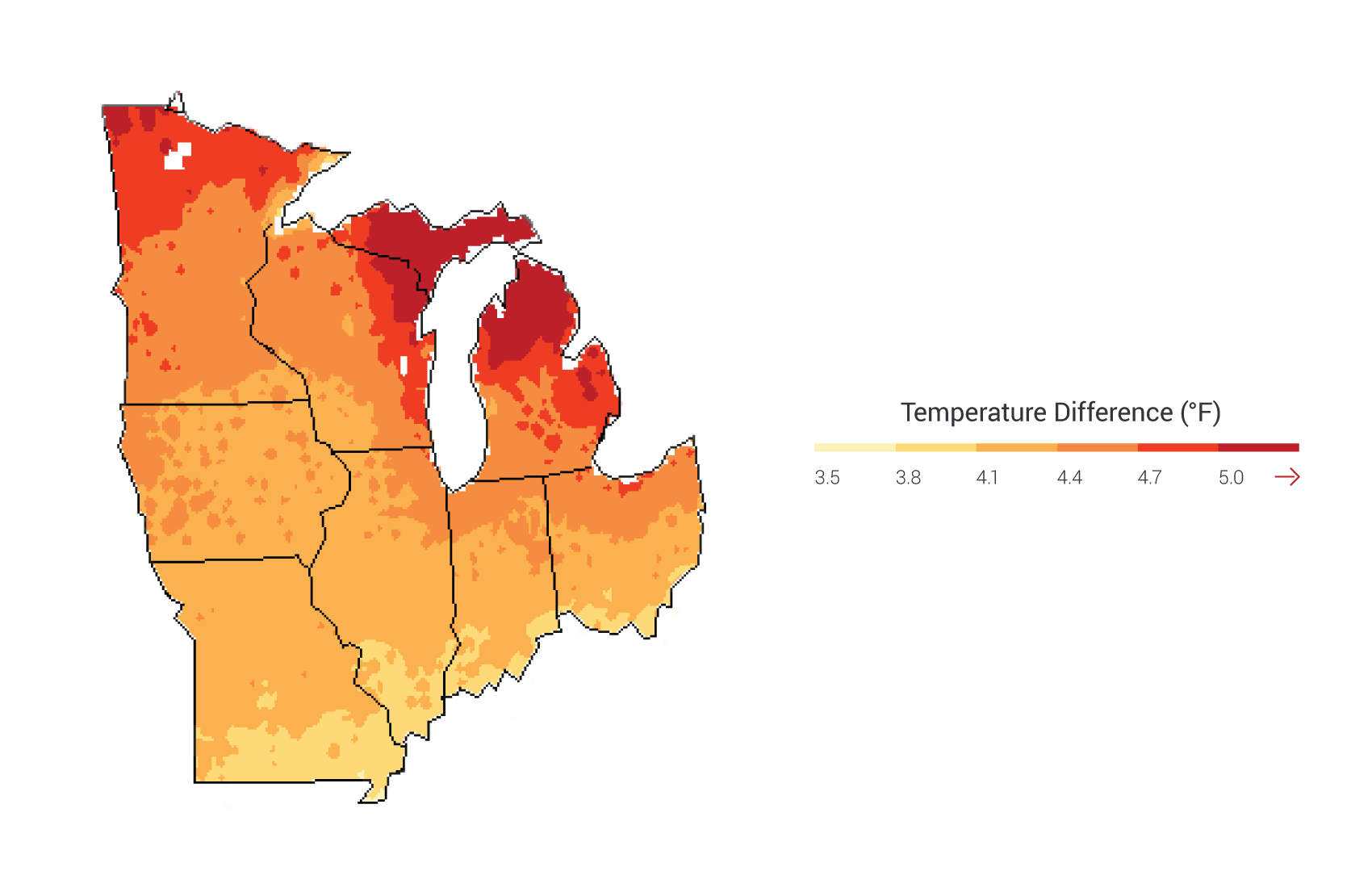
Projected average air temperature changes - Midwest
The region, an area that provides up to 65 percent of the country's corn and soybean production, may at first see increasing crop yields, as a result of rising atmospheric carbon dioxide levels and longer growing seasons. However, eventually, climate change's negative impacts such as extreme weather events, should outweigh the positives, according to Donald Wuebbles, a professor at the University of Illinois and member of the NCA advisory committee.  Wuebbles notes that "increased yields will be offset progressively by extreme weather events and precipitation events, and insect and disease threats," and adds that "though adaptation options can reduce some of the detrimental effects, in the long term, the combined stresses associated with climate change are expected to decrease agricultural productivity."

In addition to the above-noted Midwestern climate change scenarios, the report predicts that 
  • The composition of the region’s forests will change as rising temperatures drive habitats for many tree species northward; and
  • Extreme rainfall events and flooding should continue, causing erosion, declining water quality, and negative impacts on transportation, agriculture, human health, and infrastructure
Southeast
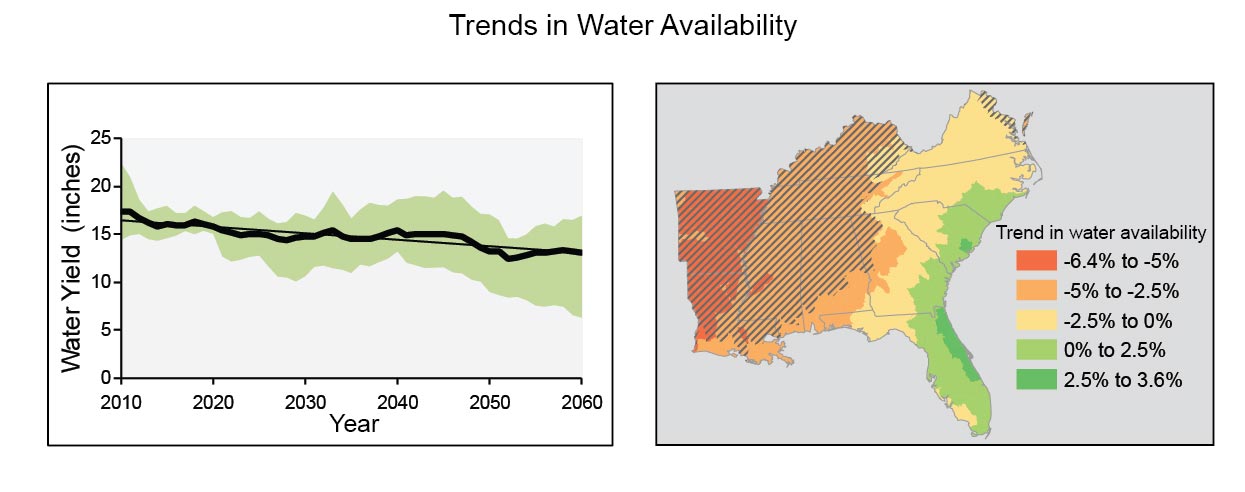
Key NCA report findings for the region are that sea level rises in conjunction with land subsidence will  result in "widespread and continuing threats to both natural and built environments and to the regional economy," and that "increasing temperatures and the associated increase in frequency, intensity, and duration of extreme heat events will affect public health, natural and built environments, energy, agriculture,
and forestry." Additionally, the report finds, "decreased water availability, exacerbated by population growth and land-use change, will continue to increase competition for water and affect the region’s economy and unique ecosystems."  Coastal Alabama, Mississippi, Louisiana, and Texas already face significant economic losses that annually average $14 billion from hurricane winds, land subsidence, and sea level rise.

In coastal Louisiana, since the 1930s, a combination of human and natural factors has resulted in 1,880 square miles of land being lost.  The NCA report regional analysis notes that "Four Native communities in Southeastern Louisiana  have already experienced significant land loss" (the Grand Bayou Village, Grand Caillou/Dulac, Isle de Jean Charles, and Pointe-au-Chien communities).

Among the reports other findings for the region are:
  • Agricultural areas in southern Louisiana with shallow groundwater tables are at risk of increased inundation and future loss of cropland; and 
  • Forest disturbances caused by insects and pathogens will be altered by climate changes due to factors such as increased tree stress, shifting phenology, and altered insect and pathogen life cycles; however, adaptation strategies are limited, except through post-epidemic management responses
Great Plains
The report found that the Great Plains are facing increasingly extreme periods of wetness and dryness due to climate change and experiencing depleted groundwater resources due to unsustainable agricultural usage patterns. The report authors observe that rising temperatures in the Great Plains region have contributed to an increased demand for water and energy, and that this trend is expected to continue, constraining development, stressing natural resources, and increasing competition for dwindling water among the region's communities, agriculture, energy production and ecological needs.  "We have been depending for water on underground aquifers, but they are running out. So we are now increasingly dependent on rainfall precisely at the time that the climate is changing those rainfall patterns," notes Katherine Hayhoe, an atmospheric scientist and associate professor of political science at Texas Tech University.
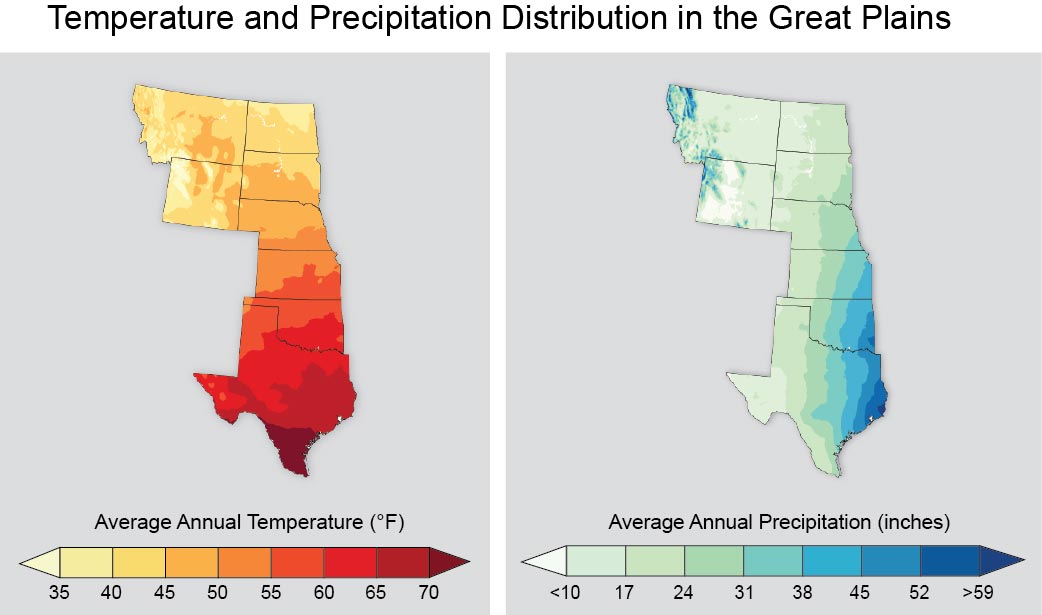
Significant Great Plains climate-related challenges are expected to include "1) resolving increasing competition among land, water, and energy resources; 2) developing and maintaining sustainable agricultural systems; 3) conserving vibrant and diverse ecological systems; and 4) enhancing the resilience of the region’s people to the impacts of climate extremes."  Great Plains communities that are already vulnerable to weather and climate extremes will be stressed even further by more frequent extreme events occurring within an already highly variable climate system, according to the report.

Other climate change implications for the Great Plains region predicted by the report include:
  • Landscape fragmentation is increasing, and such a highly-fragmented landscape will hinder adaptation of species when climate change alters habitat composition and timing of plant development cycles;
  • Changes to crop growth cycles due to warming winters and alterations in the timing and magnitude of rainfall events will continue, creating the need for new agriculture and livestock management practices; and 
  • Existing adaptation and planning efforts are inadequate to respond to projected climate change impacts, since the magnitude of expected changes will exceed those experienced in the last century.

Tuesday, May 6, 2014

Capitol Hill This Week - What to Watch For - UPDATED

Below are the U.S. House and Senate activities currently scheduled for this week that relate to Mississippi River Basin water resources. In addition to those listed meetings and hearings, the House Natural Resources Committee has scheduled a bill markup session for Thursday morning, but has yet to name the bill or bills that will be the subject of the meeting.  Links are provided to the relevant pages on the Internet, and, where appropriate, to pieces of legislation. Many Congressional proceedings are webcast live, and many of these should be, as well (follow the appropriate link).  All times are Eastern.  This page will be updated as warranted.


Wednesday
Thursday

Friday, May 2, 2014

Mississippi River Basin Water Resource Weekly News

~Virtual Newspaper for an Aquatic World~
This Week and Next
Here is a link to "What We Learned This Week," a weekly Mississippi River Basin one-paragraph summary of the week gone by (for those who don't particularly want to wade into the details, below).  The next seven days offer a pair of tantalizingly water-relevant Congressional hearings in Washington, DC: one in the Senate, concerning the next steps in Farm Bill implementation, and one in the House relating to the U.S. Environmental Protection Agency's proposal to clarify the jurisdictional scope of the Clean Water Act (please note a related, May 13, informational webinar on that topic under the "Events" heading, below).  A list of all of next week's water resource related Congressional activities (tantalizing and not) can be viewed here.

Noteworthy @UpperMiss Twitter Postings for the Week

Water Quality -
  • 200 House members tell EPA and Army Corps to drop plan to clarify Clean Water Act jurisdiction over U.S. water bodies http://ow.ly/wp65T
  • Study: majority of southern Minnesota cropland that abuts lakes and rivers doesn't meet buffer zone requirements http://ow.ly/wlhS8
  • Federal judge rules Alpha Natural Resources is illegally discharging excess levels of selenium from West Virginia coal-slurry impoundment http://ow.ly/wlnWx Also see: http://ow.ly/wloOE
  • Algae and bacteria are health and environmental threats in lakes across Wisconsin http://ow.ly/wloxI
  • Kentucky Department of Fish and Wildlife Resources investigating massive die-off of Asian carp in the Cumberland River  http://ow.ly/wlme1 and http://ow.ly/wlm60
  • Persistent thick ice, deep snow on Eastern Iowa ponds and lakes causes large winter fish kills, according to state http://ow.ly/wluWB
  • Minnesota Supreme Court delays action involving state’s lawsuit accusing 3M of environmental damage (water quality) http://ow.ly/wmSdF
  • Minnesota Pollution Control Agency to conduct water quality field work in Des Moines River basin  http://ow.ly/wnpBC
Water Resource Management (Floodplains, Dams, Navigation, Wetlands, Flooding, Supplies, etc.) -
  • LEAD STORY: Water Resources Development Act conference committee expected to complete compromise bill within the next two weeks http://ow.ly/wlfV9
  • In southwestern Minnesota, water costs rise, pipes get longer as supply adequacy wanes  http://ow.ly/wp86c
  • Army Corps of Engineers study recommends building new locks at three locations on the Upper Ohio River http://ow.ly/wp8Ep
  • Barge, port industries and Mississippi River mayors back move to broaden river shipping http://ow.ly/wlvvd also see http://ow.ly/wlw4W
  • Proposed Public-Private Partnership Projects for U.S. Inland Waterways Infrastructure Financing, Operations, and Governance http://ow.ly/wnefg  (The Horinko Group)
  • Heavy rain, swollen waterways prompt Army Corps to restrict  Mississippi, St. Croix  River navigation http://ow.ly/wmRCo http://ow.ly/wmRIR
  • National Geographic: Wetlands Do Triple Duty in a Changing Climate (with focus on Mississippi River basin) http://ow.ly/wntIa
  • Army Corps of Engineers awards two contracts for lock rehabilitation at Olmsted Dam on the Ohio River in Kentucky http://ow.ly/wmRZp
  • Politics enters discussion of funding for repairs to damaged Grand Tower, Illinois levee along Mississippi River http://ow.ly/wp9VW
Agriculture -
  • Illinois Nutrient Research and Education Council's first annual report addresses fertilizer nutrient utilization, water quality, education http://ow.ly/wmR1v
  • House Agriculture Subcommittee on Horticulture, Research, Biotechnology and Foreign Agriculture reviews management strategies to control pollinator pests, diseases http://ow.ly/wkYIE
  • Pollinator hearing deepens gulf between pesticide manufacturers and environmentalists over  pesticides' role in bee deaths http://ow.ly/wltpX
  • U.S. farmers douse their fields with wider array of herbicides in war vs. super weeds but are adding new costs and environmental concerns http://ow.ly/wlsvV
  • EPA seeks public comment on its proposal to register the "Enlist Duo" herbicide (containing 2,4-D and glyphosate) "to reduce the spread of glyphosate resistant weeds" article - http://ow.ly/wmO3t (EPA media notice: http://ow.ly/wlshE)
  • Monsanto Co. pledges to advance sustainable agriculture through increasing water and nutrient efficiency http://ow.ly/wlj2t
Climate and Weather -
NWS Topeka, Kansas satellite image
(click to enlarge)
  • LEADING STORY: High atmospheric carbon dioxide levels set a record http://ow.ly/wnPnO
  • US drought update: southern Plains precipitation continues below average; dryness expands in parts of Nebraska and Kansas; improves in parts of Iowa and Missouri http://ow.ly/wmTdv
  • NOAA Climate Prediction Center monthly drought outlook for May: May expected to be relatively dry month; widespread drought improvement not anticipated http://ow.ly/q3yAx
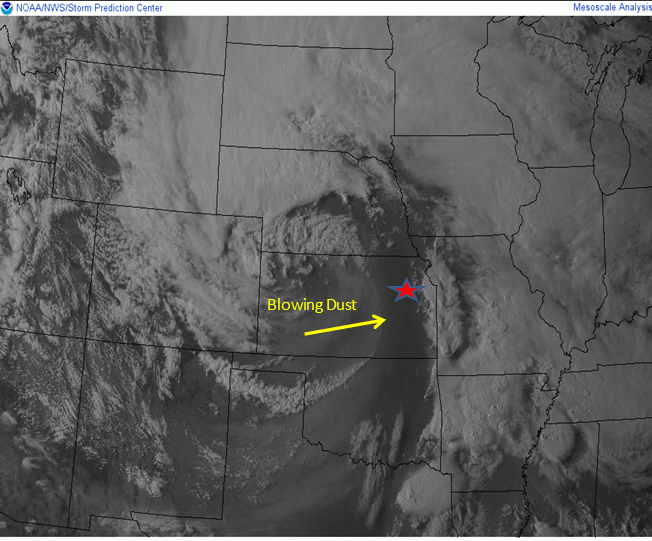
  • Satellite image shows blowing dust moving east and northeast across north-central and northeastern Kansas http://ow.ly/wlkOk (April 27; photo to the right)
  • Iowa experiencing warmer, wetter and more intense weather, forcing its cities and farmers to adapt http://ow.ly/wmPAg
NOAA National Weather Service flood prediction maps
Biodiversity, Wildlife and Invasives -
  • Minnesota Senate approves name change for Asian carp - changing it to "invasive carp" http://ow.ly/wlx6R
  • US Fish and Wildlife Service says Corps of Engineers helping it bring back three lower Mississippi basin endangered species http://ow.ly/wnuEi
  • Asian carp processing plant may soon be a reality for East Peoria, Illinois area http://ow.ly/wntqG
  • House Natural Resources Committee advances four bills to House floor that would amend the Endangered Species Act http://ow.ly/wlino
  • Report: federal endangered listing of greater sage grouse could impede voluntary landowner conservation partnerships http://ow.ly/wlh6y
  • Last Friday's La Crosse, Wisconsin biodiversity summit aim was to improve cities' environments http://ow.ly/wlnla
  • Budget shortfall in West Virginia black fly suppression program has meant fewer applications of Bti pesticide http://ow.ly/wngE9
In the Cities -
  • Columbus, Ohio explores new ways of eliminating sanitary sewer overflows, investing in neighborhoods, local economy http://ow.ly/wai7W
  • Cape Girardeau city leaders meet with Missouri Department of Conservation to focus on Mississippi River issues http://ow.ly/wp9tk
In the States-
  • Council for a Better Louisiana opposes state bill that would let governor remove levee authority members http://ow.ly/wlpAL
Forestry -
  • U.S. Forest Service poised to begin identifying national forest areas for future timber projects using farm bill's new environmental streamlining authority http://ow.ly/wnz2D
Resource Development -
  • Builders of controversial Bluegrass Pipeline through Kentucky halting project on economic grounds http://ow.ly/wlxzo
Federal Budget -
  • House GOP debuts 2015 FY science, commerce and justice appropriations bill promising National Science Foundation $7.4 billion; boosting weather programs but keeping total budget flat http://ow.ly/wkVkX
  • House committee passes first 2015 appropriations bill http://ow.ly/wnpVf while the Senate Appropriations Committee will hold its first full committee votes on fiscal 2015 spending bills on May 22 http://ow.ly/wmLCs
  • Forest Service, Department of the Interior projected to spend over $470 million more than available to fight 2014 wildfires http://ow.ly/wnwoK
  • Sens. Tom Coburn (R-Okla.) and Mark Udall (D-Colo.) Pushing Senators to Keep Earmark Moratorium http://ow.ly/wnOYs
Events -  Information on all past and future events listed here can be viewed in the on-line calendar (here as a stand-alone calendar)
  • NC-FAR Seminar: Detours On The Road To Sustainable Feedstock Production For Cellulosic Biofuel, Washington, DC, May 8 http://ow.ly/wmNbi (register by May 6)
  • Briefing on the Third National Climate Assessment; May 8, 2-3:30 PM EDT; Washington, DC http://ow.ly/wn9Lc (the Assessment will be released on May 6)
  • Webinar: What the Waters of the US Rulemaking Means for Your Watershed Work, May 13, 2-4 PM EDT. Register by May 12 http://ow.ly/wag4R
  • May 17: annual invasive Garlic Mustard Pull volunteer day at the Dixon Waterfowl Refuge at Hennepin & Hopper Lakes (Illinois) http://ow.ly/wnQlq
  • Resources For The Future Seminar-Natural Resources, Ecology, and Public Policy: Time for Some Unconventional Ideas? May 28, 12:45-2 PM EDT http://ow.ly/wp4Xs (webcast and Washington, DC)
e-Newsletters, Publications, Journals, Multimedia  -
Other news-
  • Dutch research implies that many coastal cities around the world are now sinking at a rate up to ten times that of sea level rise http://ow.ly/wkW56
  • 1.6 million Americans don't have indoor plumbing. Here's where they live (Washington Post) http://ow.ly/wkYl1 (interactive map)
Politics and People-
  • Collin O'Mara named as next President and Chief Executive Officer of the National Wildlife Federation http://ow.ly/wnQWG
  • There will be May primary elections in eleven Mississippi River Basin states.  Here is where and when they are: http://ow.ly/wmVbP
  • Ron Bruch, a 37-year veteran of Wisconsin's Department of Natural Resources, has been named WI DNR fisheries director http://ow.ly/wns1v
  • Rep. Vance McAllister won¹t run for reelection (R-LA-5) http://ow.ly/wkUoY as calls begin for him to resign now http://ow.ly/wkUGg
  • Sen. John Boozman (R-Ark.) has been released from an Arkansas hospital following emergency heart surgery last week http://ow.ly/wliBw
Last Word -
"Nullius in verba" - The Royal Society's motto, which roughly translates as "take nobody's word for it."  The motto is an expression of the determination of the 352-year-old UK society's members to withstand the domination of authority and to verify all statements by an appeal to facts determined by scientific inquiry.

What We Learned This Week - A Carp By Any Other Name

"It was the best of states.  It was the worst of states."
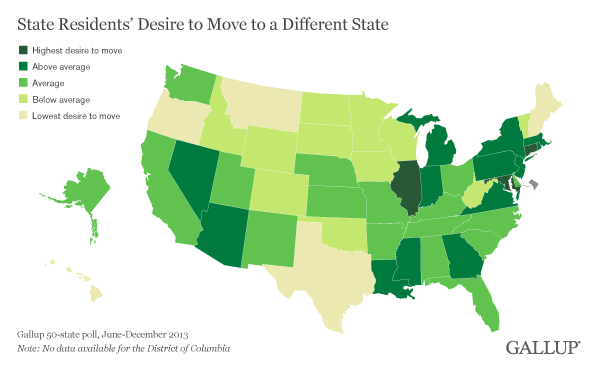
We may soon see an end to what has been a long road of negotiating a final Water Resources Development Act. Things appear to be moving legislatively, as well, on the federal spending front, with the House passing its first 2015 appropriations bill this week (while the Senate Appropriations Committee plans to hold its first full committee votes on fiscal 2015 spending bills sometime around May 22).  House GOP members don't particularly appreciate various provisions of the 40-year-old Endangered Species Act. As U.S. farmers douse their fields with a wide array of herbicides in a battle against so-called "super weeds," comes news that the USEPA is considering approval of a new pesticide designed for use with crops engineered to tolerate the herbicide 2,4-D.  Meanwhile, there appears to be an ever-widening gulf between pesticide manufacturers and environmentalists over pesticides' role in bee deaths. Near-record heavy April rains have swollen streams in the Upper and Middle Mississippi River region, causing minor flooding and disrupting barge traffic (but May should be drier).  There is a burgeoning push among industry representatives and River mayors to broaden commercial Mississippi River shipping.   Sometimes people like fish kills (500,000-plus Asian carp in Kentucky) and sometimes they don't (in Iowa farm ponds).   Minnesota's state senators express their conceptual disagreement with Juliet's thoughts about roses by any other name (in William Shakespeare's Romeo and Juliet), by voting to call "Asian carp" "invasive carp," instead. Many coastal cities around the world are now sinking much faster than previously thought (at a rate up to ten times that of climate-related sea level rise).  Not to be outdone, atmospheric carbon dioxide levels set a record last month (but Iowans seem to be adept at adapting to it all).  In "comings and goings," the National Wildlife Federation has named its new President, while Rep. Vance McAllister, who represents Louisiana's sixth Congressional district, announced that he won't run for reelection in November (as pressure mounts for him to resign now).  And last but not least, about half of Illinoisans don't like living in Illinois (conversely, Montanans rank their state the best - or among the best - places to live).

Tuesday, April 29, 2014

Capitol Hill This Week - What to Watch For


Both the House and Senate have reconvened following a two-week recess.  Congressional appropriations leaders hope to move their 2015 fiscal year spending bills quickly to the floor for consideration (the House floor as soon as this week and the Senate floor in June).  However, those hopes may be dashed, since the annual spending bills risk getting caught up in partisan policy fights. House leaders have committed to debating the spending bills under what is known as an open rule, which means that House members would not be prohibited from offering specific amendments (or "riders")  that either encourage or prohibit federal agencies from carrying out a variety of politically-charged activities. Therefore, the appropriation measures may end up being amended by a variety of such riders, slowing down debate, and making consensus achievement problematic. Ultimately, the much-hyped fast start to the appropriations process could fizzle quickly.

Below are the U.S. House and Senate committee hearings currently on this week's calendar that relate to Mississippi River Basin water resources.  Links are provided to the relevant committee pages on the Internet. Many Congressional proceedings are webcast live, and these may be, as well (follow the appropriate link). All times are Eastern.  This page will be updated as warranted.

Monday
Tuesday
Wednesday

Friday, April 25, 2014

What We Learned This Week - Dog Day Afternoon

My dogs, Amy and Kooper, sad at the
prospect of staying home on Thursday
Farmers disagree over exactly what the proposed definition of “Waters of the United States” under the Clean Water Act means for farmers (the National Farmers Union and American Farm Bureau, for example). The Mississippi River basin's dams block some kinds of sediment from going downriver, but not all kinds, and that may be good for the Louisiana delta. There was some minor flooding in the Middle Mississippi River valley; here, here and here, for example.   The 2014 navigation season officially began in the Upper Mississippi River. Midwest farmers are willing to provide ecosystem services, especially if they are paid.  El Niño is on its way in the Pacific Ocean, with implications for the U.S. later in the year.  Asian carp are making their way into the headwaters of the Ohio River watershed, with possible implications for the Great Lakes.   The historic Louisiana coastal damages lawsuit against major oil companies will soon be history, but with coastal Louisiana parishes losing residents because of coastal erosion, they'll soon be no one left to care. EPA can retroactively lower cellulosic biofuel mandates for past years when they find that those mandates weren't met. And Secretary of State John Kerry brought his dog Ben to "Take Our Daughters and Sons to Work" day, at the U.S. Department of State on Thursday, but my dogs stayed home.

Mississippi River Basin Water Resource Weekly News

~Virtual Newspaper for an Aquatic World~

Capitol Hill Next Week - What to Watch For
Both the House and Senate were recessed over the past two weeks, and both are scheduled to reconvene next Monday afternoon. Among the limited number of items on the legislative agenda, House and Senate appropriations' leaders hope to move their 2015 fiscal year spending bills quickly to the floor (to the House floor as soon as next week). However, those hopes may not be realized, as the annual spending bills risk being caught up in policy fights.  House leaders have committed to debating the spending bills under what is known as an open rule, which means that House members would not be blocked from offering specific amendments (or "riders")  that either encourage or prohibit federal agencies from carrying out any number of politically problematic activities. Therefore, the appropriation measures may end up being decorated with a variety of such riders. And, ultimately, the much-hyped fast start to the appropriations process could fizzle.  On the Congressional committee front, here is a link to some other House and Senate activities currently scheduled for next week that relate to Mississippi River Basin water resources.

Public Comment Period Opens for Proposed Waters of the U.S. Rule
On April 21, the Environmental Protection Agency and  Army Corps of Engineers officially published a proposed rule to clarify the scope of Clean Water Act jurisdiction for streams and wetlands across the U.S. The proposal had been released on March 25, but was not published until last Monday.  The Federal Register publication (found here as a PDF file) opened a 91-day public comment period, through July 21, during which time comments on the proposed rule may be submitted online, via email, by regular mail or by courier. Specific instructions for submitting comments can be seen in this section of the Federal Register notification (see related stories under "Water Quality," below).

Noteworthy @UpperMiss Twitter Postings for the Week

Water Quality -
  • LEAD STORY: EPA-Army Corps Proposed Rule formally published: Clean Water Act; Definitions: Definition of “Waters of the United States” Under Clean Water Act http://ow.ly/vZJbK (PDF file of Federal Register notice)
  • LEAD STORY: EPA and the U.S. Army Corps of Engineers on Monday publish their proposed rule defining "waters of the U.S." http://ow.ly/w1Fq4 (news coverage)
  • American Farm Bureau Federation: EPA Clean Water Act proposed rule "will impose unworkable regulations on the nation’s farms" http://ow.ly/w4vXG
  • USEPA Nonpoint Source Success Story: Tennessee: McKnight Branch-Implementing Grazing and Erosion Control Best Management Practices http://ow.ly/w4pdi
Water Resource Management (Floodplains, Dams, Navigation, Wetlands, Flooding, Supplies, etc.) -
Mississippi River Lock and Dam
Number 2, near Hastings, Minnesota
  • LEAD STORY: Researchers say Mississippi River dams aren't to blame for starving its delta of sediment needed to stay above sea level http://ow.ly/vZtCj (also see this story: http://ow.ly/vZtV9 and link to study abstract here: http://ow.ly/vZZiz)
  • Farm cooperative closes agricultural products ferry service across Mississippi River between Illinois and Missouri http://ow.ly/vZO36
  • Mississippi River at Rock Island is expected to top flood stage this week, which will result in minor flooding http://ow.ly/w1GtB
  • Mississippi River in Dubuque, Iowa hits the 17-foot minor flood stage http://ow.ly/w1ICt  and http://ow.ly/w1IEf
  • Army Corps of Engineers, St. Paul District welcomes first line tow of 2014 navigation season to St. Paul, Minnesota http://ow.ly/w1HgZ
  • US Water Alliance overview of EPA’s new Water Innovation Technology Blueprint, Version 2, addressing water challenges and opportunities http://ow.ly/w2bcW
  • Kansas State University, Manhattan is winner of EPA 2nd annual Campus RainWorks Challenge (1st Place, Site Design Category) http://ow.ly/w2dtJ
  • Kansas officials look again at rerouting some of Missouri River's "excess" water westward across Kansas http://ow.ly/w51xs
Agriculture -
  • Midwest farmers, especially those with large farms, appear willing to change their farming practices to provide ecosystem services in exchange for payments http://ow.ly/w5dbE
  • Cover Crops Swing Into Popularity: More than 60% of farmers have planted a cover crop at some point on their farm http://ow.ly/w6YTZ
  • Study: "Biofuels from crop residue can reduce soil carbon and increase CO2 emissions" http://ow.ly/w9LHR
  • Agriculture Drone Business Takes Off  http://ow.ly/w1Dxk
  • USDA Secretary announces support for 116 projects to improve water, wastewater services for rural U.S. http://ow.ly/w2aHX
  • "Food freedom" bipartisanship takes hold on Capitol Hill as support for local food systems grows http://ow.ly/w4vjR
Positive (red) index values indicate
an El Niño event
Climate and Weather -
  • El Niño weather phenomenon, which can trigger extreme global weather patterns, could start as early as July http://ow.ly/w4xnT
  • Drought update: Drier-than-normal weather dominates Great Plains; that pattern expected to persist in Plains, Midwest into next week http://ow.ly/w7ugJ
  • Oklahoma's variable climate is helping scientists understand how climate change could affect farms everywhere http://ow.ly/w7tbH
  • OSU Climate and Weather: Historical Trends and Future Forecasts webinar is available here: http://ow.ly/w8coV (national in scope)
  • Commentary: Consumer awareness, private initiatives, regulation, targeted investments needed to move towards sustainable water use in light of changing climate http://ow.ly/w9LZO
Biodiversity, Wildlife and Invasives -
  • Asian carp DNA found in Muskingum River in Ohio (tributary of the Ohio River) http://ow.ly/vZei8
  • US Fish and Wildlife Service April 24, Whooping Crane migration status update http://ow.ly/w9PwO
In the Cities -
  • Tim Kabat, mayor of La Crosse, Wisconsin: Mississippi River is key to our region's future http://ow.ly/w6Z5R
  • Huntington, West Virginia wins EPA-USDA 2014 Livable Communities in Appalachia competition, with focus on developing local food systems http://ow.ly/w1EtM
  • Friday: HUD Secretary Donovan, and EPA Administrator McCarthy will tour sustainability investments in Memphis, TN http://ow.ly/w9CVn
In the States-
  • Wisconsin municipalities gain more time, flexibility to carry out phosphorous removal from wasterwater under new state law  http://ow.ly/w7rXW
Louisiana Coastal Region-
  • LEAD STORY: Without much legislative resistance, historic coastal damages lawsuit against major oil companies will soon be history http://ow.ly/w4C4b (However, lawmakers appear to be backing off action against similar litigation filed by Jefferson and Plaquemines parishes http://ow.ly/w4Cz2)
  • Southeast Louisiana coastal restoration, hurricane protection are new, booming 'water management' economic sector, Data Center says http://ow.ly/vZowQ
  • New report: commuting statistics indicate that coastal Louisiana parishes are losing residents because of coastal erosion http://ow.ly/vZL66
  • $1.35 B Louisiana Inner Harbor Navigation Canal Surge Barrier-largest ever Army Corps civil works design-build project-wins outstanding achievement award ow.ly/w1GIE
  • NOAA vessels, contractors begin 180th hydrographic surveying season; high demand for Louisiana coastal, Northern Gulf surveys http://ow.ly/w32Iu and http://ow.ly/w32Gn
  • USFWS report: multiplier effect of coastal restoration spending on output (4.03) and job multiplier (55) are highest for Louisiana of all U.S. coastal states http://ow.ly/w4HWh (PDF file of report)
Forestry -
Resource Development -
  • Advocates on either side now expect a long wait for an Administration decision on Keystone pipeline http://ow.ly/w1BcW
  • Energy and climate change experts say Keystone pipeline's political symbolism vastly outweighs its policy substance http://ow.ly/w2emi
  • EPA retroactively lowers 2013 cellulosic biofuel requirement, aligning mandated 2013 volume to actual amount produced http://ow.ly/w4nwb
Federal Budget -
  • Sen. Dick Durbin, D-Ill., wants the White House to support his effort to bring back earmarks http://ow.ly/w2gIP
  • Over 100  hunting, angling groups (from 11 western states) urge Congressional appropriators to fully fund the Land and Water Conservation Fund http://ow.ly/w9APg (letter: http://ow.ly/w9AEH)
Events -  Information on all past and future events listed here can be viewed in the on-line calendar (here as a stand-alone calendar)
  • 20th Arkansas River Basin Water Forum "Planning and Planting for the Future" under way http://ow.ly/w720P
  • USEPA State Level Nutrient Reduction Strategies Webinar: Adapting Minnesota's Shoreland BMPs for Climate Change; April 24, 10 AM CT http://ow.ly/vZs2w (log in as guest) 
  • April 29 WEF webcast will present recent findings on algae-based nutrient removal in waste streams; 1 pm EDT (free) http://ow.ly/w70DI
  • Webinar: The National Climate Assessment Recommendations and Implications; May 9, 11:30 AM ET http://ow.ly/vZf67
  • First Annual Mid-South Agricultural and Environmental Law Conference; May 16, Tunica, Mississippi  http://ow.ly/w5hjn Hosted by the Arkansas Bar Association, the National Sea Grant Law Center, and the National Agricultural Law Center
  • Mississippi River/Gulf Of Mexico Watershed Nutrient (Hypoxia) Task Force Public Meeting (Little Rock, AR) - Webcast; May 21; 8:30 am-5:45 pm CT http://ow.ly/w9zAf
  • Sixth Annual Mississippi River Forum Workshop (National Park Service), May 30, 8:30 AM-12:30 PM CDT, St. Paul, Minnesota http://ow.ly/w82Wg
  • Early Bird Discounted Registration open for Conference on Ecological and Ecosystem Restoration, New Orleans, Louisiana, July 28-August 1 http://ow.ly/w1DUC
  • Save the Date: Mississippi River Watershed Education Symposium, Nov. 14-15, 2014, Alton, IL http://ow.ly/w9yn3
e-Newsletters, Publications, Journals, Multimedia  -
  • America's WETLAND Foundation April Newsletter http://ow.ly/vZdxM
  • Mississippi River Collaborative's April 2014 "MRC Currents" http://ow.ly/vZdlU
  • "The Outlook" - Dovetail Partners April e-newsletter: covering active stewardship and Minnesota's county forest lands http://ow.ly/w1APJ
  • St. Croix River Association's April e-newsletter http://ow.ly/w1BKy
  • Bi-weekly Green Lands Blue Waters update, highlighting Mississippi River Basin Continuous Living Cover on agricultural land  http://ow.ly/w2cgL
  • Find the latest and archived Tulane Institute on Water Resources Law and Policy TUWaterWays e-newsletters here: http://ow.ly/w5krY
  • National Great Rivers Research and Education Center April 2014 E-Newsletter ow.ly/w9y4L
Other news-
  • Environmental Law and Policy Center op-ed: "Another View: An Earth Day scorecard for a greener Iowa" http://ow.ly/w1Iiq
  • Mississippi River News and Insights: Coldwater Crew wins 2013 Midwest region Hartzog Award for Outstanding Volunteer Service http://ow.ly/w4uML
  • Environmentalists urge USEPA Region 4 to press for stronger federal oversight of coal combustion waste http://ow.ly/w6ZMd
  • People who live in US West and Midwest tend to have brighter views of their states than in other parts of country http://ow.ly/w9OLM
Politics and People-
  • Sen. John Boozman (R-Ark.) "responded well" to Tuesday emergency heart surgery he had at Rogers, Ark. hospital http://ow.ly/w4n92
  • Republican state Senator Joe Leibham and Winnebago County Executive Mark Harris (D) enter race to fill retiring GOP Rep. Tom Petri’s 6th district U.S. House seat in Wisconsin http://ow.ly/w4udy
  • House Republicans face historic brain drain atop committees next year, as many as half of chairpersons could be forced to step down http://ow.ly/w4wNK
Last Words -
Click to enlarge
"We wish to suggest a structure for the salt of deoxyribose nucleic acid (D.N.A.). This structure has novel features which are of considerable biological interest."  - James Watson and Francis Crick, April 25, 1953  (On that date in 1953, the magazine Nature published an article by biologists Francis Crick and James Watson, describing the "double helix" of Deoxyribose Nucleic Acid. The figure to the left is a diagrammatic representation of that double helix from that article: A Structure for Deoxyribose Nucleic Acid. Watson J.D. and Crick F.H.C. Nature 171, 737-738 (1953)).
James Watson (left) and Francis Crick